Calories in cos Lettuce - Nutrition Facts Information
Cos lettuce is one of the most healthy vegetables that expert recommend you to add to your diet -- be it using in your salads or in regular food items. This article will help you to get a detailed account of some of the major nutritional components that are present in cos lettuce, its calorie contents, the possible health benefits that you may get from this veggie, and other details.
Calorie content in cos lettuce:
Being rich in high amounts of nutrients, cos lettuce is quite low in calorie content. Moreover, the amount of water content in cos lettuce is quite high which makes it a healthy and hydrating vegetable to add to your diet.
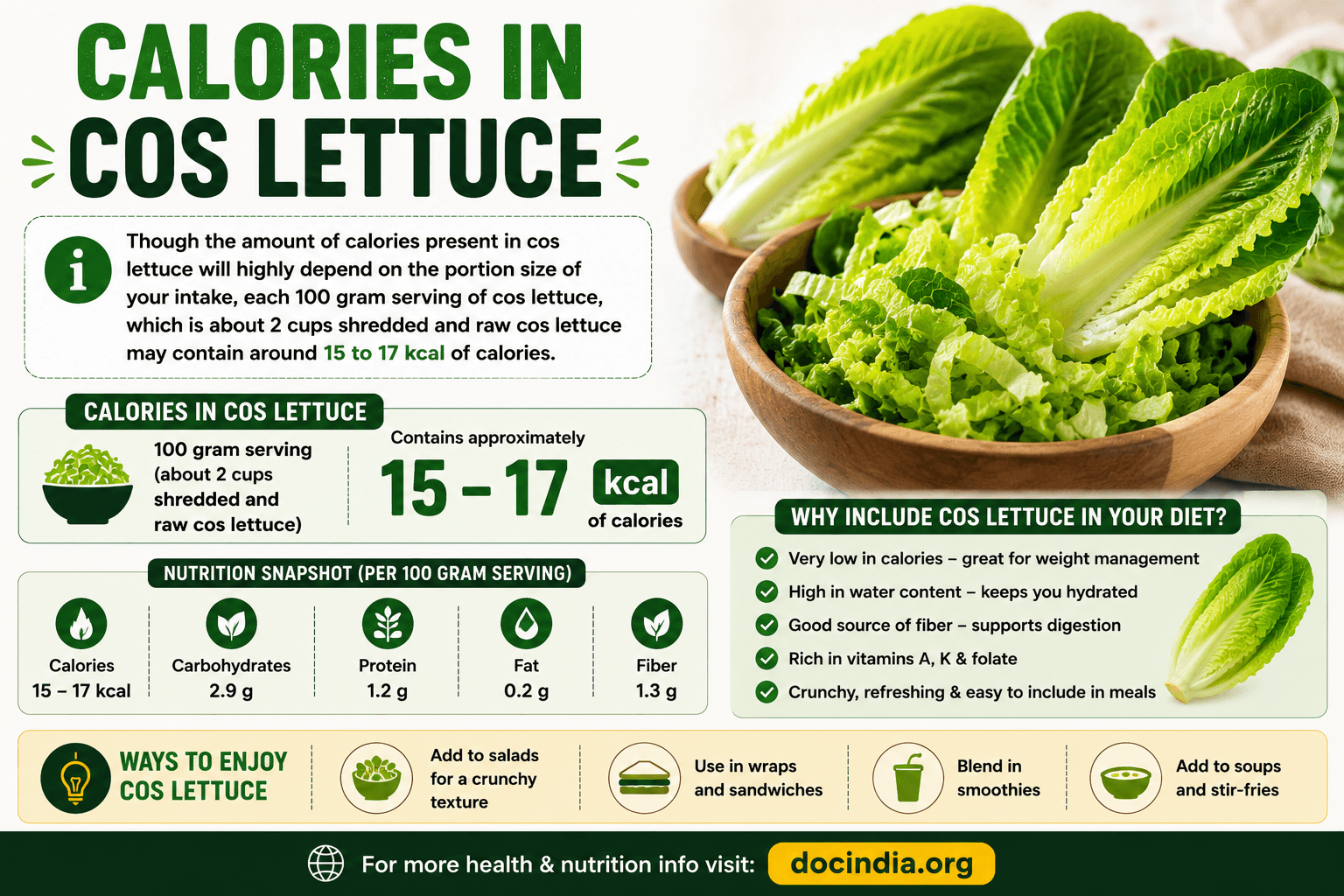
Though the amount of calories present in cos lettuce will highly depend on the portion size of your intake, each 100 gram serving of cos lettuce, which is about 2 cups shredded and raw cos lettuce may contain around 15 to 17 kcal of calories.
Nutritional components in cos lettuce:
Cos lettuce is usually high in nutritional components which are needed in your body for maintaining healthy physical functioning. Below is the complete list of nutrients found in cos lettuce along with an approximate measure of the amounts of nutrients present:
Protein: 1.2 grams
Total Fat: 0.3 grams
Carbohydrates: 3.3 grams
Dietary Fiber: 2.1 grams
Sugars: 1.2 grams
Vitamin K: 128 percent DV
Vitamin A: 34 % DV
Vitamin C: 26% DV
Folate or folic acid (Vitamin B9): ~34% DV
Iron: 5% DV
Potassium: 5% DV.
What are the health benefits of having cos lettuce?
Cos lettuce is a healthy vegetable that is rich in high amounts of nutrients, which can provide you with enough health benefits, such as follows:
1.Helps to keep your heart healthy
2.Improves your digestion
3.Helps in weight loss and healthy weight management
4.Boosts your immune system
5.Improves vision and reduces eye problems.
Which doctor to consult before consuming cos lettuce?
Cos lettuce is quite a healthy choice for your overall health and wellness. But before you start adding cos lettuce to your diet, it is important for you to know whether you can even have this vegetable at all.
For this, you need to consult a registered dietitian or a nutrition expert who will be able to tell you how the portion size of your cos lettuce intake each day based on your calorie requirements, how to cook cos lettuce at home for healthier food options, and other necessary details.
Final Thoughts:
Cos lettuce is a crispy and tasty green that you can add to any type of food to make it a healthier version. The nutritional components in this lettuce, especially the high amounts of vitamins, minerals and plant-based components are highly beneficial for keeping you healthy and free from the risks of developing diseases. But it is always better to take expert opinion before having cos lettuce to evade the risks of side effects.
Also Check: Calories in Asparagus - Nutrition Facts Information
Author

Bidiptaa Sen
MA in Mass Media and Communication, Jadavpur University With 3.5+ years of experience in writing marketing and SEO content on healthcare and wellness, I write articles that help people to get an idea regarding medicines that are prescribed, how to improve their wellness care and educate people how to choose accurate health facilities. My communication skills, depth of knowledge in media management and strategic methods for better social media engagement and improving readers' experience through extensive research on the healthcare scenario.
View profile