Calories in chicken Curry Rice - Nutrition Information
On this page
Chicken curry and rice are some of the most staple food items that you may have in your daily diet. Most Indians love this not only because chicken curry and rice is a delicious combo, but it is also a healthy and filling dietary choice that you can make.
But if you are concerned about the dietary components in chicken curry and rice, then this article will help you to get a detailed account of some of the nutritional components that are present in chicken curry rice, its calorie contents, the possible health benefits that you may get from this dish, and other details.
Calorie content in chicken curry and rice:
Chicken curry and rice can be a hearty and healthy meal for lunch or dinner, but the amounts of calories that are present in this dish will depend on different factors, such as follows:
The type of rice that you are consuming (white or brown rice, for example)
The portion size of your rice and chicken intake
The way you are cooking your rice and chicken
The ingredients added into the chicken curry.
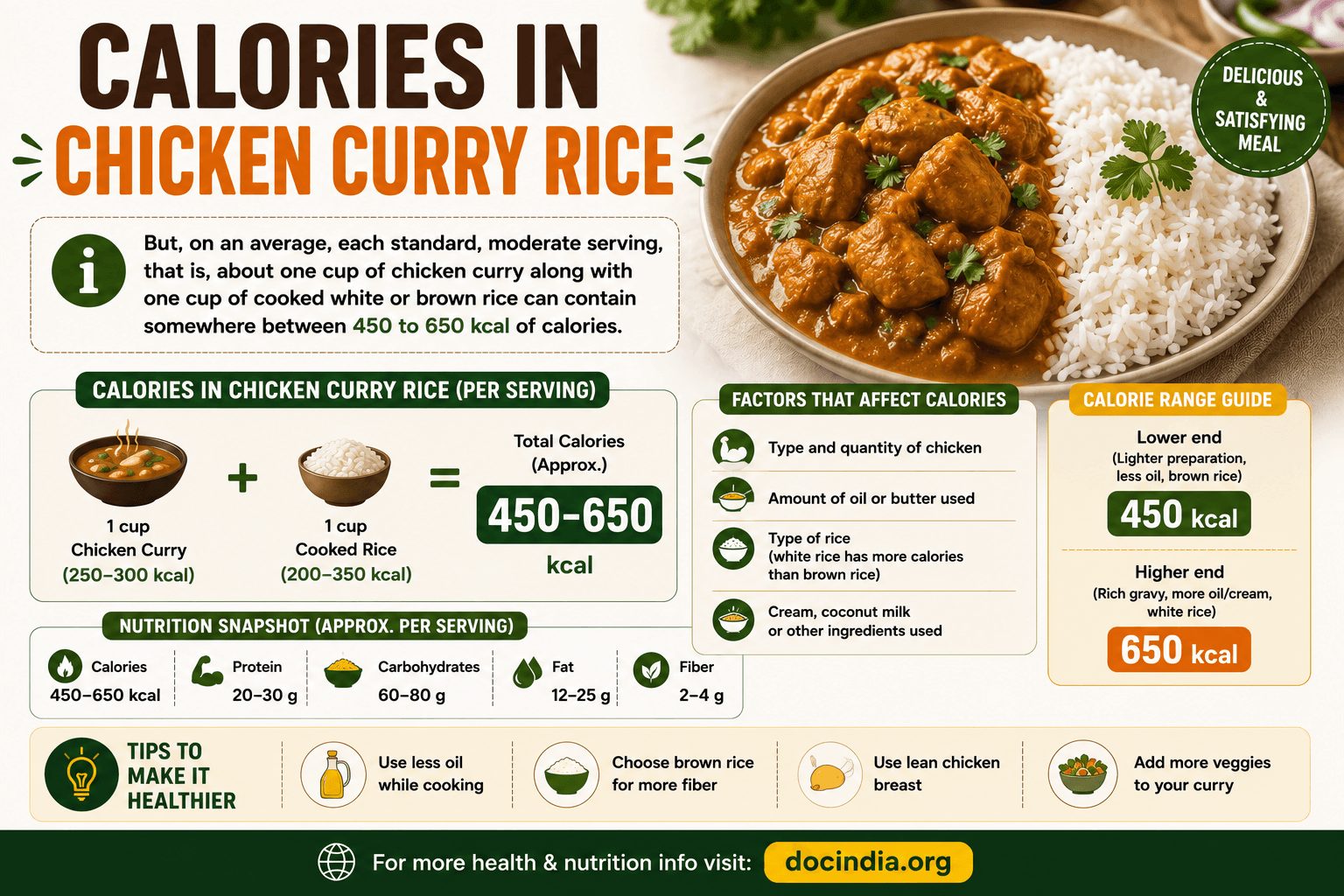
But, on an average, each standard, moderate serving, that is, about one cup of chicken curry along with one cup of cooked white or brown rice can contain somewhere between 450 to 650 kcal of calories.
Nutritional components in chicken curry rice:
A bowl of chicken curry and rice holds enough amounts of nutritional components that are highly beneficial for your overall wellness and for providing health benefits.
Here is a complete list of nutrients found in chicken curry rice along with an approximate measure of the amounts of nutrients present:
Protein : approximately 30 to 35 g
Fats : Roughly 12 to 18 g
Carbohydrates : Around 50 to 60 g.
Apart from these macro-nutrients, you might also get some amounts of micro-nutrients from a bowl of chicken curry rice as well, such as vitamins C and B6, manganese, and sulfur compounds that support cardiovascular health. You may also get some amounts of healthy antioxidants from chicken curry as well, such as lycopene.
Which doctor to consult before consuming rice and chicken curry?
Before you start adding chicken curry rice to your diet, it is important for you to know whether you can even this dish at all. For this, you need to consult a registered dietitian or a nutrition expert who will be able to tell you how much chicken curry rice (in terms of portion size) you can have each day based on your calorie requirements, how to cook chicken curry rice to make it healthy, and other necessary details.
You may also consult a diabetic expert before having chicken curry rice if you have high blood glucose levels.
Final Thoughts:
Rice and chicken curry is quite a healthy and wholesome meal to be consumed, but you must have this meal based on their health conditions.. Apart from being rich in carbs and protein it also contain vitamins and minerals, that help to provide certain health benefits.
Also Check: Calories in Pinto Beans - Nutrition Facts Information
Author

Bidiptaa Sen
MA in Mass Media and Communication, Jadavpur University With 3.5+ years of experience in writing marketing and SEO content on healthcare and wellness, I write articles that help people to get an idea regarding medicines that are prescribed, how to improve their wellness care and educate people how to choose accurate health facilities. My communication skills, depth of knowledge in media management and strategic methods for better social media engagement and improving readers' experience through extensive research on the healthcare scenario.
View profile