Calories in Pinto Beans - Nutrition Facts Information
On this page
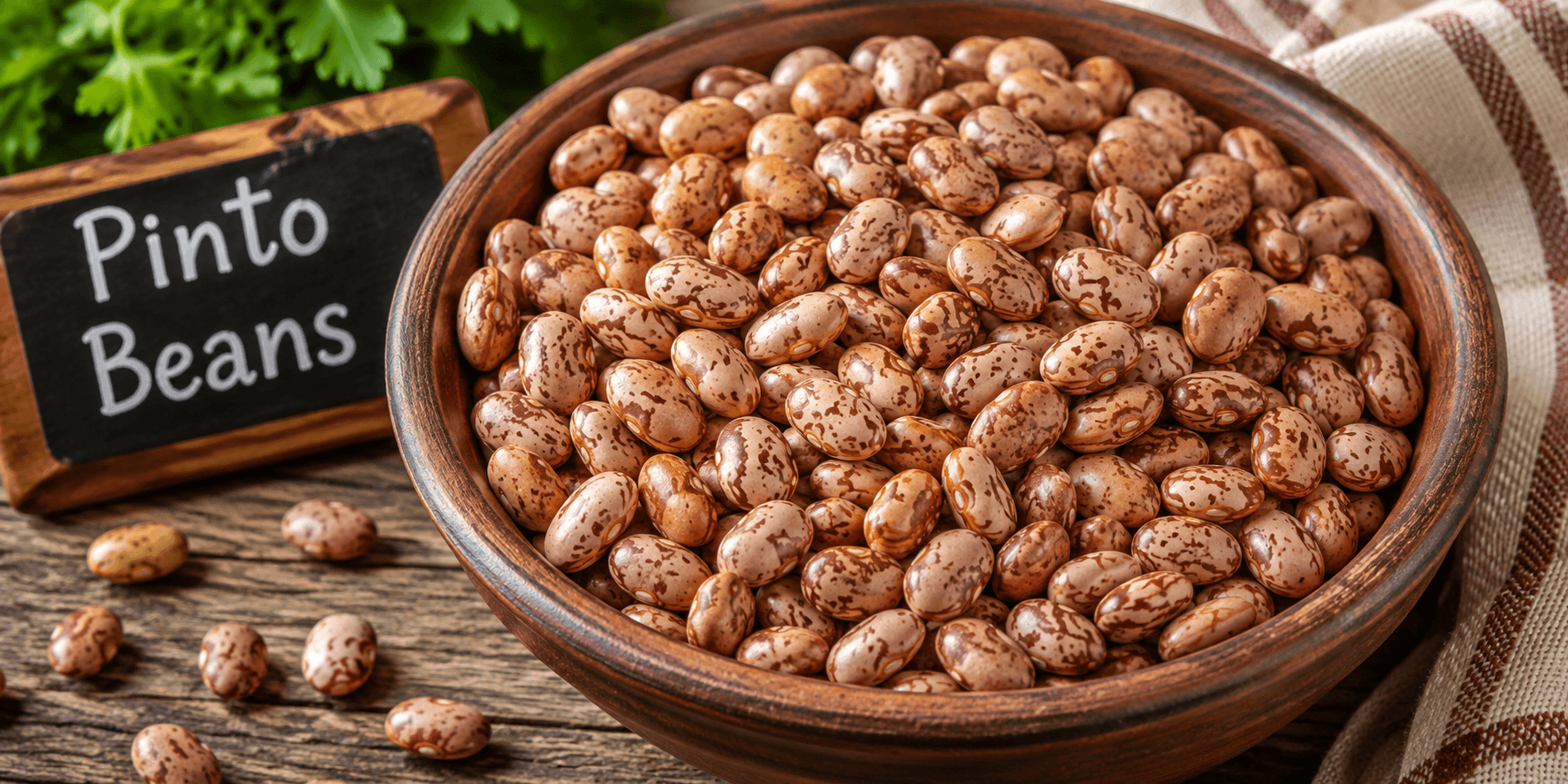
Pinto beans can be some of the healthiest additions to your diet, when it comes to your legume dishes. This article will be a detailed guide for you to know the amounts of calories in pinto beans, the total nutritional components present in these beans and the health benefits that you may derive from this legume, and other vital facts about pinto beans.
Net amounts of calories in pinto beans:
The total amounts of calories that are present in pinto beans will differ, as the quantities mostly depend on some factors, some of which can be listed below:
The way you are cooking the beans
The portion size of your total pinto bean intake
The foods that you are pairing with pinto beans
The types of ingredients that you are adding to your pinto bean dish.
But on an average, one standard cup of boiled pinto beans (without salt), containing approximately 171 grams of serving by weight can contain almost around 245 kcal of calories.
Detailed breakdown of the total calories in pinto beans:
If you want to understand how the measure of calories in pinto beans, then it is important to understand that most of the calorie content in these beans are derived from the carbohydrates and proteins that are present in these beans.
In each standard serving of boiled pinto beans, you will get around 176 calories from carbohydrates which contributes around 72 percent of the total calorie content in pinto beans, while protein contributes to roughly 24 percent of the total calorie content as the calories from protein is almost around 60 kcal in pinto beans. You will get much smaller amounts of calories from fats in these beans, as the fat contribution to calories in around 9 kcal or only around 4 percent.
Nutritional components in pinto beans:
Pinto beans being legumes can provide you with some of the vital sources of nutrients which will provide enough health benefits. Here is a complete list of some of the vital nutrients that are found in pinto beans along with the approximate measure of the amounts present:
Nutrient Component Amount Per Cup (171g) % Daily Value (DV)*
Water 114 g --
Total Carbohydrates 44.8 g 16%
Dietary Fiber 15.4 g 55%
Sugars 0.4 g --
Total Protein 15.4 g 31%
Total Fat 1.0 g 1%
Saturated Fat 0.2 g 1%
Polyunsaturated Fat 0.4 g --
Monounsaturated Fat 0.1 g --
Apart from these macro-nutrients, pinto beans are also rich in some of the most vital micro-nutrients that your body may require for performing healthy metabolic and physical functions. Some of them include the following:
Vitamins Amount Per Cup (171g) % Daily Value (DV)*
Folate (Vitamin B9) 294 mcg 74%
Thiamine (Vitamin B1) 0.3 mg 28%
Riboflavin (Vitamin B2) 0.1 mg 8%
Niacin (Vitamin B3) 1.2 mg 8%
Vitamin K 3.6 mcg 3%
Minerals Amount per cup (171 g) % Daily Value (DV)*
Manganese 0.9 mg 39%
Phosphorus 251 mg 20%
Iron 3.6 mg 20%
Magnesium 85.5 mg 20%
Potassium 746 mg 16%
Health benefits of pinto beans:
Here is a complete list of some of the major health benefits of having pinto beans:
1.Better digestion and gut health
2.Blood sugar regulation
3.Better cardiac health
4.Improved blood pressure levels.
Which doctor to consult before adding pinto beans to your diet?
Considering the nutritional components in pinto beans, they are quite beneficial when it comes to adding these beans to your daily diet. You will get enough nutrients and health benefits from these beans. But of you are still in doubt regarding the intake of pinto beans in your meals, it is always better to consult with a registered nutritionist expert or a dietitian . This is because, consulting such a specialist will give you a detailed idea regarding the portion size of your pinto bean intake, how frequently you can have this legume, and other details.
Final Thoughts:
Having pinto beans is beneficial because of the nutrients present in it, especially the vitamins and minerals, can be highly for your health and wellness. These dried beans that are usually packed with nutritional components which your body can efficiently use up for performing some of the most vital physiological functions. But you must have these beans after consulting with an expert.
Also Check: Calories in sweet Potato - Nutrition Health Information
Author

Bidiptaa Sen
MA in Mass Media and Communication, Jadavpur University With 3.5+ years of experience in writing marketing and SEO content on healthcare and wellness, I write articles that help people to get an idea regarding medicines that are prescribed, how to improve their wellness care and educate people how to choose accurate health facilities. My communication skills, depth of knowledge in media management and strategic methods for better social media engagement and improving readers' experience through extensive research on the healthcare scenario.
View profile