Calories in Yellowtail sashimi - Nutrition Facts Info
On this page
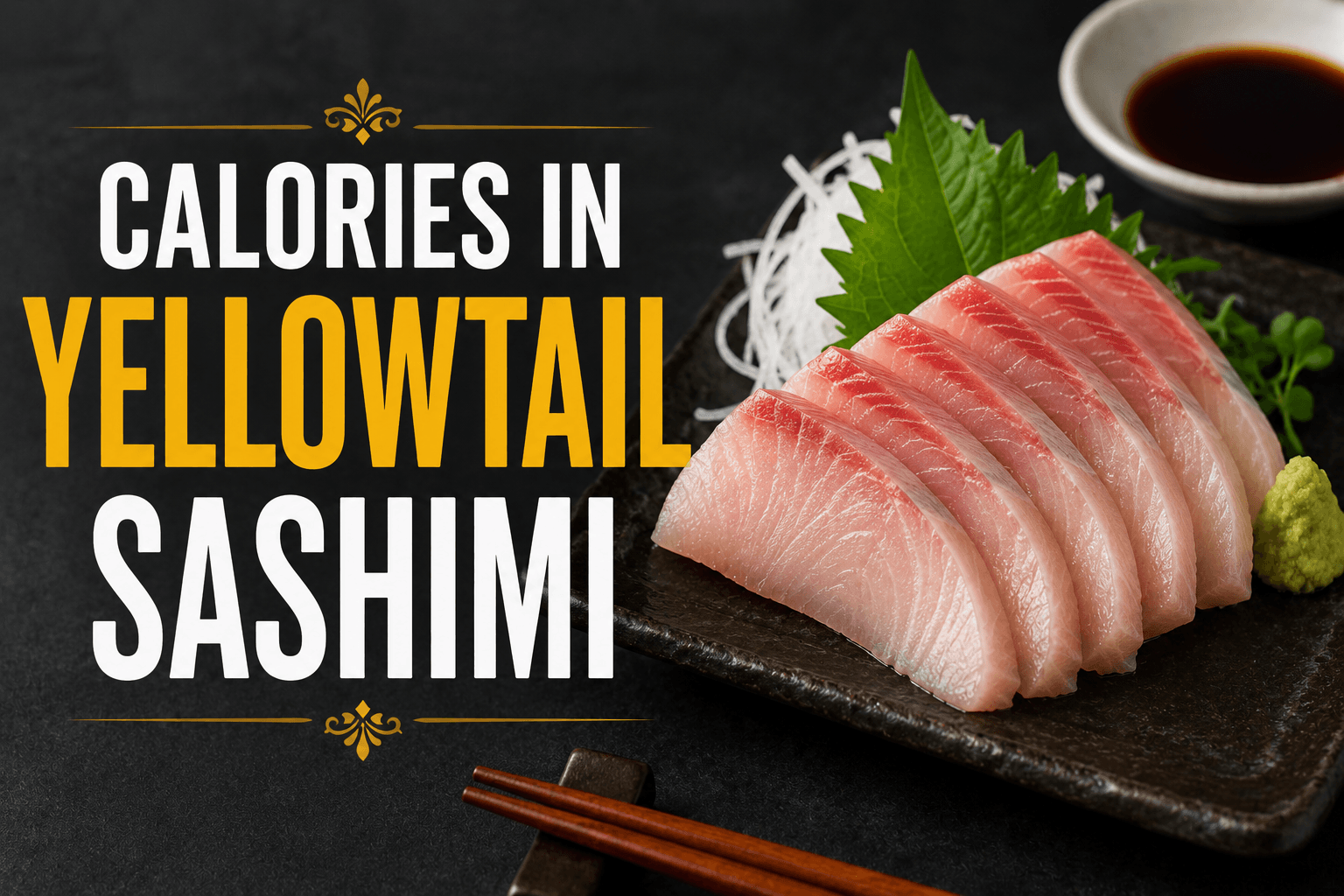
Have you ever heard of yellowtail sashimi? If you are a person fond of sushi and Japanese foods, then you must be a fan of hamachi or yellowtail sashimi. This is a pale-pink coloured food with buttery texture and mild flavour. But is this healthy for you at all?
This article will give you a detailed account of the calorie content in yellowtail sashimi, whether you will find any nutritional components in this sushi, the health benefits of yellowtail sashimi and other details.
Amounts of calories present in yellowtail sashimi:
Yellowtail sashimi is not only moderate in terms of calorie content, it is also a rich source of some of the most vital nutritional components that are vital for your health.
There are different types of factors that are responsible for the difference in net calorie contents in yellowtail sashimi. Some of them can be listed below:
The amount of yellowtail fishtail consumed, that is, the portion size
The amount of butter used while making the dish
The way the sushi has been cooked
The ingredients added into this sushi.
But on an average, each standard serving of raw yellowtail sashimi, weighing around 3 ounce or approximately 85 gram can roughly contain 125 to 135 kcal of calories. Most of the calories in yellowtail sashimi is derived from the high amounts of protein that are present in yellowtail fish used in making this sushi.
Nutritional profile of yellowtail sashimi:
Being made primarily from fish, yellowtail sashimi is a rich source of high quality animal protein. But you will find both macro and micro nutrients in this sushi. Here is a complete list of the common nutritional elements in each serving of yellowtail sashimi along with an approximate measure of the amounts of nutrients present:
Protein: 20 grams
Fat: 5 grams (with a high proportion of unsaturated fats)
Carbohydrates: 0 grams
Vitamins: Vitamins B12 and D
Minerals: selenium and potassium
Omega-3 fatty acids: EPA and DHA.
What are the health benefits of having yellowtail sashimi?
Yellowtail sashimi is made from a type of fatty fish, it can yield various types of health benefits. Below is a list of some of the major health benefits of having yellowtail sashimi:
1.Helps in lowering high blood pressure
2.Reduces the risks of inflammation
3.Zero carb content can be beneficial for PMOS patients
4.High protein content can be good for ketogenic diet.
Which expert to consult before having yellowtail sashimi?
Before having yellowtail sashimi, you may consult with a registered nutritionist expert or a dietitian . This doctor will give you a detailed idea regarding the portion size of your total sashimi, how frequently you can have this sushi, and other details.
Final Thoughts:
Yellowtail sashimi is made from yellowtail fish which is a kind of fatty fish and thus it is always a healthy choice to have this Japanese dish. But be careful while having this, as there are chances of food-borne diseases from this sushi.
Author

Bidiptaa Sen
MA in Mass Media and Communication, Jadavpur University With 3.5+ years of experience in writing marketing and SEO content on healthcare and wellness, I write articles that help people to get an idea regarding medicines that are prescribed, how to improve their wellness care and educate people how to choose accurate health facilities. My communication skills, depth of knowledge in media management and strategic methods for better social media engagement and improving readers' experience through extensive research on the healthcare scenario.
View profile