14-Month-Old Toddler Nutrition
On this page
Overview
The process of growing up is very fascinating, hence the more it fascinates the parents the more cautious they become. And that is fine. Caring extra about your little ones is a very natural habit. Because they are dependent on you in every way. From their feeding to their bathing to sleeping you need to be the one to regulate yourself in each area.
Sometimes people have doubts about whether they are providing the right amount of care and nourishment to their loved ones or not. For instance, we can talk about how one needs to provide the right amount of nutrition and how they need to do it.
When the toddler reaches the age of 14 months or so, it can eat some solid food like bananas apart from breast milk. One needs to keep in mind that the nutrition which is available for their toddler must be in adequate amounts and have all the basic nourishing elements in it.
So how one can make those perfect choices for their loved ones.
While providing and thinking about the right nutrition always refer to the dietitian first for proper knowledge about feeding your toddler. Secondly, it is better to keep track of the eating habits and eating items your toddler consumes.
Nutritional Variety
The toddler is a stage in which the child starts to transit from a small baby to a grown one. They started to utter words, they learned to eat table food, and they also acquired the taste of the food and how the taste differs from one another. During the age period of “an infant” breast milk and formula milk are the right amount of nutrition. But as soon as the development and growth took place, the nutrition requirements also changed and increased.
We all know that a healthy base is a lifetime’s achievement, the proper nutrition during the first two years of the child’s life plays a vital role in building that base. It will also create healthy lifestyle patterns and allow him to live a good healthy life. When the child reaches the age of 6 months, one can introduce him to the foods and drinks apart from breast milk and formula milk.
In this stage, the food or drinks which your child consumes comes under the category of complementary foods. They are called complementary food because apart from feeding your child with breast milk and infant formula they are added as a part of his or her diet.
Depending upon their age, size, and activity level, the diet will gradually increase. On average, a toddler needs about 1000-1400 calories a day.
This is just average data, the rest depends upon the requirements of your toddler. We know everyone is unique and this means that they have different metabolism rates as well. If he or she is provided with an adequate supply of food they will give you cues you need to understand those cues.
One also needs to keep in mind that nutrition is average and if you are not hitting the perfect mark it does not matter, what matters is that your child is getting adequate healthy food.
The recommendation of Dietary Guidelines for Americans and the American Academy of Paediatrics, states that children should get introduced to other foods rather than breast milk or infant milk formula. If someone is introducing food before 4 months, it is not advisable it might create problems for the child.
How can one know that their child is ready for complimentary food apart from breast milk and infant formula milk? One needs to look for these signs:
- If your toddler sits up alone or with some support.
- If your toddler can control his head and neck.
- If your toddler opens their mouth while offering food.
- If your toddler swallows it instead of spitting it out.
- If your toddler brings objects near to his mouth.
- If your toddler tries to chew toys or objects near him.
If he exhibits any of these signs you should know that now you need to introduce him to some different food instead of giving him only breast milk or formula milk.
What will be the ‘food’ which you need to introduce to your toddler?
It is said that you do not need to give the foods in a certain order, it needs to be a random process. The foods which can be given are as follows:
- Infant Cereals: These cereals are specially for children (toddlers), they help them in building a good strong base.
- Meat: Meat can be given to them but in a limited and accountable amount, as it is a good source of protein.
- Egg: Egg can also be given as it is full of protein and necessary nutrients.
- Fruits: Fruits can also be given to a toddler, but while giving them one needs to keep in mind that they can not get stuck in the food pipe of their toddler.
- Grains: Grains are very good for toddlers. You can give these to your toddler.
- Yoghourts: Yoghourts are a source of calcium and they are very good in building bones and the body structure.
- Cheese: Cheese can also be given to a toddler.
If you are giving infant cereals to your child it is important that you should give him different types of cereals not only a particular type. These can be oat cereals, barley, and multi-grain cereals. Sometimes people only provide rice cereals to their infants, what happens is that providing only rice cereals is responsible for exposing children to arsenic exposure.
How can you make your child consume these foods?
First, you need to be patient during this process. Let him try to have one single-ingredient food at a time. This results in helping you to figure out which food is easily consumable by him or her and which food is not. Apart from that, this will also help you to understand whether he or she has any type of food allergies or not, so in the future, you can avoid having that food. So whenever you introduce any food to your toddler you need to wait for at least 3 – 5 days between each food just to analyze food allergies and your child’s preferences as well.
After the first step of introducing food, you need to introduce foods that come under the category of ‘Potentially Allergenic Foods.’ These foods include:
- Cow’s Milk
- Dairy Products
- Eggs
- Fish
- Shellfish
- Tree Nuts
- Peanuts
- Wheat
- Soy
- Sesame
These foods should be introduced once a child develops the habit of consuming food apart from breast milk. Moreover, cow’s milk should be given after 12 months of age. But other dairy products like yogurts can be given before the age of 12 months. If your child has or develops any type of allergy regarding any food, you need to consult your doctor immediately.
How can one prepare food for their toddlers?
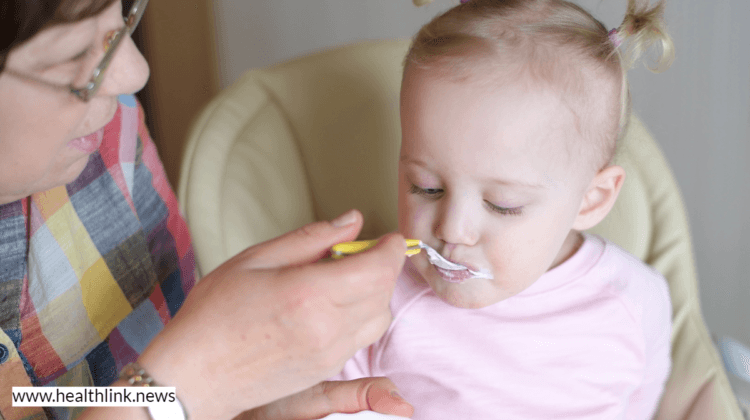
As their teeth are not fully developed it is advisable to give them the food in a mashed or pureed form, in a smooth form so they can easily consume them. Consuming new food can make your child cough and gag sometimes because his or her oral skills are not still developing. Sometimes because of negligence, a child can consume some food that has the choking potential. One needs to be aware of that and always make sure that they consume food in your presence and avoid objects which they might intake in your absence.
Try to prepare food that can easily dissolve in saliva so this will also reduce the chances of choking.
Some recommendations while preparing food for your little ones (especially toddlers):
- Mix cereals (oats, barley, or multigrain) with breast milk, formula milk, or water to make it smooth for eating.
- Make a puree of the vegetables or fruits so they can consume it easily.
- You can cook hard fruits or vegetables so you can mash them or you can make their puree very easily and your toddler can eat it without having any problem.
- You can cook food until it gets very soft and mash it with a fork so your toddler can easily have it.
- Remove all fat, skin, and bones from the meat, poultry, or fish before cooking. And once it is done, mash the pieces with the fork and then give it to your toddler.
- Always cut the fruits or veggies into small pieces so they can easily be eaten by your toddler.
- You can cut cylindrical foods like hot dogs, sausages, and string cheese into short and thin strips instead of round pieces that could get stuck in the food pipe of your child.
You can follow these recommendations and your child can enjoy different tastes. You just need to be cautious while they are having food, it is always advisable that the presence of a parent is necessary while their loved ones are having food.