Why Does the Body Need Electrolytes?
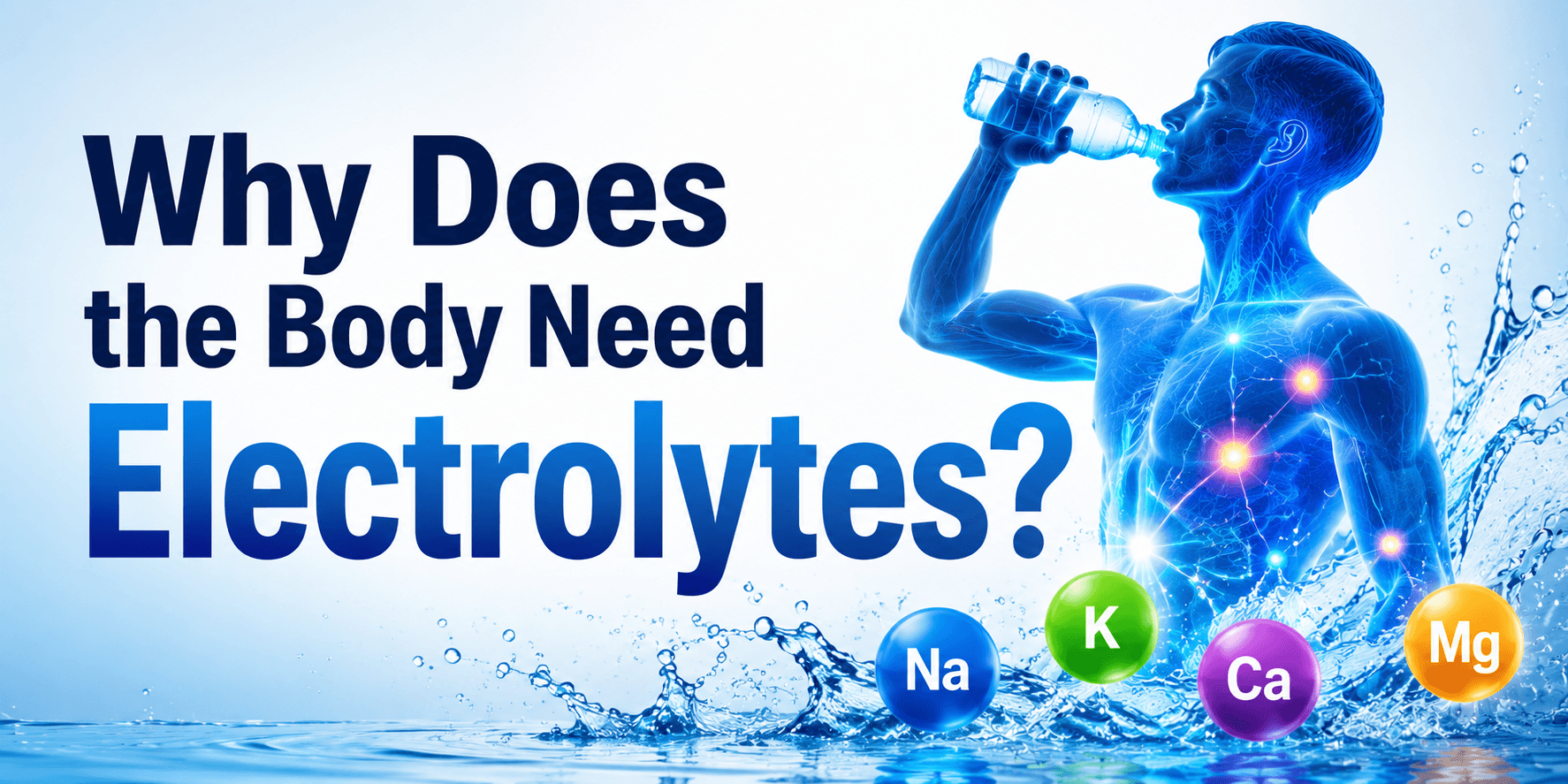
Certain basic facts to know about electrolytes:
Electrolytes are some of the most vital components that your body requires to carry out some of the major physiological activities of the body, but also to regulate proper fluid balance in the body. But before you know whether electrolytes are needed in your body, it is important to know what electrolytes actually are.
What are electrolytes all about?
If you consider your body as a complex structure of biological activities, then electrolytes are certain types of chemical components that act in the form of electricity. Electrolytes are mostly minerals that consists of two types charges (positive and negative). These minerals are usually naturally charged and and they help to maintain the fluid balance by supporting the entire physiological system.
But have you ever wondered why we need electrolytes? This article is going to give you a detailed account of why we need to have electrolytes in the body, how electrolytes can maintain fluid balance, what happens when imbalance occurs and other details.
What is the requirement of electrolytes in the human body?
The human body is made up of 60 percent water, Thus, the body requires charged minerals and to form electric pathways that can help carrying out some of the most vital physical processes, Your body consists of electrolytes such as sodium, potassium, calcium, magnesium, chloride, phosphate, and bicarbonates -- all of which form electrolytic compounds with a positively charged and a negatively charged ion.
These electrolytes are used in the body in the form of active chemical switches and triggers instead of being passively as a fuel. These electrolytes can aid better and more effective absorption of water into the cells. This is particularly useful for your heart health, because by managing blood pressure evenly, electrolytes can help to reduce the risks of cardiovascular diseases.
The health benefits of electrolytes:
Electrolytes usually flow through the blood vessels, fill the interstitial spaces between the cells and tissues, and are present tightly inside our cells. These helps to result into various types of health benefits such as follows:
Maintaining healthy functions of the muscle and nerve tissues
Helps in optimized hydration
Helps in maintaining healthy heart rhythm
Maintains healthy pH balance in the body.
These are mostly the reasons why various health care professionals recommend their patients to have more electrolytes (or ORS solutions, for example), during strenuous exercises because a lot of water has been lost through sweat. You may also need more electrolytes in your body when you are recovering from an illness for better hydration and resuming mineral balance in the body.
What are the fundamentals of electrolytic balance in the body?
The biological processes that go on each day in your body to keep you healthy use up the stored ionic energy. Here is a list of some of those physiological operations that are performed in the body:
1.Maintaining osmotic pressure and fluid balance:
A process known as osmosis is carried out in the body for helping water to flow naturally toward the higher concentrations of solutes. It is precisely the sodium-potassium balance that controls the flow of water. While sodium is the primary electrolyte outside your cells that decides where the water will flow, potassium manages the fluid volumes inside your cells. So, these two minerals work as electrolytes to maintain the overall hydration in your body.
2.Brain functions and nerve transmissions:
Various functions that your body performs -- be it a physical function or simple muscle movements as commanded by the brain are often controlled by the electrolytic balance in the body. So, it is highly crucial for you to maintain healthy balance of electrolytes to promote better brain functions and nerve transmissions. It is through what scientifically is known as action potential, the lightening charge travels down your nerve fibers and this enhances your brain functions to easily communicate with your body in no time.
3.Improving contraction and relaxation of the muscles:
Just like nerve functions, muscular activities in your bodies that include simple movements or regular locomotion will require proper, coordinated balance of electrolytes in the body.
Minerals such as Magnesium plays a major role here. This mineral usually acts as a natural calcium blocker. Thus minerals in the bone joints, such as calcium in particular, is forcefully sent back into its storage compartments. Under such circumstances, the muscle fibers can relax. This is the principle of relaxation using electrolytes. The opposite condition happens for contraction of muscles as well. Without this connection between calcium and magnesium, smooth muscle movements can become difficult.
How do electrolytic minerals function in the body?
The minerals that are required the most in your body for maintaining healthy fluid balance are sodium and potassium. The body keeps sodium ions outside the cells while the potassium charge stays inside, the body creates a state of constant electrical and chemical tension, which is scientifically known as the resting membrane potential. This is a tension, which can exactly function in the form of a fully-charged battery, because of the functions of the positive and negative charged ion arrangement.
So, when the body needs to perform any specific physiological function, it simply needs to open up the microscopic areas that are present in the cell membrane, and then these charged ions will rush through and the stored electrical energy within them would be eventually used up.
Final Thoughts:
To conclude, it can be said that electrolytes are some of the most important parts of the body that help you to maintain your fluid balance. Electrolytes, especially sodium and potassium function in the body to keep your organs healthy and make sure you stay hydrated. These electrolytes not only help to maintain your blood pressure but also ensure that you stay healthy.
So, here is a word of caution it is important that you keep your electrolytes in balance (especially sodium and potassium), and if test results reveal that any particular mineral is low or in excess than the usual count, seek expert opinion at once.
Also Check: Signs That You May Not Be Drinking Enough Water
Author

Bidiptaa Sen
MA in Mass Media and Communication, Jadavpur University With 3.5+ years of experience in writing marketing and SEO content on healthcare and wellness, I write articles that help people to get an idea regarding medicines that are prescribed, how to improve their wellness care and educate people how to choose accurate health facilities. My communication skills, depth of knowledge in media management and strategic methods for better social media engagement and improving readers' experience through extensive research on the healthcare scenario.
View profile