What To Expect During A Female Hair Transplant Consultation In Mumbai
On this page
- Reviewing Your Hair Loss History
- Discussing Previous Hair Loss Treatments
- Understanding Medical And Lifestyle Factors
- Why Blood Tests May Be Recommended
- Examining The Scalp And Hair Density
- Using Trichoscopy For A Closer Assessment
- Assessing The Donor Area
- Estimating Available Grafts
- Discussing Hair Transplant Techniques
- Understanding FUE Hair Transplantation
- Understanding FUT Hair Transplantation
- Planning The Transplant Area
- Creating A Suitable Hairline Design
- Discussing Expected Results And Recovery
- Understanding The Hair Growth Timeline
- Reviewing Pre-Procedure Instructions
- Preparing Questions For Your Specialist
- Understanding The Cost Of Treatment
- Why Individual Assessment Matters For Pricing
- Deciding Whether Surgery Is Appropriate
- Considering Non-Surgical Treatment Options
- Choosing A Qualified Hair Restoration Specialist
- Reviewing The Complete Treatment Plan
- Conclusion

Hair thinning in women can affect confidence, styling choices, and everyday comfort. Although temporary shedding may improve with appropriate medical care, persistent female pattern hair loss can require a more detailed assessment to identify its cause and determine suitable treatment options. For women seeking professional hair loss treatment in Mumbai , a consultation with a qualified hair restoration specialist can provide valuable information about scalp health, hair density, and possible treatment pathways.
A female hair transplant consultation is more than a discussion about surgery. It involves reviewing medical history, examining the scalp, assessing the donor area, discussing treatment techniques, and setting realistic expectations. Understanding what happens during the appointment can help you prepare and make the consultation more productive.
Reviewing Your Hair Loss History
The consultation usually begins with a detailed discussion about your hair loss. The specialist may ask when you first noticed thinning, whether the shedding has increased over time, and which areas of the scalp are most affected.
Your family history can also provide useful information. Female pattern hair loss may have a hereditary component, while other forms of shedding can be associated with nutritional factors, hormonal changes, medical conditions, or certain medications.
Discussing Previous Hair Loss Treatments
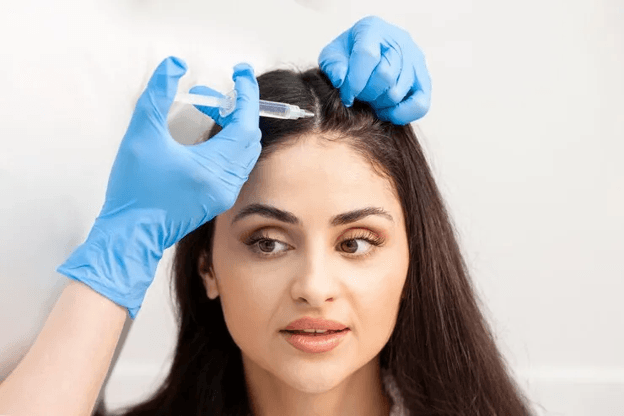
The specialist may ask about treatments you have previously used, including topical products, oral medication prescribed by a doctor, PRP therapy, or other scalp treatments. Sharing this information allows the clinician to understand how your hair has responded to previous approaches.
You should also mention any previous procedures involving the scalp, as these may affect future treatment planning.
Understanding Medical And Lifestyle Factors
Female hair loss can have several contributing factors. During the consultation, the specialist may ask about recent changes in your health, diet, stress levels, medication, and hormonal history.
Pregnancy, significant weight changes, thyroid disorders, iron deficiency, and other factors may contribute to increased shedding. Identifying these issues is important because not every type of hair loss requires a transplant.
Why Blood Tests May Be Recommended
If the medical history suggests a possible underlying cause, your doctor may recommend blood tests. These can help assess factors such as iron levels, thyroid function, or other relevant markers.
Existing test results can be useful during the appointment, particularly if they were completed recently. The specialist can use the information alongside the scalp examination to determine whether further medical investigation is appropriate.
Examining The Scalp And Hair Density
A physical scalp examination is an important part of the consultation. The specialist will assess areas where thinning has occurred and examine the condition of the scalp.
They may evaluate hair density, strand thickness, scalp health, and the distribution of existing hair. This helps determine the pattern and severity of hair loss.
Using Trichoscopy For A Closer Assessment
Trichoscopy uses magnification to provide a closer view of the scalp and hair follicles. It can help the specialist identify differences in hair shaft thickness, follicular patterns, and other scalp characteristics.
The findings can support the clinical assessment and help determine whether a surgical procedure may be appropriate.
Assessing The Donor Area
A hair transplant depends on having a suitable supply of healthy donor follicles. For women, the donor area is commonly located towards the back and sides of the scalp, although its suitability varies between individuals.
The specialist will assess the density and stability of the donor hair before estimating whether enough grafts can be safely harvested.
Estimating Available Grafts
The number of available grafts is an important part of treatment planning. The specialist will consider donor density, the size of the thinning area, and the required level of coverage.
A detailed assessment helps prevent unrealistic expectations and ensures that the proposed procedure is based on the patient's available donor resources.
Discussing Hair Transplant Techniques
Once the assessment is complete, the specialist can explain which hair restoration techniques may be suitable. FUE and FUT are two commonly discussed methods, although the recommended approach depends on individual circumstances.
The doctor should explain how each technique works, its limitations, recovery requirements, and how it may fit into your treatment plan.
Understanding FUE Hair Transplantation
Follicular Unit Extraction involves removing individual follicular units from the donor area before placing them into selected areas of thinning.
The specialist will explain whether FUE is appropriate based on donor density, hair characteristics, the number of grafts required, and the distribution of hair loss.
Understanding FUT Hair Transplantation
Follicular Unit Transplantation involves removing a strip of skin containing hair follicles from the donor area. Individual follicular units are then prepared for transplantation.
FUT may be discussed when the specialist believes it could provide an appropriate graft yield for a particular patient. The consultation should include information about the linear donor-area scar associated with this technique.
Planning The Transplant Area
A female hair transplant requires careful planning because the surgeon must work around existing hair while addressing areas of reduced density. The treatment plan may focus on the frontal region, central scalp, parting area, or other locations depending on the pattern of thinning.
The specialist will assess how the transplanted follicles can be distributed within the available donor supply.
Creating A Suitable Hairline Design
Hairline design is an important part of the consultation. The specialist may use markings or photographs to demonstrate the proposed hairline and discuss how it relates to facial proportions and existing hair.
The goal is to create a plan that is appropriate for the patient's age, hair characteristics, facial structure, and long-term hair loss pattern.
Discussing Expected Results And Recovery
A consultation should include an honest discussion about expected results. Hair transplantation does not produce immediate changes, and transplanted follicles require time to progress through the normal growth cycle.
The specialist may explain the expected stages following the procedure, including the initial healing period, temporary shedding, and subsequent hair growth.
Understanding The Hair Growth Timeline
New growth generally takes several months to become noticeable, and the maturation of transplanted hair can continue for many months. The exact timeline varies between patients.
Understanding this process before surgery can help patients prepare for the recovery period and avoid expecting immediate results.
Reviewing Pre-Procedure Instructions
If you are considered suitable for surgery, the clinic may provide instructions to follow before the procedure. These instructions can vary according to your medical history and the technique being used.
You may be advised about medication, supplements, alcohol, hair products, and scalp care. Always follow the specific instructions provided by your treating medical professional.
Preparing Questions For Your Specialist
A consultation is also an opportunity to ask questions. You may want to ask about the recommended technique, estimated graft requirement, recovery period, potential risks, aftercare, and the experience of the surgical team.
It can be useful to write your questions down before the appointment so that important concerns are not overlooked.
Understanding The Cost Of Treatment
The cost of a female hair transplant can vary considerably. Factors may include the number of grafts required, the technique selected, the complexity of the procedure, and the clinic's professional fees.
A reputable consultation should provide a clear explanation of the proposed treatment and associated costs rather than relying on a generic estimate.
Why Individual Assessment Matters For Pricing
Every patient's hair loss pattern is different. Someone with limited thinning may require fewer grafts than someone with more extensive loss.
For this reason, an in-person assessment can provide a more meaningful estimate than a standard advertised price.
Deciding Whether Surgery Is Appropriate
Not every woman experiencing hair thinning will be an appropriate candidate for transplantation. If the specialist identifies an active condition, unstable hair loss, or insufficient donor density, they may recommend addressing these issues before considering surgery.
In some cases, medical treatment or other non-surgical options may be more appropriate.
Considering Non-Surgical Treatment Options
Depending on the diagnosis, a specialist may recommend medical management, scalp treatments, nutritional correction, or monitoring before proceeding with transplantation.
This approach can help ensure that the treatment plan addresses the underlying cause of hair loss rather than focusing solely on areas where thinning is visible.
Choosing A Qualified Hair Restoration Specialist
The quality of the consultation is an important consideration when selecting a hair restoration provider. Patients should look for appropriate medical qualifications, experience with female hair loss, transparent communication, and a treatment plan based on individual assessment.
A thorough consultation should not feel rushed. The specialist should explain the diagnosis, available options, potential limitations, and expected recovery in understandable language.
Reviewing The Complete Treatment Plan
Before making a decision, ensure you understand the proposed procedure, graft estimate, donor-area plan, recovery requirements, aftercare, and possible risks.
Taking time to review these details allows you to make an informed decision about whether a hair transplant is appropriate for your circumstances.
Conclusion
A female hair transplant consultation in Mumbai provides an opportunity to understand the reasons behind hair thinning and assess whether surgical restoration is suitable. The appointment typically includes a review of medical history, scalp examination, donor-area assessment, discussion of FUE or FUT, hairline planning, recovery information, and cost considerations.
For women seeking a hair transplant for women in Mumbai , a personalised assessment is an important starting point. The right treatment depends on the cause and pattern of hair loss, donor availability, overall health, and individual expectations. A detailed consultation with a qualified specialist can help establish a practical treatment plan and provide clear information before any decision about surgery is made.
Author

DocIndia Editorial Team
Check cache DocIndia Editorial Team works with Doctors to create informative articles.
View profile