Cold-Pressed Oils vs Ghee: When to Use Each in Your Kitchen
On this page
- What Makes Cold-Pressed Oil Different
- What Makes Ghee Different
- Smoke Point: Why It Decides Your Cooking Method
- Flavor Profile: Sharp and Pungent vs Rich and Nutty
- When to Use Cold-Pressed Oil in Your Kitchen
- When to Reach for Ghee Instead
- Can You Use Them Together?
- Making the Right Choice for Your Kitchen
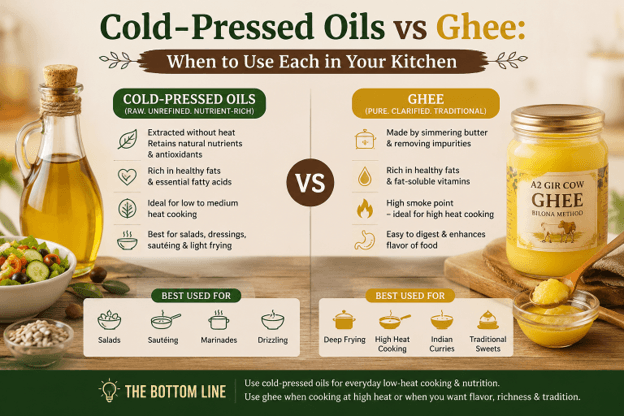
Cold-pressed oils and ghee are two of the most common cooking fats used in Indian homes. While both offer health benefits, they aren't meant to be used in the same way. Choosing the right one for the right dish can improve the taste, nutrition, and even how well your food cooks.
A good place to start is with the oil most Indian kitchens grew up on: cold pressed mustard oil . Extracted without heat or chemical solvents, it retains its natural pungency, color, and nutrients far better than refined alternatives, which is exactly why it's seeing a strong comeback in home kitchens today.
What Makes Cold-Pressed Oil Different
Cold-pressed oil is produced by cold pressing of seeds or nuts without the use of heat or chemicals used during the process of refining oil. Cold pressing retains more of the aroma and nutritional content of the oil. In contrast, refined oils undergo the process of heat extraction and chemicals are added in order to increase the longevity and neutrality of the oil.
Cold-pressed mustard oil is valued in Indian cuisine for its sharp, spicy taste and ability to transform simple meals like vegetables, pickles, and deep-fried snacks into something special. Its history stretches back to the kitchens of Bengal, Punjab, and North India, where its unique taste is deemed an important ingredient of some regional recipes.
What Makes Ghee Different
Ghee is clarified butter, made by simmering butter until the milk solids separate and settle, leaving behind pure butterfat. This process gives ghee a nutty aroma, a rich golden color, and a longer shelf life than regular butter, without needing refrigeration.
Pure buffalo ghee , specifically, tends to have a denser, richer texture than cow ghee, along with a higher fat content, which makes it a favorite for tempering dals, finishing curries, and traditional sweet preparations where a heavier, more indulgent mouthfeel is desired.
Smoke Point: Why It Decides Your Cooking Method
The difference in smoke point between cold-pressed oil and ghee is one of the most useful in this case. After the raw pungency has been cooked out of it, the smoke point of cold-pressed mustard oil is rather high, and it can be used for deep frying, tempering and sautéing.
Also, the smoke point of ghee allows using it for cooking with high temperatures such as frying and roasting, when it does not decompose fast as other refined oils. This is one of the reasons why cold-pressed oil and ghee are stable ingredients for Indian cuisine with numerous techniques requiring frying and tempering.
Flavor Profile: Sharp and Pungent vs Rich and Nutty
Flavor is usually the determining factor here. Cold pressed mustard oil lends a strong, tangy kick to dishes that is just perfect for pickles, fish curries, and foods where you need the taste to transform from raw to cooked. Ghee provides warmth and richness to the meal, its sweet, caramel-like taste distinguishing dishes like dal tadka and khichdi from those made using oil.
In many Indian households, the practice of using mustard oil to cook the dish first and then adding some ghee at the end of cooking is followed.
When to Use Cold-Pressed Oil in Your Kitchen
Cold pressed oil is usually a better option for:
● Sautéing or stir-frying dishes that require a neutral to mild flavor base
● Pickling foods that require the preserving properties of mustard oil along with its taste
● Fry-ups or snacks that would benefit from a more intense finish
● Dressings and cold dishes that retain the oil’s natural flavor and nutrients
When to Reach for Ghee Instead
Ghee is ideal for the following applications:
● Tempering of dals and curries because of the flavor contribution of the ghee.
● Preparation of traditional desserts and cooking during festivals because richness and texture play an important role in those dishes.
● To roast dry fruits and spices due to natural affinity of ghee with spices.
● To garnish dishes such as khichdi and paratha.
Can You Use Them Together?
Absolutely. In fact quite a few traditional recipes already do. The way it works is that the basic recipe, such as curries or dal, is prepared using cold pressed oil, and then topped off with tadka which is prepared in ghee. This means that you get the convenience of using oil in the cooking process along with the flavor of ghee.
Making the Right Choice for Your Kitchen
It is not easy to decide which of the two types of fats is better. Again, it will depend on what you are cooking, what kind of taste you want, and your background in traditional cooking. It is more important to use high-quality cold-pressed oil and good quality ghee than to choose any other type of oils and fats that will be inferior to both of these.
Keeping both cold-pressed mustard oil and ghee in your pantry will give you the opportunity to prepare food just like it has always been prepared in Indian kitchens.