Minimally Invasive Cardiac Surgery: Technique Comparison, Recovery Time and Outcomes
On this page
- How Minimally Invasive Cardiac Surgery is Performed
- Types of Minimally Invasive Cardiac Procedures
- Minimally Invasive Surgery vs Open-Heart Surgery
- Recovery Timeline After Minimally Invasive Heart Surgery
- Patient Eligibility for Minimally Invasive Cardiac Surgery
- How to Choose a Hospital for Minimally Invasive Cardiac Surgery?
- Questions to Ask Your Cardiac Surgeon
- Conclusion
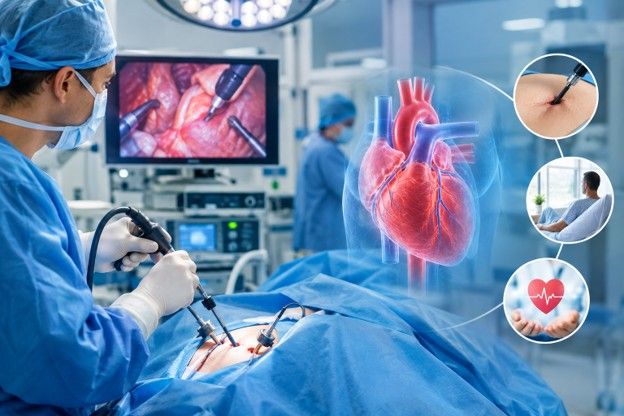
Advances in heart care have expanded the treatment options available for many heart conditions. In suitable cases, minimally invasive cardiac surgery allows certain procedures to be performed through smaller incisions or catheter-based techniques, which may support a quicker recovery and a shorter hospital stay.
Mumbai is recognised for its advanced healthcare facilities and experienced cardiac specialists, offering access to a wide range of modern heart treatments. If you are considering treatment at a heart hospital in Mumbai , understanding the available surgical approaches can help you make informed decisions with your cardiac specialist. Understanding these surgical approaches can help patients discuss suitable treatment options and recovery expectations with their cardiac specialist.
How Minimally Invasive Cardiac Surgery is Performed
Traditional open-heart surgery usually involves opening the breastbone to reach the heart. Minimally invasive cardiac surgery avoids this approach where possible. Surgeons may work through small incisions between the ribs or use special instruments to reach the heart with less disruption to the chest wall. Some procedures use robotic assistance, where the surgeon controls advanced instruments from a console. Other treatments are done through a catheter inserted into a blood vessel. The aim is to treat the heart condition effectively while reducing physical trauma. However, every patient needs a detailed assessment before this approach is advised.
Types of Minimally Invasive Cardiac Procedures
Several procedures come under minimally invasive cardiac care. The main techniques include:
● Mini-thoracotomy, where surgery is done through a small incision between the ribs
● Robotic-assisted cardiac surgery, where the surgeon uses robotic instruments for precise movements
● Transcatheter valve procedures, such as TAVI, for selected valve conditions
● Keyhole bypass surgery for carefully selected patients
The choice depends on the heart condition, scan findings, overall health, and history of previous surgery. A heart team usually reviews these details before recommending a treatment plan.
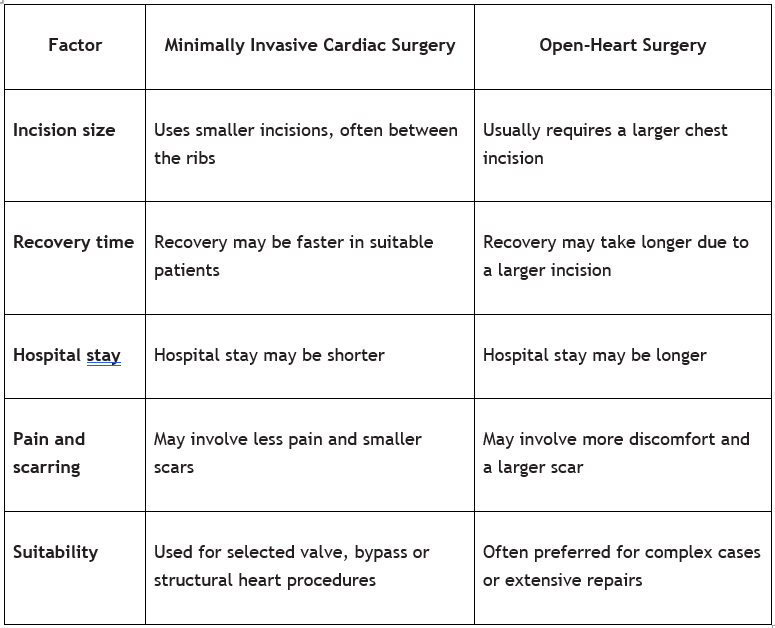
Minimally Invasive Surgery vs Open-Heart Surgery
Both minimally invasive surgery and open-heart surgery have specific roles in cardiac care. The suitable approach depends on the patient’s heart condition, overall health and treatment needs.
Recovery Timeline After Minimally Invasive Heart Surgery
Recovery is often shorter after minimally invasive cardiac surgery than after open-heart surgery. Many patients may leave the hospital within a few days, depending on the procedure and their health condition. Light activity may resume within two to three weeks, although recovery varies from patient to patient.
Driving, work and exercise should restart only after medical approval. Cardiac rehabilitation can help patients regain strength safely through guided exercise and education. Follow-up visits are also important to monitor wound healing, medications, heart rhythm, and overall recovery.
Patient Eligibility for Minimally Invasive Cardiac Surgery
Not every patient is suitable for minimally invasive heart surgery. The cardiac team checks the exact heart problem, age, lung function, heart strength and overall fitness. Previous chest surgery or complex heart disease may also affect the decision.
Patients with selected valve disease, blocked arteries or structural heart conditions may benefit from minimally invasive treatment. In some cases, open surgery may offer a safer or more complete repair. The final decision should be based on clinical assessment and long-term treatment goals. Before advising surgery, doctors may recommend blood tests, ECG, echocardiography, CT scan, angiography or lung assessment. They may also review medicines, allergies, diabetes, blood pressure and previous surgeries to plan the procedure safely.
How to Choose a Hospital for Minimally Invasive Cardiac Surgery?
Outcomes depend strongly on the experience of the cardiac team. A multi-speciality hospital in Mumbai can support complex cardiac care by bringing cardiology, cardiac surgery, anaesthesia, intensive care and rehabilitation together.
Centres such as Reliance Foundation Hospital provide cardiac care through minimally invasive techniques, robotic-assisted surgery and procedures for bypass surgery and valve repair or replacement. This type of coordinated setup can support patients before, during and after surgery. Patients should ask about the team’s experience, case volume, expected hospital stay, complication risks and recovery plan. These details help families understand how the centre manages both the procedure and follow-up care.
Questions to Ask Your Cardiac Surgeon
Before choosing a treatment plan, patients and families can ask:
● Am I suitable for a minimally invasive cardiac procedure?
● Which technique is recommended for my condition?
● How many similar procedures has the team performed?
● What recovery time should I expect?
● What are the risks in my specific case?
● Will I need cardiac rehabilitation after surgery?
These questions make the consultation more focused. They also help patients understand the procedure, recovery plan and long-term care needs.
Conclusion
Minimally invasive cardiac surgery can offer smaller incisions, shorter hospital stays and faster recovery for suitable patients. Techniques such as mini-thoracotomy, robotic-assisted surgery, transcatheter valve procedures and keyhole bypass surgery are selected based on the heart condition and overall health.
When choosing a heart hospital in Mumbai, patients should review cardiac expertise, technology, intensive care support, rehabilitation services and follow-up care. A structured approach helps patients receive appropriate treatment, understand recovery expectations and continue long-term heart care after surgery.
Author

DocIndia Editorial Team
Check cache DocIndia Editorial Team works with Doctors to create informative articles.
View profile