Drinking Water Quality and Health: Hidden Health Risks
On this page
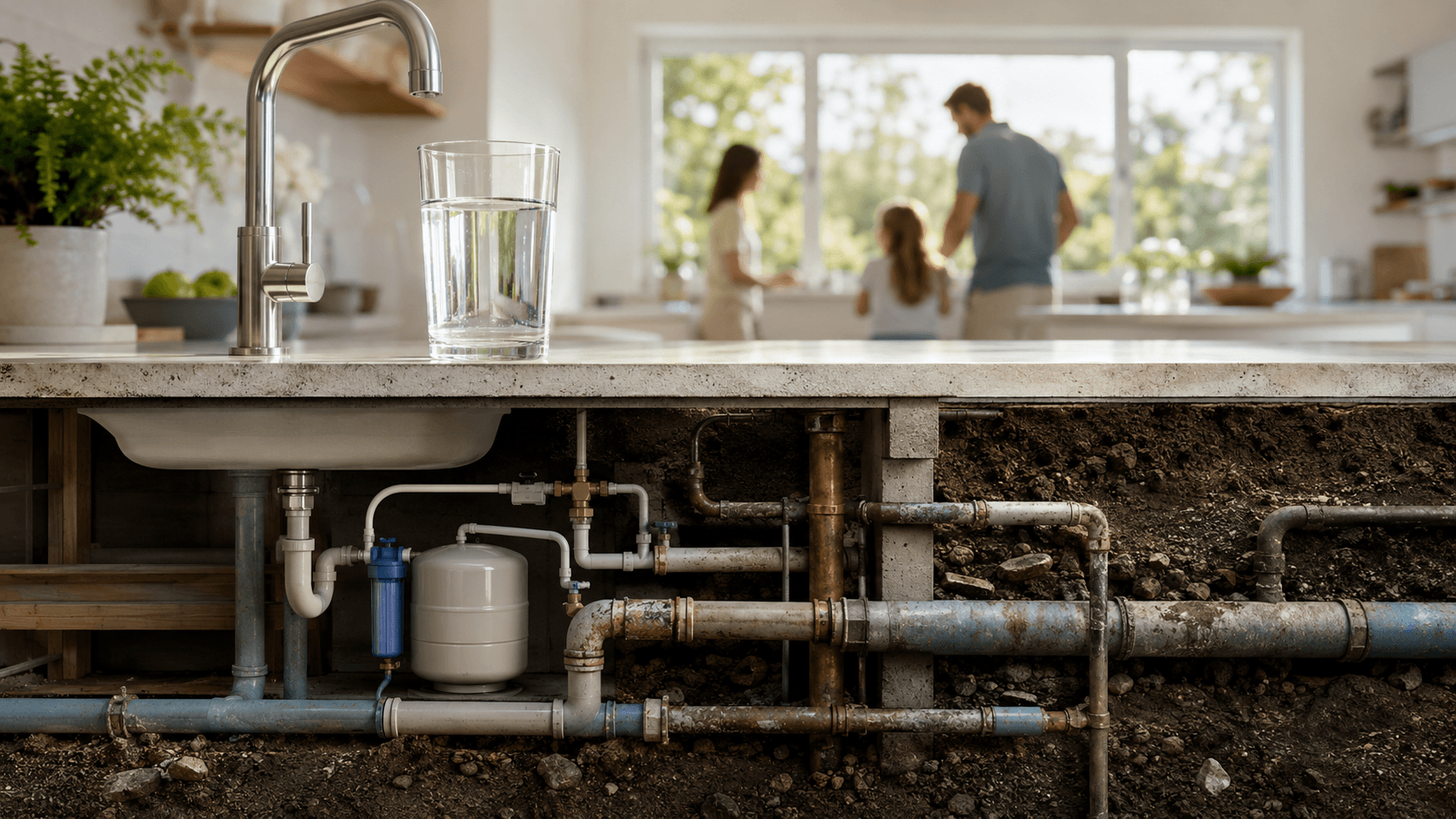
A glass of water can look perfectly fine. Still have something bad in it. Things like bacteria, lead, nitrate and arsenic do not always change the way water looks, smells or tastes.That is why it is easy to overlook the connection between Drinking Water Quality and Health, as many of the risks can be invisible.
The quality of our water is affected by where it comes from, how it is treated, the pipes that carry it, the plumbing in our homes, the tanks that store it and how we handle it, all of which can influence the Health Effects of Poor Water Quality. If there is a problem at any of these points it can change the water that reaches our glass.
The Journey of Our Drinking Water Starts Long Before We Turn On the Tap
Our drinking water can come from the ground, a river or a spring. Water from the ground can naturally have arsenic or fluoride in it while water from the surface is more likely to have sewage, farm runoff and industrial pollution in it. The treatment of our water has to address these dangers.
The journey of our water does not end at the treatment plant. If the pipes are broken they can let things into the water when the pressure drops. Old pipes can also release lead or copper into the water. If the storage tank is not covered or cleaned properly it can introduce microorganisms into the water.
The World Health Organization looks at the path that our water takes from the source to our homes. Of just testing the water at the end they say we should find and control the risks all along the way.
Some Health Problems Show Up Away
The Health Effects of Poor Water Quality can include diarrhea, vomiting, stomach pain, fever and diseases such as typhoid and cholera when drinking water contains harmful microorganisms. The World Health Organization says that least 1.7 billion people are drinking water that has been contaminated with feces. They also say that bad microorganisms in our water cause 505,000 deaths from diarrhea every year.
These are among the Health Effects of Poor Water Quality, as vomiting and diarrhea can cause significant fluid loss and dehydration. Babies, older adults and people with immune systems can get very sick from this. If a lot of people who drink from the source get sick especially after a flood or a pipe breaks we should investigate the source of the water.
Other Health Problems Can Take Years to Show Up
If our water has chemicals in it it can be hard to know because we might not get sick right away. The effect of these chemicals depends on what they're how much of them we are exposed to and how long we are exposed.
Lead is an example of this. It can get into our water from pipes, solder and plumbing fixtures. Children are especially vulnerable to lead because it can affect their brain and nervous system development even if they seem healthy. The CDC says that lead can cause problems at low levels of exposure.
Arsenic is another problem. It can occur naturally in groundwater in some areas. Has been linked to skin changes, heart disease and certain cancers after long-term exposure. High levels of nitrate in our water can also be bad for us for infants under six months.
These examples show that the Health Effects of Poor Water Quality may not always be immediately noticeable, even when someone is exposed to contaminants. We cannot just wait for symptoms to show up to know if our water is safe.
Why Clear Water Can Be Misleading
Just because our water looks, tastes and smells fine does not mean it is safe. If our water is cloudy has sediment in it or smells bad we should pay attention. Lead and many microorganisms cannot be seen or tasted and we need to test our water to detect them.
The same is true for total dissolved solids (TDS) in our water. A TDS meter can estimate how much dissolved material is in our water. It cannot identify what it is. Even if our water has a TDS reading it can still have bacteria, arsenic, lead or pesticides in it.
No treatment can solve all problems. Different systems, like activated carbon, ultraviolet systems and reverse osmosis do jobs. We need to choose a treatment that matches the problem with our water and make sure it is certified to do that job.
Importance of Clean Drinking Water in Our Daily Lives
The Importance of Clean Drinking Water goes beyond simply staying hydrated, as we also use water for cooking, preparing infant formula, making ice and brushing our teeth. We use water for infant formula, cooking, ice and brushing our teeth, which can create ways for us to be exposed to bad things in our water.
If our water tastes or smells bad we might avoid drinking it and choose sweetened drinks instead.. Making our water taste good should not be more important than making sure it is safe.
The World Health Organization says that 2.1 billion people still do not have access to managed drinking water. They define water as water that is available when we need it and is free from contamination. This highlights the Importance of Clean Drinking Water and shows why both access to safe water and its quality matter for our health.
What We Can Do in Our Homes
First we need to understand where our water comes from. If we get our water from a source we should read the quality reports and follow any official advisories. If we have a well or borewell we have a bigger responsibility to make sure our water is safe because it might not be tested regularly.
The CDC says that about one in five private wells in the United States has least one chemical in it that can affect our health. We should test our water through a laboratory especially after a flood, construction nearby damage to our well or a sudden change in our water.
If our test results show that our water has lead, arsenic, nitrate or microorganisms in it we should talk to health authorities or a qualified water professional to figure out what to do. We should not just rely on a general-purpose filter.
We should replace our filters on schedule. Cover and clean our storage tanks safely. If we are told to boil our water we should follow the instructions from our authorities. Boiling can kill disease-causing organisms but it does not remove heavy metals, salts or most chemicals from our water.
The Health Effects of Poor Water Quality can range from short-term illness to health problems that develop after long-term exposure. That is why testing, treating and storing our water properly are more important than how it looks or what the marketing says.Ultimately, the Importance of Clean Drinking Water is about preventing avoidable health risks: safe water helps us stay hydrated, prepare food and support our health without unnecessary exposure to contaminants.
Author bio:
Dvine H2O shares information, about drinking water quality, hydration and wellness based on evidence. Their content helps readers understand water safety and treatment without relying on claims.
Author

DocIndia Editorial Team
Check cache DocIndia Editorial Team works with Doctors to create informative articles.
View profile