Calories in Paneer Paratha Nutritional Information
On this page
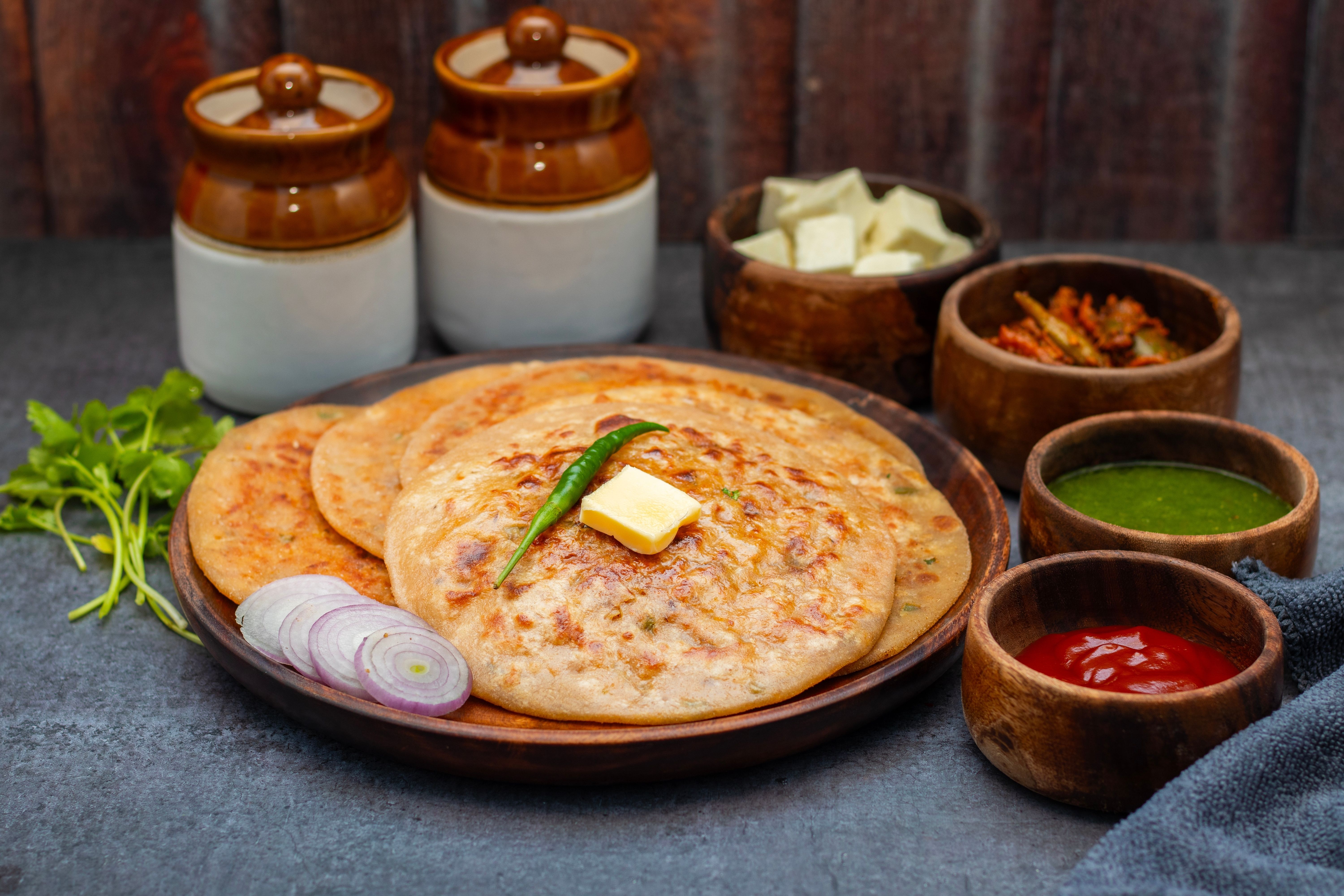
Which Indian does not love to savour a plate of paneer paratha? But are you aware of the number of calories it contains? This article will be a clear guide on the calorie content of parathas, the nutrients present in them, the pros and cons of eating them, and other details.
Calorie content in paneer paratha:
Parathas are high in calorie content as they are made of high amounts of oil and refined flour. All these ingredients usually add to the calorie content. Moreover, the way in which you are making the parathas can also contribute to the calorie content of the parathas. Paneer parathas usually have a filling of paneer, which is often cooked with other ingredients. The calorie content of such a kind of paratha can depend on the filling as well.
On average, the net number of calories that are present in one medium-sized paneer paratha, which may weigh around 180 to 200 grams can 450 to 480 kcal. The calorie content may be less than 500 kcal if you cook the paneer paratha in low oil and the paratha filling contains around 70 to 100 grams of paneer. The calorie content may significantly increase to 500 to 550 kcal if you cook the paneer with moderate oil and the stuffing contains more than 100 grams of cooked paneer.
It is important to remember that the calorie content of paneer parathas can reach up to even 600 kcal when you add more ghee or oil while making them.
Is it healthy to have paneer parathas?
Paneer parathas are not rich in high amounts of nutrients; they are dense in calorie content. It is therefore doubtful to claim whether they are beneficial for your health at all. Here is a list of some of the major health benefits and positive aspects of having paneer parathas:
1. A nutrient source from paneer:
The stuffing made of paneer can be mildly beneficial for your overall health and wellness. Paneer is a dairy product that can provide you with the benefits of calcium and protein. In fact, you are likely to get almost around 15 to 20 grams of protein from each serving of paneer parathas, which is often required in your body for healthy muscle maintenance, hormonal balance, and tissue repair.
2. Keeps you full for long:
Paneer parathas are heavy foods, so once you have them, you are likely to stay full and have enough satiety for a longer duration. This helps to reduce the urge for binge eating or hunger amidst meals.
3. Dense in energy:
Paneer parathas can help to provide enough energy, which is often required for carrying out various types of physiological functions. In fact, paneer parathas, when consumed in moderation, can be a filling meal for those who perform heavy activity or those who have busy routines.
What are the negative sides of having paneer parathas?
Though having paneer parathas is completely unhealthy, there are some potential downsides of having them regularly or in excessive quantities. Some of the major side effects may include the following:
Risks of obesity
Cardiac ailments
Increasing cholesterol from high saturated fats.
Which doctor should you consult before consuming paneer parathas?
Usually, many diet experts would not suggest that you have paneer parathas in excess. Doctors are likely to advise you to consume fried meals such as paneer parathas in moderation as they are high in fat and calories to prevent the risks of side effects on your health. Before you start having paneer parathas, you can consult a registered dietitian or a nutritionist who will be able to guide you regarding how many of these parathas you should have based on calorie intake, whether you can have paneer parathas at all or not, and other details.
Final Thoughts:
Paneer parathas are some of the most common and most loved dishes in any Indian kitchen. They are rich in fats and calories and contain very few nutrients, like protein and calcium from the paneer, carbohydrates, and some amounts of fibre. Though having paneer parathas can help you to have energy and stay full for a long time, you must always consume these parathas in limited quantities to avoid the risks of side effects.
Also Check: Calories in Moong Dal Chilla and Nutritional Information
Authors

Bidiptaa Sen
MA in Mass Media and Communication, Jadavpur University With 3.5+ years of experience in writing marketing and SEO content on healthcare and wellness, I write articles that help people to get an idea regarding medicines that are prescribed, how to improve their wellness care and educate people how to choose accurate health facilities. My communication skills, depth of knowledge in media management and strategic methods for better social media engagement and improving readers' experience through extensive research on the healthcare scenario.
View profile
Surbhi Singhal
Surbhi is dedicated and self-motivated Ph.D. scholar passionate about Content Creation, Editing, and Teaching. I excel in dynamic environments, thrive on challenges, and am eager to contribute my expertise and enthusiasm in pushing the boundaries of knowledge.
View profile