Calories in 1 Roti: Nutrients, Health Benefits, And Many More
On this page
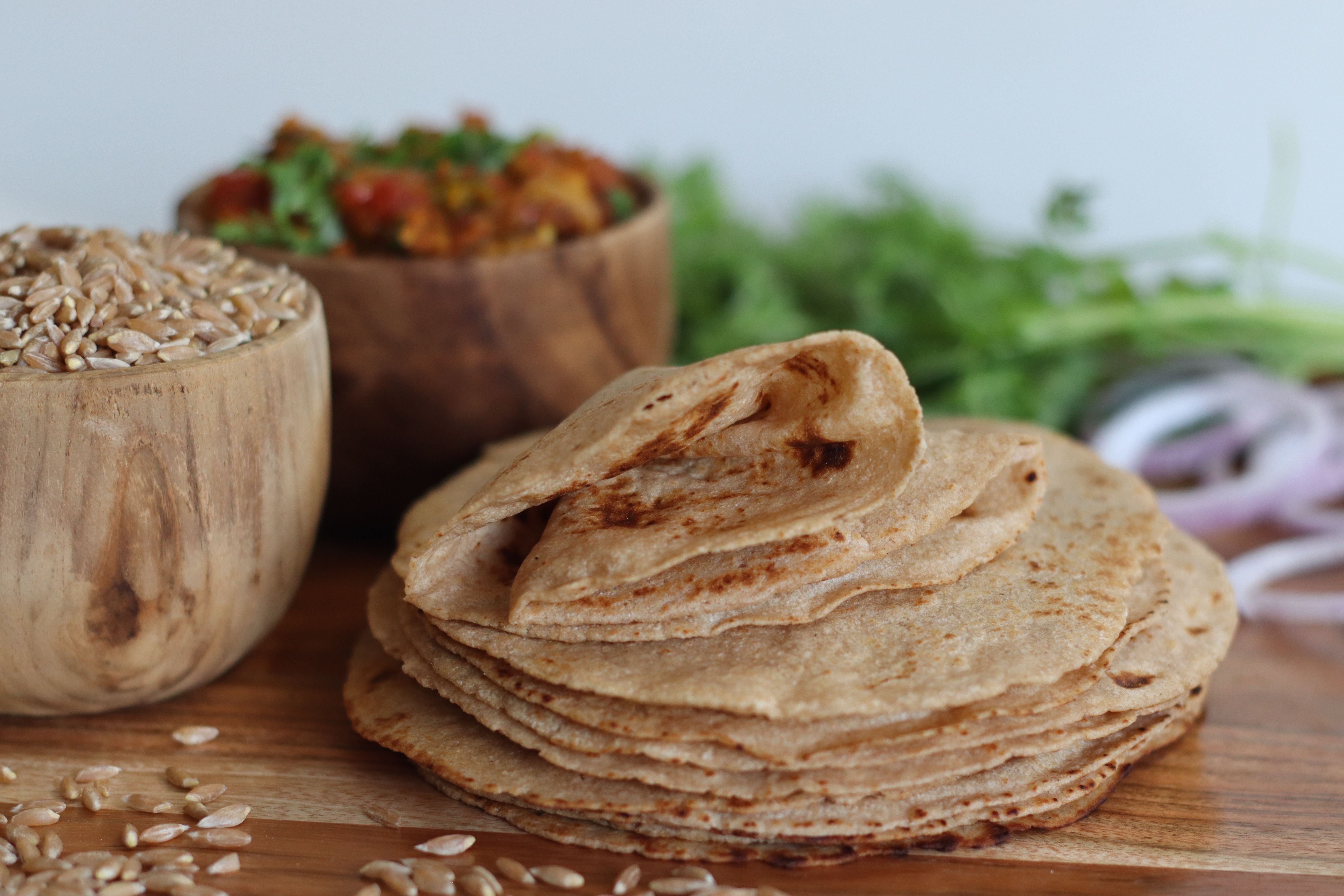
If you are an Indian, roti or chapatis must be one of your go-to food items. In fact, roti is one of the most widely consumed food items in Indian households. There can be different types of rotis, made of different flours and may often consist of stuffing as well.
If you are someone who wishes to have rotis in your diet, then it is important for you to know the calorie content in rotis, so that you may understand the portion size that you may need to add to your diet. Read this article till the end to get a detailed idea of some of the major nutrients that are present in rotis, the calorie content in 1 roti, the health benefits that you derive from them, and other details.
All that you need to know about rotis:
Who would not know about hot phulkas or ghee-laden rotis if someone is from an Indian household? Roti is a type of flatbread that is a very commonly consumed food item in Indian families. It is usually made of wheat flour, but may also be made of maida, ragi, and so on. Initially, a dough is prepared by adding water to wheat flour, and then the dough is rolled out to make hot, round rotis as they are cooked on a hot tawa. In many cases, rotis may be laden with ghee, butter, or oil for added taste. You may also have rotis with different types of curries and side dishes from Indian cuisine.
When you are having rotis in your diet, it is important to know that rotis are not only delicious in taste, but they also have essential nutrients that are required to keep you healthy. For instance, rotis can provide you with a rich source of fibre content that is required for better gut movement. Apart from this, rotis can also be a rich source of various micronutrients as well.
List of nutrients in Rotis:
The nutritional components that are present in rotis are highly beneficial for maintaining healthy physiological activities in the body and to provide enough energy to the body for performing necessary activities. Macro-nutrients that are present in one roti are not only beneficial for providing energy once they are broken down into simpler components, but they are also beneficial for keeping you healthy. Moreover, the micronutrients, that is, the vitamins and minerals in rotis, can help reduce the risks of developing diseases and thus improve your immune system.
The nutrient intake can increase if you consume rotis with curries made of vegetables or dal (lentils). Here is the complete list of nutritional ingredients that are present in rotis, along with their approximate amounts:
Nutrient Amount (per 100 g)
Carbohydrates 46.13 g
Proteins 7.85 g
Fats 9.2 g
Vitamin B1 0.36 mg
Vitamin B2 0.18 mg
Vitamin B3 4.61 mg
Vitamin B6 0.28 mg
Vitamin B9 0.038 mcg
Vitamin E 0.55 mg
Vitamin K 0.003 mg
Potassium 196 mg
Magnesium 56 mg
Calcium 36 mg
Sodium 298 mg
Iron 2.2 mg
It is important to note here that the value of the nutrients that are given above will depend on several factors - the amounts of oil or ghee that are used for preparing the roti, the curry that you use to have the roti with, the type of flour that is used for making the rotis, and so on.
Total amount of calories in 1 roti:
It is difficult to measure the exact amount of calories that is present in one piece of handmade roti. Moreover, the net calorie content in 1 roti may heavily depend on the way a roti is made. On a per 100-gram basis, roti may contain around 300 calories. The calorie content may differ based on the size of the roti as well. For instance, the calorie content in a half medium roti of around 20 grams can be approximately 60 calories, whereas the calories in a 32-gram small roti can be 96 calories.
The calorie content will increase to 120 kcal in a 40-gram medium-sized roti, whereas a large roti of 52 grams can have around 156 calories. Many people have a habit of using two to three rotis if they are medium-sized. You are likely to take in two rotis of 80 grams, you are taking is 240 calories, whereas 120 grams of 3 medium rotis can be around 360 calories.
Health benefits of having rotis:
Having a roti in your meal will not only help in balancing your diet, but will also help you to get enough nutrients that are responsible for your wellness. Though rotis are some of the most staple and commonly consumed food items in Indian households, they are rich in nutrients that can provide you with a lot of health benefits. Some of the major health benefits of having rotis can be listed here as follows:
1. Rotis can give you sustained energy:
When you take a roti in your meal, you are taking in lots of carbohydrates and fibre. All these nutrients break down to give you enough amounts of energy for carrying out different types of physiological activities.
2. Rotis are beneficial for heart health:
The nutritional components that are present in rotis can be beneficial for keeping your heart healthy. This is because these nutrients can help to reduce the levels of LDL or bad cholesterol. Reduced cholesterol levels can help you have a lower chance of developing different types of cardiac ailments, such as heart attack, cardiac arrest, heart failure, and various other cardiovascular diseases.
3. Rotis can aid in improving digestion:
Rotis are rich in fibre content that can help you to improve your digestion, by not only reducing the risks of having indigestion, heartburn, and stomach upset, but can also help in better movement of the bowels. The fibre content in rotis can help in improving the health of the gut microbiome, which can improve your bowels and can also aid in easier movement of the bowels through the gastrointestinal tract.
4. Roti can be a major source of protein:
When you are having a roti, you are, in fact, taking in a lot of protein components that can help in the better functioning of the body. Rotis can be a better source of plant-based protein that can help you in better growth and development. The protein sources that are present in rotis can be helpful for better muscle growth and repair of cells and tissues. This is beneficial for improving your immune system as well.
Which specialist should you consult for having rotis?
If you wish to add rotis to your diet and if you are wondering which type of doctor you must consult before this, it is highly advisable to consult a dietitian . Only a dietitian will be able to determine whether you need to consume rotis in your diet, how many calories you will be taking in through rotis, the size and number of rotis that are fit for you, and other necessary details.
You may also consult a gastroenterologist because such experts may also tell you whether you need to have rotis at all in your diet.
Final Thoughts:
Rotis are quite nutritious and can form a major part of a healthy and balanced diet. In fact, rotis are quite widely consumed in many Indian households and can be delicious when served hot with side dishes such as curries or vegetables. They are rich in nutrients such as fibre, carbohydrates, proteins, vitamins, and minerals, along with plant-based components that are beneficial for your overall wellness and can also aid in reducing the risks of developing diseases. But before adding rotis to your daily diet, it is very important to seek expert opinion to reduce the risks of side effects.
Also Check: 1 Bowl Dal Calories - Nutrition Facts, Protein & Benefits
Also Check: Calories in Paratha nutrition, carbs, GI, protein, fibre, fats
Also Check: Calories In Aloo Ki Sabzi
Also Check : Calories in Poha – Benefits, Nutritional Information
Author

Bidiptaa Sen
MA in Mass Media and Communication, Jadavpur University With 3.5+ years of experience in writing marketing and SEO content on healthcare and wellness, I write articles that help people to get an idea regarding medicines that are prescribed, how to improve their wellness care and educate people how to choose accurate health facilities. My communication skills, depth of knowledge in media management and strategic methods for better social media engagement and improving readers' experience through extensive research on the healthcare scenario.
View profile