Medically reviewed by Mrs Farhat Khan
1 Plate Poha Calories – Benefits, Nutritional Information - Docindia.org
On this page
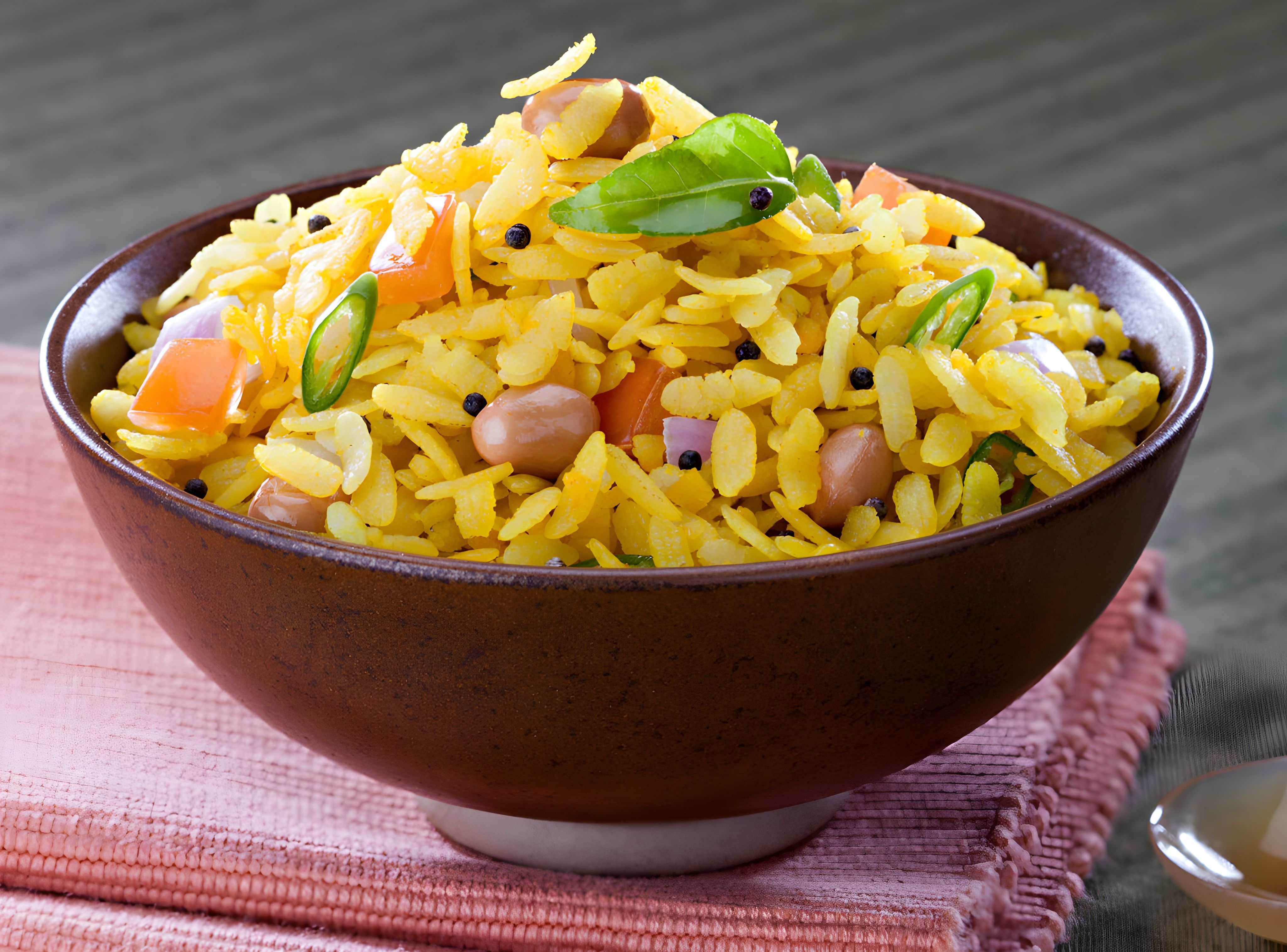
Poha, which is commonly known as flattened rice, is one of the most commonly consumed dishes of Indian cuisine. It is not only a delicious food item that you can have either in your breakfast or during afternoon snacks, but it is also a rich source of vital nutrients.
If you are thinking of adding poha or cooked flattened rice to your diet, then you must go through this article. This article will give you a detailed account of some of the major nutrients that are present in poha, the number of calories present in it, its health benefits, and other necessary facts.
All the basic facts that you need to know about poha:
If you are Indian, then you probably know the basic aspects of poha or flattened rice, is it is a recipe that may have often been prepared in your household. Poha is a dish that is most commonly consumed as it is easier to digest, and even after having a bowlful of poha, it will feel somewhat lighter on the stomach.
Poha can be easily a healthy start to your day as it is rich in essential nutrients as well. When soaked and cooked, poha becomes softer, and if you add vegetables and simple spices, it can become quite a nutrient-dense and hearty meal for breakfast. Poha is not only easy to prepare, but it is also a healthy dish that will help you derive a lot of energy as well. So, it is highly advisable to have a plate of poha in the morning as a perfect choice for breakfast.
The amount of calories present in Poha:
It is difficult to reveal the exact amount of calories present in poha. This is because the amount of calories in poha will depend on the nature of the flattened rice, and above all, on the way in which the dish is prepared.
Approximately, a small plate that can contain 100 grams of poha can have almost 130 to 140 kcal of calories, whereas a medium plate of 200 grams of poha can have 260 to 280 kcal. If you choose to have poha in a larger plate, that is, almost 300 grams, then the calorie content may range between 390 to 420 kcal. So, on average, a standard plate of plain poha may contain approximately 130-140 calories per 100 grams. This idea of calorie-based on portion size is necessary because this will help you to know how much poha you should be having in your diet in order to fulfil your calorie requirements.
Besides these, the calorie content in poha will also depend on the amounts of oil, peanuts, or ghee (clarified butter) used in the dish, because these components are rich in calories and can significantly increase the calorie content of poha if added in greater amounts. On the other hand, if you add a medium amount of spices and vegetables, then the calories will be lower, and the meal will become richer in nutrients.
Nutritional facts and components in poha:
As it has already been mentioned, poha is rich in nutritional elements. Apart from being a rich source of essential macro-nutrients such as carbohydrates, fibre, protein, and so on, poha contains some of the key micro-nutrients as well. This is because many experts consider that poha consists of key nutrients (mostly minerals) such as potassium, magnesium, iron, calcium, and so on. Some of the most vital nutrients that can be found in one plate of poha can be listed below:
Nutrient Amount (per 100 g)
Carbohydrates 76 g
Protein 6.7 g
Fat 1.1 g
Fibre 1.0 g
Potassium 50–170 mg
Magnesium 40 mg
Iron 20 mg
Calcium 13 mg
So, it is clear that having poha can be beneficial for your health as it can provide you with a combination of carbohydrates, some protein, and small amounts of fibre, iron, and essential vitamins.
But, it is also important to note here that the value of the nutrients given above, which are found in poha, may vary based on the types of ingredients that are added to the dish.
Health benefits of having poha in your diet:
Poha is a healthy breakfast option that is rich in a lot of health nutrients, such as protein, carbohydrates, fibre, along a lot of health-beneficial minerals. So, having poha in your diet is supposed to result in a lot of health benefits. Some of the major health benefits that you are likely to enjoy after adding poha to your diet can be listed here as follows:
1. Poha helps in easier digestion:
You can have a plateful of poha or cooked flattened rice early in the morning for breakfast, and you are still likely to feel lighter because poha is easier to digest and can help to reduce the chances of indigestion, heartburn, or acidity that may occur after having a heavy meal. Moreover, poha is low in fat and calorie content. So, if you cook poha with a lot of vegetables, with a minimum amount of ghee or oil, you have a lower chance of heavy calorie intake.
2. Having poha can give you energy:
Poha is rich in complex carbohydrates and high amounts of fibre. When consumed, these carbohydrates break down to provide energy to the body that is required for carrying out various types of biological and physiological functions of the body. In fact, the carbohydrate-rich extracts of poha can help give you sustained energy for hours, which makes it a suitable choice for a healthy breakfast in the mornings or midday meals.
3. Poha is high in mineral content:
Apart from being rich in some of the major types of nutrients, poha is also a major source of some of the vital minerals that are required in your body to help you stay healthy. Poha is a major source of iron that will help to improve the condition of red blood cells and the synthesis of haemoglobin, pigments that are responsible for the red colouration of the blood, and can therefore aid in preventing the chances of developing anaemia.
You may add some drops of lemon juice while preparing poha as well. This will not only help in better absorption of iron, but will also add vitamin C to the dish.
4. Having poha can provide satiety:
The reason why many experts often recommend people to have a bowl of simply prepared poha with added vegetables and basic spices is that poha provides a feeling of satiety. On the one hand, it does not feel heavy on the stomach, being easier to digest; on the other, it helps you to stay full for quite a long time. This is because poha is high in fibre content, and it is also rich in carbohydrates that will help give you a sense of fullness and will reduce the chances of binge eating.
Can poha help in weight loss?
Consumption of poha is often related to weight loss because poha consists of moderate amounts of calories, and it is rich in essential nutrients. It will also help you to stay full for a longer duration, which can be beneficial for healthy weight loss and can help you to be mindful of your calorie intake. So, poha can be a healthy option that you can add to your weight loss diet plan.
Final Thoughts:
Poha is a healthy food and one of the most commonly consumed foods in Indian homes. This dish can provide you with a perfect combination of all the nutritional components that are required for you to stay healthy and free from diseases. It is easy to digest and a healthy option for breakfast.
But, here is a word of caution: before you start adding poha to your diet, you must be aware of the calories your body requires and the extra calories that you are adding with oil or ghee. If the calorie count remains optimum, you can continue to have this dish for a healthy start to the day.
Also Check: 1 Bowl Dal Calories - Nutrition Facts, Protein & Benefits
Also Check: Calories in Paratha nutrition, carbs, GI, protein, fibre, fats
Also Check: Calories In Aloo Ki Sabzi
Reviewer

Mrs Farhat Khan
Dietician
I have a work experience of 7 years. I like to write blogs on health topics, some of my blogs on google are Omega 3 for muscle building, Active rest , Resting heart rate. I have a work experience of 3 years as a clinical & consulting dietician in Gynaecologist hospital & 4 years as a health coach on the Goqii health application.
View profileAuthor

Bidiptaa Sen
MA in Mass Media and Communication, Jadavpur University With 3.5+ years of experience in writing marketing and SEO content on healthcare and wellness, I write articles that help people to get an idea regarding medicines that are prescribed, how to improve their wellness care and educate people how to choose accurate health facilities. My communication skills, depth of knowledge in media management and strategic methods for better social media engagement and improving readers' experience through extensive research on the healthcare scenario.
View profile