Whey Protein Isolate vs Concentrate
On this page
- What Is Whey Protein?
- The Three Primary Forms
- A Closer Look at Whey Protein Isolate
- Key Characteristics of Isolate
- Whey Isolate vs. Whey Concentrate: Full Comparison
- Who Should Choose Isolate?
- What Doctors and Nutritionists Actually Say
- On Lactose Intolerance
- On Muscle Building
- On Purity and Safety
- On Absorption
- Brand Comparison: Top Whey Isolates
- Optimum Nutrition Gold Standard Whey
- Dymatize ISO100 Hydrolyzed
- Isopure Zero Carb
- Transparent Labs 100% Grass-Fed Whey Protein Isolate
- QNT Prime Whey Triple Blend Isolate
- Does a Triple Blend Formula Actually Make Sense?
- How to Read a Protein Label: Red Flags to Watch For
- Frequently Asked Questions
- Final Word
What Is Whey Protein?
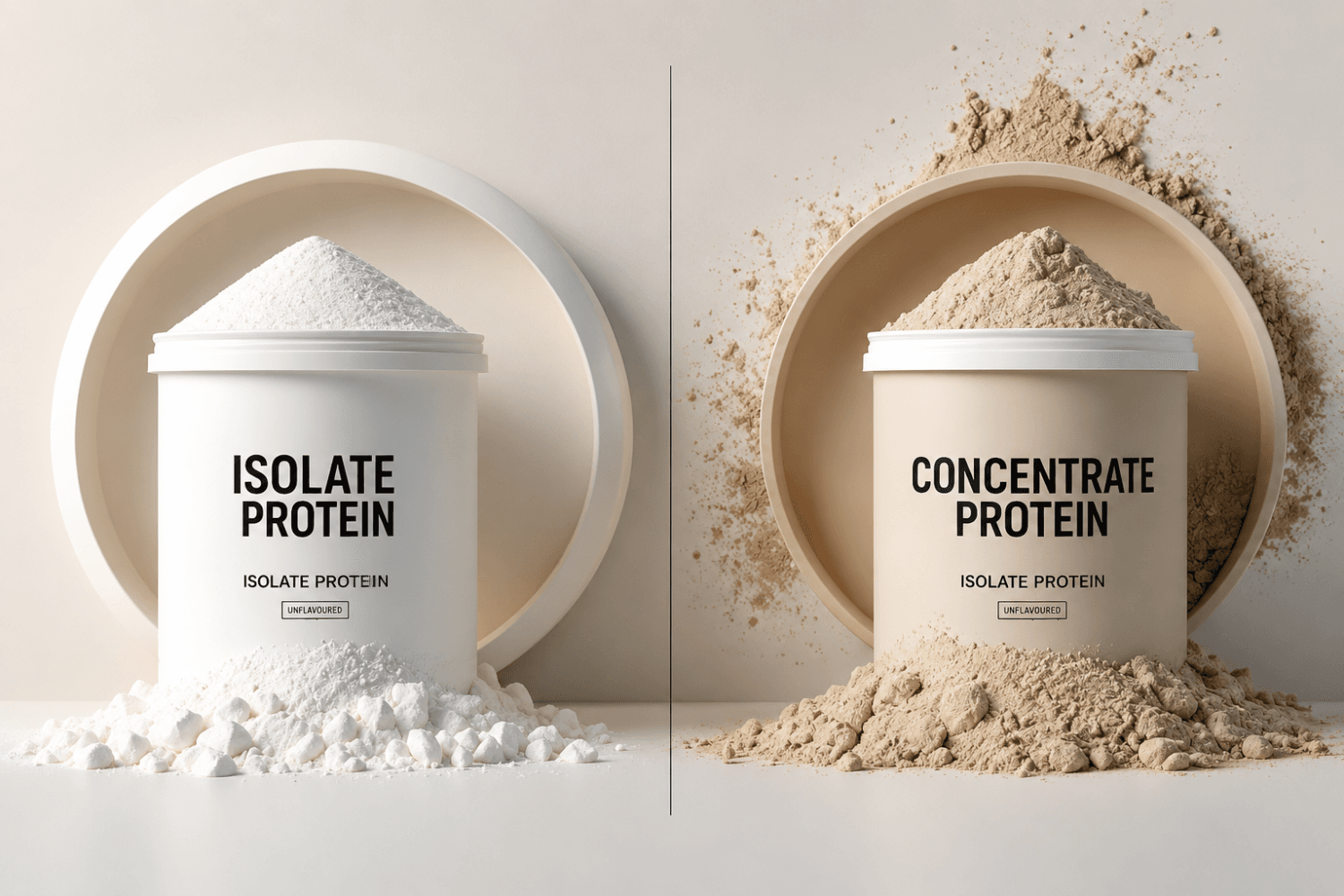
Whey is a natural byproduct of the cheese-making process. When enzymes are added to cow's milk to curdle it, the liquid that separates from the solid curds is whey. This liquid is rich in fast-digesting protein, essential amino acids, and bioactive compounds. After pasteurization and drying, it becomes the white powder you find in your protein tubs.
Whey belongs to a group of eight proteins naturally found in cow's milk. It is considered a complete protein, meaning it contains all nine essential amino acids your body cannot produce on its own. This alone makes it one of the most nutritionally potent supplements available.
The Three Primary Forms
• Whey Protein Concentrate (WPC) — the least processed form
• Whey Protein Isolate (WPI) — further filtered for higher purity
• Whey Protein Hydrolysate (WPH) — pre-digested for the fastest absorption
A Closer Look at Whey Protein Isolate
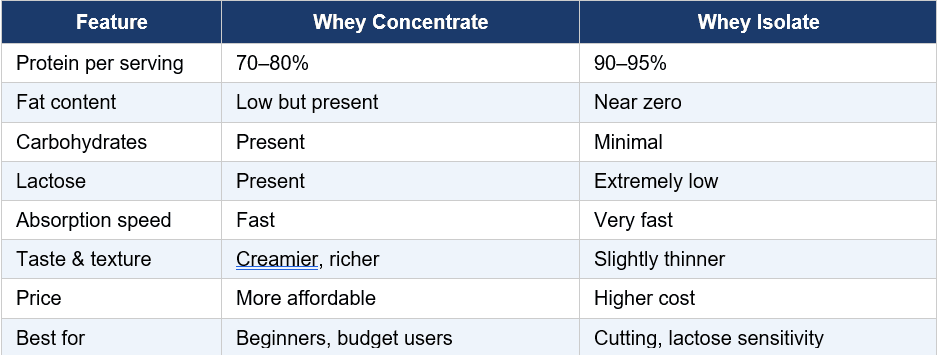
Whey Isolate is essentially Concentrate taken a step further. After the initial filtration, the liquid whey undergoes additional processing — typically microfiltration or ion-exchange filtration — to strip out virtually all the fat, carbohydrates, and lactose. The result is a powder that is 90–95% pure protein per serving.
Key Characteristics of Isolate
• Protein content: 90–95% per serving (vs. 70–80% in Concentrate)
• Fat content: Near zero
• Carbohydrates: Minimal to none
• Lactose: Extremely low (often under 1g per serving)
• Calories per scoop: Lower than Concentrate
Because of this ultra-filtration, Isolate is absorbed rapidly by the intestine. Amino acids — especially leucine, the primary trigger for muscle protein synthesis — reach the bloodstream quickly. This makes it particularly well-suited for post-workout consumption, when your muscles are most receptive to repair and growth.
Whey Isolate vs. Whey Concentrate: Full Comparison
Who Should Choose Isolate?
• You are lactose intolerant or have a sensitive stomach
• You are in a cutting phase and watching every calorie
• You want the cleanest possible macros per serving
• You train intensely and want rapid post-workout absorption
Who Should Stick With Concentrate?
• You are a beginner or on a tighter budget
• You have no issues digesting dairy
• You want a creamier, more palatable shake
• You are in a bulking phase where extra carbs and fats are not a concern
What Doctors and Nutritionists Actually Say
On Lactose Intolerance
Reviewed by Kathleen M. Zelman, RD, on WebMD, the guidance is clear — whey isolate is the better choice for those with lactose sensitivity, since its additional filtration removes most of the lactose found in standard concentrate. That said, anyone with a true milk allergy (as opposed to intolerance) should avoid whey products entirely.
On Muscle Building
Medical News Today, citing a 2019 scientific review, notes that whey protein's high leucine content makes it particularly effective for muscle building and repair. Leucine is the key amino acid that activates muscle protein synthesis. A 2025 meta-analysis referenced by the same source found additional evidence that whey protein may even help improve cholesterol levels, beyond its well-known fitness benefits.
On Purity and Safety
A 2025 investigation by Consumer Reports found that multiple mainstream protein powders contained trace amounts of heavy metals like lead, cadmium, and arsenic. Registered Dietitian Jillian Robillard, MS, RD, noted in Fortune's protein powder review that while the FDA's reference levels for lead are significantly higher than the thresholds used in that investigation, pregnant women and children should exercise extra caution. This underscores the importance of choosing brands that use third-party testing.
On Absorption
Biochemically, isolate delivers amino acids directly to the small intestine without lactose-related interference, allowing muscle protein synthesis to proceed without the bloating or discomfort some people experience from dairy — a point highlighted by nutrition researchers at the National Institutes of Health (NIH).
Brand Comparison: Top Whey Isolates
Optimum Nutrition Gold Standard Whey
One of the most widely trusted names in the supplement world. Gold Standard uses a blend of whey isolate, concentrate, and peptides — offering 24g of protein per serving with 5g of BCAAs. It is not a pure isolate product, but the blend makes it versatile for daily use. Comes in over 20 flavors and blends well with water or milk. Consistently rated among the best all-around protein powders by independent reviewers.
Dymatize ISO100 Hydrolyzed
A hydrolyzed whey isolate, meaning it is partially pre-digested for even faster absorption than standard isolate. This is what sets it apart — it is built for athletes who want rapid recovery. It contains 25g of protein per serving, minimal carbs and fat, and has won multiple industry awards. BarBend reviewers noted it is one of the fastest-absorbing proteins available and is frequently recommended for competitive athletes and bodybuilders.
Isopure Zero Carb
Known for its exceptionally clean macros — the Zero Carb version delivers literally 0g of carbohydrates per serving, along with 25g of protein and a significant array of added vitamins and minerals. BarBend reviewers gave it the edge over Dymatize in micronutrient content. Priced accessibly at roughly 4 cents per gram of protein in larger tubs.
Transparent Labs 100% Grass-Fed Whey Protein Isolate
Consistently ranked as the best overall protein powder by Fortune and multiple expert reviewers in 2025–2026. Uses grass-fed whey, comes in 18 flavors, and is third-party tested for heavy metals and banned substances. User testers praised its completely smooth texture. A premium option at a higher price point.
QNT Prime Whey Triple Blend Isolate
For those exploring beyond the international giants, QNT's Prime Whey has been gaining steady attention, particularly in India and Europe. Its triple blend formulation — combining whey isolate, concentrate, and hydrolysate — offers layered absorption: the hydrolysate hits fast, the isolate follows, and the concentrate provides sustained release.
It delivers 25g of protein per scoop with 5.8–5.9g of BCAAs, zero added sugar, and includes DigeZyme — a digestive enzyme blend that may help users who typically experience stomach discomfort with protein powders. Amazon users have noted it mixes well in both water and milk and does not cause bloating. It is certified by CoE-NSTS and tested for 220+ WADA-banned substances, which is a meaningful quality benchmark. Available in a wide range of flavors including Kesar Kaju Pista and Irish Chocolate.
Does a Triple Blend Formula Actually Make Sense?
There is a legitimate nutritional rationale for blending hydrolysate, isolate, and concentrate together:
• Hydrolysate absorbs the fastest (pre-digested peptides)
• Isolate provides high-purity protein with fast absorption
• Concentrate offers a slightly slower, sustained amino acid release alongside naturally occurring bioactive compounds like immunoglobulins
The idea is to cover multiple absorption windows with one product. Whether this makes a significant real-world difference in muscle-building outcomes is still debated in research — but the blend approach is logically sound and well-tolerated by most users.
How to Read a Protein Label: Red Flags to Watch For
1. Amino Acid Spiking
Some brands add cheap amino acids like glycine or taurine to inflate protein numbers. Look for 'protein from whey' explicitly, not just total amino acid counts.
2. Proprietary Blends
If the label says 'protein blend' without specifying exact amounts of each form, you cannot know how much isolate vs. concentrate you are actually getting.
3. Third-Party Testing
Look for certifications like Informed Sport, NSF Certified for Sport, or WADA testing. This matters especially for competitive athletes.
4. Added Sugars and Fillers
Some formulas sneak in milk powder, creamers, or maltodextrin. Read the full ingredient list, not just the front panel.
5. Heavy Metals
Prefer brands that publish their third-party heavy metal test results, particularly given the 2025 Consumer Reports findings.
Frequently Asked Questions
Q: Is whey isolate better than concentrate for weight loss?
Generally, yes. Whey isolate has fewer calories, less fat, and fewer carbohydrates per serving, making it better suited for a calorie-controlled diet. Both types are filling and high-protein, which helps with satiety and preserving muscle while losing fat.
Q: Can I take whey protein if I'm lactose intolerant?
Most people with lactose intolerance can tolerate whey isolate without issues. The extra filtration removes nearly all the lactose. Concentrate retains more lactose and may cause bloating or discomfort. Start with a small serving and see how your body responds.
Q: When is the best time to take whey protein?
Post-workout is the most popular window — within 30–60 minutes after training. That said, research suggests total daily protein intake matters more than precise timing. Whey can also be used in the morning or as a between-meal snack.
Q: How much whey protein should I take per day?
The International Society of Sports Nutrition recommends 20–40g of protein per meal to optimize muscle growth. For most active individuals, 1–2 scoops (roughly 25–50g of protein) from supplementation, on top of whole food protein sources, is adequate.
Q: Does whey protein cause kidney damage?
In healthy individuals with normal kidney function, moderate whey protein consumption is considered safe. The concern about kidneys relates mainly to people who already have compromised kidney function. If you have pre-existing kidney issues, consult your doctor before using any high-protein supplement.
Q: Is whey protein safe for women?
Absolutely. Whey protein is not a hormone and does not cause masculinization. It supports lean muscle tone, recovery, and can help women meet their daily protein targets — all of which are beneficial for general fitness, bone health, and weight management.
Q: Does whey protein expire?
Yes. Most whey proteins have a shelf life of 1–2 years from the manufacture date. After expiry, the protein content remains largely intact, but flavor and texture may degrade. Always store in a cool, dry place and keep the container sealed.
Q: Can I use whey protein as a meal replacement?
It can supplement a meal but should not fully replace one. Whole meals provide micronutrients, fiber, and other compounds a protein shake does not. Blending whey with fruits, oats, and healthy fats gets you closer to a balanced meal.
Q: Whey isolate or hydrolysate — which is faster absorbing?
Hydrolysate absorbs faster since the protein chains are already partially broken down. However, the practical difference in muscle-building outcomes between the two is minimal for most people. Hydrolysate tends to be the most expensive of the three forms.
Q: Does the brand of protein matter?
Yes, but not always in the way marketing suggests. Protein quality, processing method, and third-party testing matter more than brand name. What matters most is accurate labeling, third-party certification, and that the product fits your dietary goals and digestion.
Final Word
If you are healthy, training consistently, and eating a balanced diet, either whey concentrate or isolate will help you hit your protein goals effectively. The real decision comes down to your specific situation: budget, lactose tolerance, caloric targets, and how clean you want your macros to be.
For most serious gym-goers and those who want to minimize digestive discomfort, whey isolate — or a triple-blend formula that leads with isolate — is the more refined choice. For beginners or those on a budget who tolerate dairy well, concentrate remains a solid, time-tested option.
No supplement replaces whole food protein. Think of whey as a convenient top-up, not a foundation.
Author

DocIndia Editorial Team
Check cache DocIndia Editorial Team works with Doctors to create informative articles.
View profile