Walnuts: Health Benefit and Side Effects
On this page
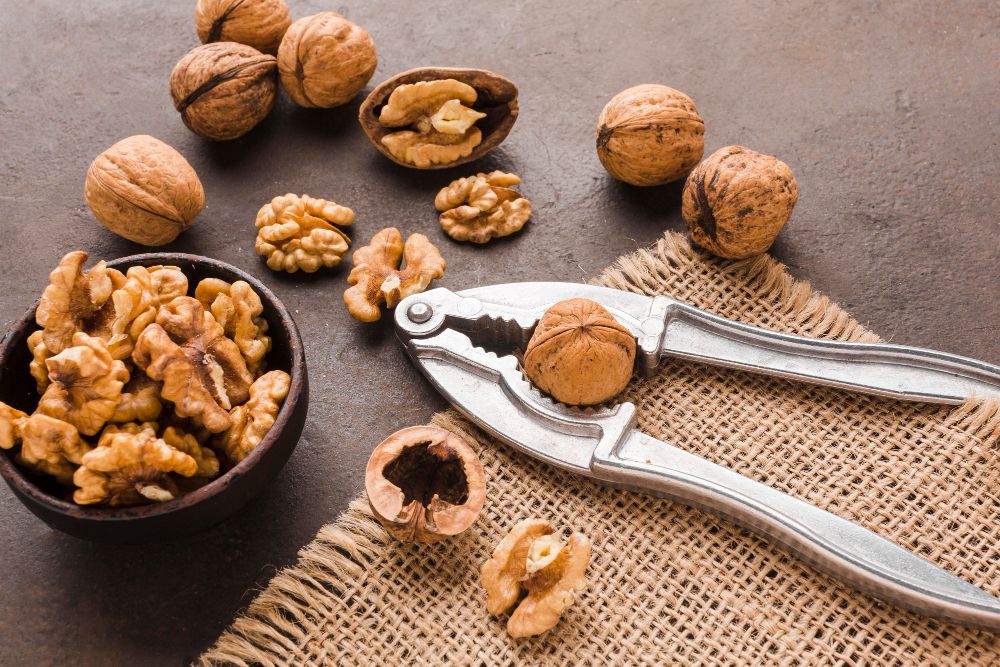
Walnuts are known for having a hard, tough shell, the inner meat looks like a tiny brain and has a rich, sweet taste. The walnut is the most widely-consumed nut in the world and has been enjoyed for more than 8,000 years.
Commercial walnuts come from California and China. English walnuts and black walnuts are the most common varieties.
Walnuts nutrition information
One serving of walnuts is 7 g or about 1 ounce. A serving of walnuts has: (1)
- 185 calories
- 2.5 grams of monounsaturated fat
- 1.7 grams of saturated fat
- 4.3 grams of protein
- 3.9 of carbohydrates
- 1.9 grams of fiber
- 7 grams of sugar
Walnuts are an excellent source of:
- Manganese
- Copper
- Magnesium
- Phosphorus
- Vitamin B6
- Iron
Some are a source of monounsaturated and polyunsaturated fats and omega-3 fatty acids. They are also a reliable source of protein that is also very healthy for you to consume.
Nuts are a reputation as a high-calorie and high-fat food. Nuts are also known to be an effective source of vitamin E. However, they are essential in nutrients and provide important heart-healthy fats.
Walnuts are nutritious and help to increase satisfaction and satiety. Therefore, low-fat foods are more healthful as snacks, compared with chips, crackers, and other simple carbohydrate foods.
A meta-analysis of previous studies found that people that consumed a walnut-enriched diet had a lower mortality rate than those that consumed a regular diet.
- Lower cholesterol levels by about 7 mg/dL, representing a 3% greater reduction.
- Lower LDL cholesterol by about 5.5 mg/dL, which is a 4% greater reduction.
- Lower triglycerides (5.7 mg/dL) lower by approximately 5.7 mg/dL, a 5%
- Lower the Apo protein B (a protein linked to cardiovascular disease) by nearly 4 mg/dL
While the improvements in blood lipids were rather low, larger improvements were made in total cholesterol, and consequently, were quite apparent when the comparison diet was a typical American or western diet (that is, a diet high in red meats, dairy foods,
Weight gain is always a concern for those who are on a diet. Fortunately, people on the high-walnut diet did not gain weight.
Studies have shown that eating walnuts can help lower LDL cholesterol, but also lower your cholesterol overall. Eating walnuts can keep your artery walls healthy. It is wise to consume more walnuts.
Nuts can also help ease the type of inflammation that leads to heart disease. One study found that as much as five servings of nuts a week can reduce your risk of heart disease by up to 50 percent.
Walnut-based foods have been shown to have anti-cancer properties. Bacteria in your stomach and intestines turn ellagic acid into antioxidant compounds that may help ward off cancer.
Why are walnuts good for health?
Walnuts are special dry fruit because they contain oils that can help to protect against cardiovascular disease. Walnuts are rich in polyunsaturated fatty acids.
Walnuts have additional anti-inflammatory effects that keep blood vessels healthy, in addition to having favorable effects on blood lipids.
All nuts vary in their nutritional profile, but many nuts are rich in mono-unsaturated fats, alongside poly-unsaturated fats.
Walnuts are healthy types of fats, but their specific combination of fats and polyunsaturated fatty acids may be particularly good for cardiovascular health.
Walnuts health benefits
Consuming all kinds of plant-based foods has long been associated with a reduced risk of many lifestyle-related health conditions.
Walnuts may have the potential to increase bone and cardiovascular health and reduce the risk of gallbladder disease and epilepsy.
1. Heart Health
Walnuts contain high-density lipoprotein (HDL) cholesterol, which has been shown to lower triglyceride levels. This can also reduce the risk of cardiovascular disease, stroke, and heart attack.
Scientists published findings of a small study which suggested that:
Walnut oil can help to activate blood vessels, whole walnuts can enhance the process of eliminating “bad” LDL cholesterol.
Nevertheless, they do not claim that their statement proves that it is true, or that products that contain nuts are nut-free.
2. Weight Management
According to recent research published in the Asia-Pacific Journal of Clinical Nutrition, it has been found that eating nuts are associated with higher levels of energy use while at rest.
In weight loss trials that compared diets that include or exclude nuts, diets that include nuts in moderation showed greater weight loss.
A study published in the American Journal of Clinical Nutrition also found that those who reported rarely eating nuts had a greater incidence of weight gain over 8 years than those who ate nuts regularly.
3. Gallstone Disease
Frequent nut consumption is linked to a smaller chance of developing gallstones. Large, long-term studies have shown that women who eat more than 5 grams of nuts each week for more than 20 years have a smaller likelihood of developing gallstones than women who eat less than 1 gram of nuts each week.
4. Bone Health
Walnuts are a useful source of copper, and severe copper deficiencies are associated with lower bone mineral density and an increased risk of osteoporosis.
Osteoporosis is defined as a disease in which bones become thinner and less dense, making them easier to fracture and break.
There are currently limited studies available to better understand the effects of marginal copper deficiency on bone health and to determine if it is beneficial to prevent and manage osteoporosis.
Copper is important for the maintenance of collagen and elastin; a major structural component of the body.
Without sufficient adult stem cells, the body cannot replace damaged connective tissue or the collagen that makes up the building blocks for bone. A range of issues can arise from a lack of understanding of the importance of proper hand placement.
Studies have shown that walnuts contain a high amount of manganese. Manganese has been shown to prevent osteoporosis. In combination with the mineral’s calcium and copper, it has been proven to be effective. Magnesium is an important mineral in helping absorb calcium into the bones.
While supplements of manganese and copper are thought to be harmful, consuming these vitamins and minerals is thought to be good for bone health.
5. Epilepsy
Red blood cells from people with epilepsy have also been found to have lower levels of manganese than those without epilepsy, although a manganese deficiency is not thought to cause epilepsy.
6. Cancer prevention
Cancer is a condition in which cells grow out of control. Eating healthy food, exercising, and avoiding unhealthy lifestyle habits can lower your odds of developing certain types of cancers.
Since walnuts are a rich source of beneficial plant compounds, they could be an effective part of a cancer-preventive diet that provides a variety of minerals and vitamins
Walnuts have several bioactive components that may have anticancer properties, including
- Gamma-tocopherol
- Phytosterols
- Omega-3 fatty acids
- Ellagic acid and related compounds.
- Various antioxidant polyphenols
Scientific studies have shown that people who consume nuts have a lower cancer incidence. Nuts are an important part of a healthy diet, and studies have shown that nuts may suppress cancer growth in breast, prostate, colon, and kidney tissue.
Although it is difficult to determine the effectiveness of these supplements based on in vitro studies, in vivo studies will need to be conducted in humans to confirm these effects.
Walnut Side Effects
In general, nut allergies are a common problem, but some people need to avoid nuts due to allergic reactions.
Allergy
Specific symptoms of walnut allergy are typically severe and can include reactions such as anaphylaxis, which can be fatal without treatment.
People with a walnut allergy need to avoid all nuts that belong to the walnut family.
Reduced Mineral Absorption
Walnuts are high in phytic acid and can cause harm when eaten with other foods.
Phytate (or phytic acid), is a chemical that is found in many plants and that can prevent minerals in your diet from being absorbed. This is true only for meals that contain high-Phytate foods.
Individuals who regularly follow a diet that is deficient in phytic acid rarely require the supplement of iron, calcium, or vitamins A or D. Therefore, most people do not need to worry about becoming deficient in these minerals.
It has been theorized that eating walnuts can improve a person’s cholesterol. There is no scientific evidence to prove the correlation, but it is possible that those who like walnuts also tend to exercise more, smokeless, and have favorable genes.
According to several studies, eating nuts may be one of the best ways to improve your health.