Calories in Vegetable Soup - Nutrition Facts Information
On this page
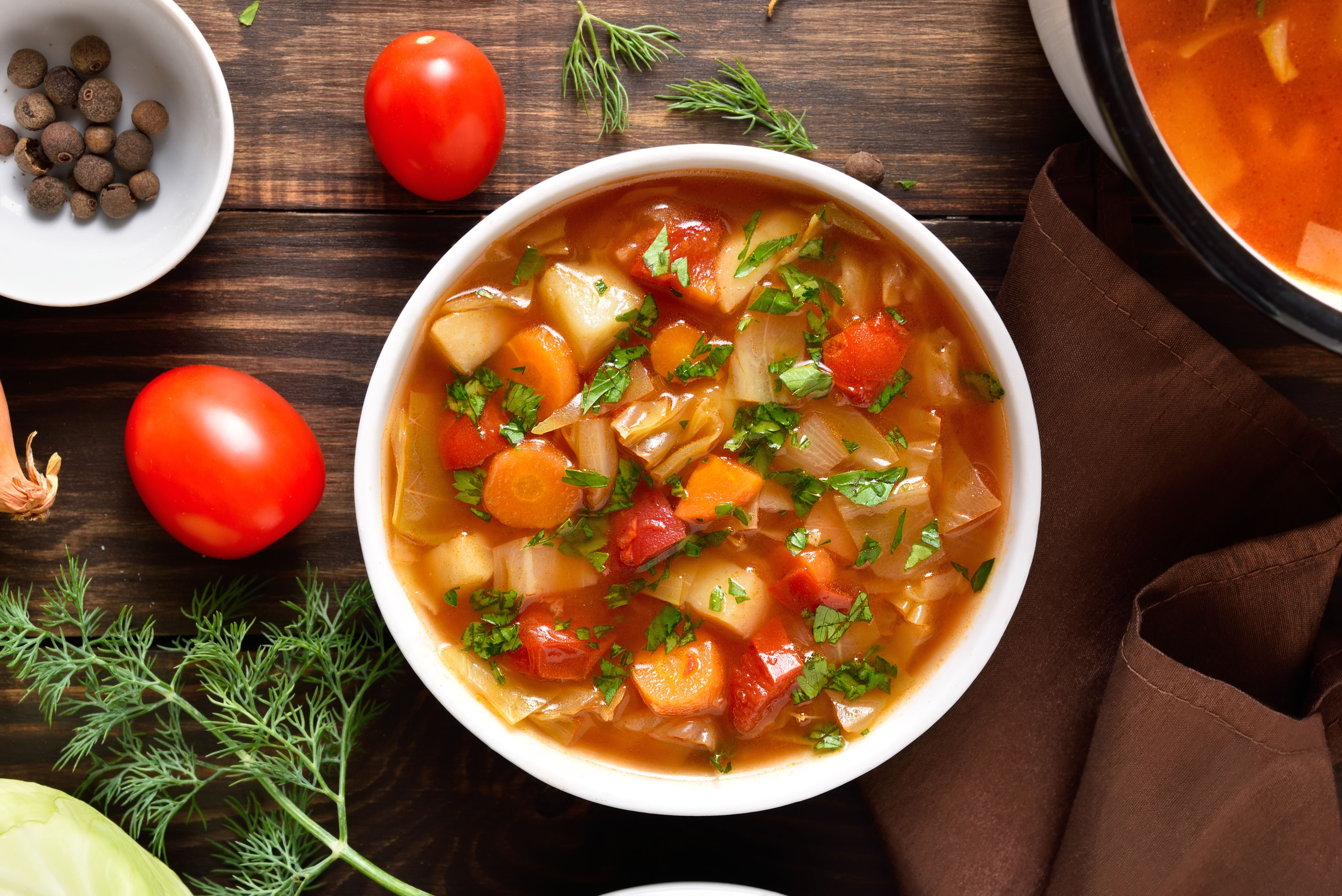
Vegetable soup is quite a soothing and comforting meal, which is also rich in nutrients and can provide you with enough health benefits. Many experts often recommend people to have vegetable soup not only as a part of your diet, but also when someone is sick or even under the weather. This article will particularly focus on the calorie content in vegetable soup, the nutrients and vital elements present in such a soup, the possible health benefits that you may get from them, and other necessary details.
Calorie content in vegetable soup:
The net amount of calories that are present in one bowl of vegetable soup is considerably lower compared to the amounts of calories found in other types of soups (shezwan or manchow, for example). Moreover, one of the major reasons why veg soup is low in calorie content is the high amounts of vegetables that are present in the soup.
There are different reasons as a result of which the net calorie content in vegetable soup may vary; some of those factors may be listed below:
The portion size of your veg soup intake
The amount of oil used to fry the vegetables
The types of ingredients that are added while making the soup
Different types of vegetables are added to the soup while cooking.
On average, each bowl of vegetable soup that weighs around 200 to 250 ml may contain around 80 to 120 calories. Being rich in vegetables and water, the calorie content in vegetable soup is quite low.
It is therefore often quite a healthy and nutritious option to add to your balanced diet if you are planning to undergo healthy weight loss.
It is also important to note that the calorie content in vegetable soup can increase to some extent when you add egg or corn flour slurry into it.
Nutritional components found in veg soup:
Vegetable soup is a rich source of nutritional ingredients that are highly beneficial for your overall health and wellness. Here is a list of some of the most commonly found nutritional components that are present in a bowl of vegetable soup:
1. Dietary fibre:
You are likely to get quite some amounts of dietary fiber from the chopped vegetables that are put in a bowl of vegetable soup. Though most of the vegetable fiber gets reduced when you cook them, you still get some fiber which can help in better bowel movement and can help to keep you regular.
2. Vitamins and minerals:
Being rich in vegetables, a bowl of veg soup will always be rich in vitamins and minerals. Some of the major vitamins that you can get from each bowl of veg soup can include vitamin A, vitamin B, and vitamin C, along with folate or folic acid, especially from vegetables such as carrots, tomatoes, and other leafy vegetables.
You can expect to get minerals such as potassium, magnesium, and iron from the vegetables that you use in a bowl of vegetable soup.
3. Antioxidants:
You can also get some amounts of antioxidants and natural plant-based compounds from the vegetables that are added to a bowl of vegetable soup. All these antioxidants can help to reduce the risks of oxidative stress and the chances of developing inflammation.
Apart from providing you with all these nutritional components, having vegetable soup can also be healthy for you because the water content in the soup can help you to stay hydrated.
Which doctor should you consult before adding veg soup to your diet?
Even if you wish to add veg soup to your daily diet, most healthcare professionals are going to advise you that you must go ahead with this. This is because you can get several health benefits from a bowl of veg soup. But you may also consult a registered dietitian or a nutritionist before you formally.
Final Thoughts:
A bowl of veg soup can be quite filling and rich in nutritional ingredients. Some of the most common nutrients in vegetable soup include vitamins and minerals from the different types of vegetables that are present in it. This helps in healthy weight management due to low-calorie content, and can also be beneficial for healthy digestion, gut, and heart health.
Also Check: Calories in Hot Chocolate – Nutrition Facts Information
Authors

Bidiptaa Sen
MA in Mass Media and Communication, Jadavpur University With 3.5+ years of experience in writing marketing and SEO content on healthcare and wellness, I write articles that help people to get an idea regarding medicines that are prescribed, how to improve their wellness care and educate people how to choose accurate health facilities. My communication skills, depth of knowledge in media management and strategic methods for better social media engagement and improving readers' experience through extensive research on the healthcare scenario.
View profile
Surbhi Singhal
Surbhi is dedicated and self-motivated Ph.D. scholar passionate about Content Creation, Editing, and Teaching. I excel in dynamic environments, thrive on challenges, and am eager to contribute my expertise and enthusiasm in pushing the boundaries of knowledge.
View profile