Calories in Rasmalai – Nutritional Information & Health Analysis
On this page
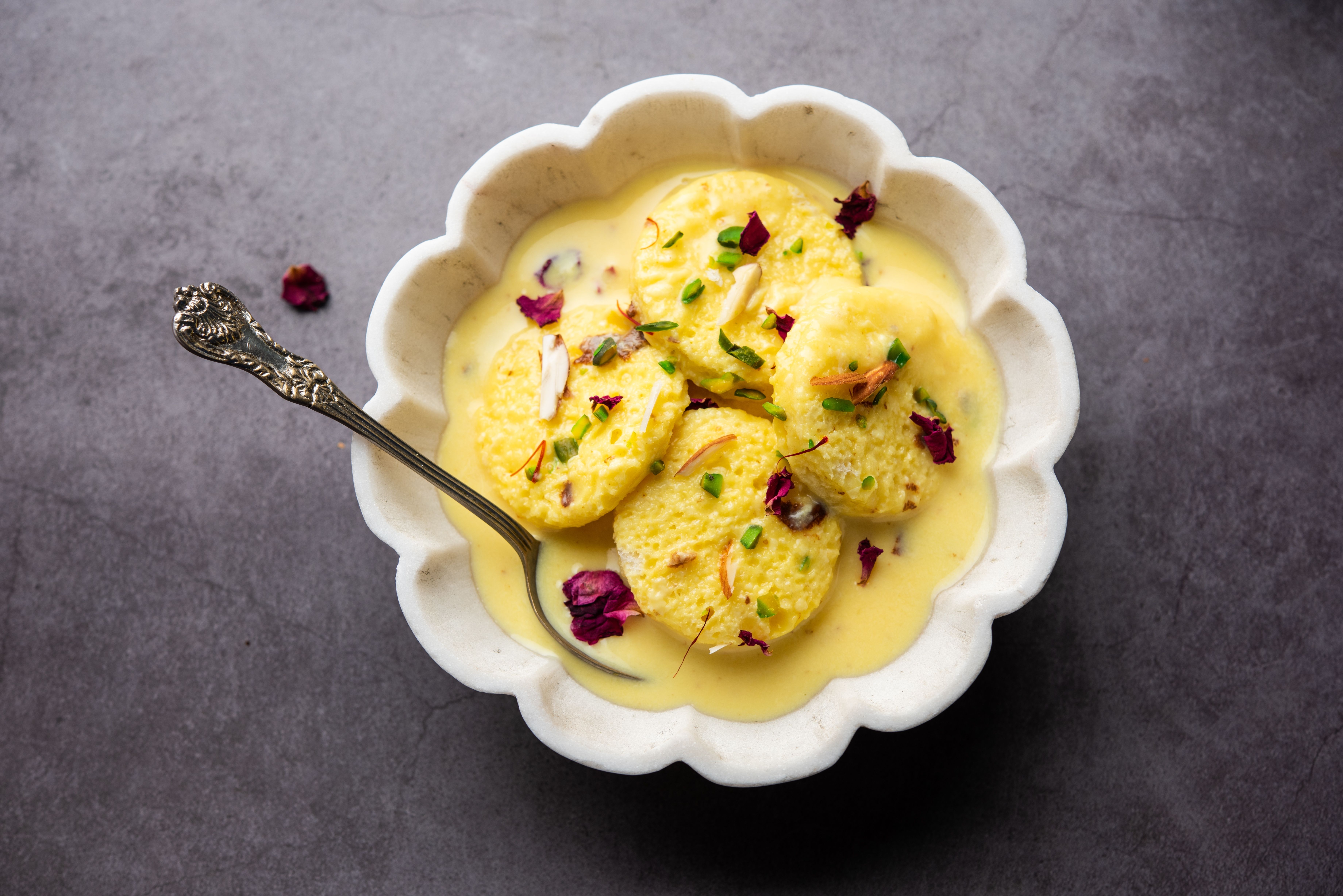
Rasamalai is one of the most loved sweets in many parts of India. But are you aware of the health benefits and calorie content of rasamalai? Like any other sweet, rasamalai is also rich in calories and added sugar, so this article will be your guide to calorie content in rasamalai, the nutritional profile of this sweet, whether you can enjoy any health benefits from rasamalai at all, and, most importantly, who should be able to consume it with caution.
Calorie content in Rasamalai:
Being a sweet, rasamalai, it is generally expected to be high in calories. But, it is also important to remember that the net calorie content in rasamalai can largely depend on the portion size of this sweet, the type of milk that is used (such as full-fat, skimmed or low-fat milk) and how it is made.
It can be stated that a single piece of rasamalai, weighing around 100 to 120 grams, can contain approximately 200 to 250 calories.
The other sources from which calories in rasamalai can be derived may include the following:
Chhana or paneer
Added sugar or sweetening agents
Nuts used as garnishing
Malai and paneer.
Is there any nutrient in rasamalai?
Unlike many other sweets, rasamalai may contain some nutrients from milk, paneer, and the nuts used to prepare it. Here is a list of nutrients that are found in rasamalai:
1. Protein:
Being made mostly from chhana, milk, paneer, and malai, you are likely to get quite a significant amount of milk protein from rasamalai. This protein may be beneficial for:
Supporting better repair of muscles, tissues, and cells
Provide satiety
Improves overall body functioning.
2. Minerals:
Rasamalai can be a major source of minerals, such as calcium, derived from the milk that is used for preparing this sweet. Calcium content in rasamalai can help to improve:
Your bone strength
Health of the teeth enamel.
Is there any health benefit to having rasamalai?
Rasamalai is a sweet that contains very limited amounts of nutrients. So, it is quite obvious that it does not provide you with enough health benefits. Yet here are some of the benefits that you are likely to enjoy after having rasamalai in limited quantities:
1. Bone strength:
Rasamalai contains milk protein and calcium from milk-based components such as chhana or paneer, which can be beneficial for keeping your bones healthy.
2. High in energy:
Consuming rasamalai can provide you with enough energy, especially among those who are underweight, as the complex carbs from sugar can make it an energy-dense sweet.
3. Rich in protein:
There are multiple sources of protein in rasamalai, which can make it a healthy alternative to fried sweets. When consumed in moderation, this sweet can be beneficial for your health.
Side effects of having rasamalai:
When consumed in excess, rasamalai can result in major health problems. Some of them can be listed below:
High sugar intake
Increased consumption of calories
Risks of spikes in blood glucose levels
Intake of high saturated fats
Risks of worsening cholesterol levels (especially increasing LDL or bad cholesterol).
Whom should one consult - a doctor or a dietitian before eating rasamalai?
Rasamalai is quite a savoury dish, but it is often advised to be consumed in moderation by many experts. It is therefore vital to consult a registered dietitian or nutrition expert to seek advice regarding whether they should be consuming this sweet at all, how much of this sweet is good for your health and other details. You must also consult a doctor, especially if you have the following health problems:
• Diabetes
• Obesity
• Problems related to digestion
• Health problems related to high intake of calories or sugar restrictions.
A professional who is trained in nutrition or diet planning will be able to guide you on the portion size of rasamalai, the rate of consumption based on your health conditions, and other important details.
Final thoughts:
Rasamalai will always remain one of the most savoury and beloved sweets in any Indian household. But it does not contain enough nutrients to provide you with health benefits. You may consume this sweet after consulting with a health care professional or a diet expert, but it is important to consume this sweet in moderation to avoid the risk of developing any side effects on your health.
Also Check: Calories in 1 Kaju Katli and Nutritional Information
Authors

Bidiptaa Sen
MA in Mass Media and Communication, Jadavpur University With 3.5+ years of experience in writing marketing and SEO content on healthcare and wellness, I write articles that help people to get an idea regarding medicines that are prescribed, how to improve their wellness care and educate people how to choose accurate health facilities. My communication skills, depth of knowledge in media management and strategic methods for better social media engagement and improving readers' experience through extensive research on the healthcare scenario.
View profile
Yashodhwara Singh
I completed my BTEC in Aeronautics from Acharya Institute, Bengaluru, and my schooling from Aligarh Muslim University. I have completed multiple internships, including at HAL. With prior experience in technical writing, I currently work part-time as a medical content writer at DocIndia.
View profile