Calories in 6 Eggs Protein - Nutrition Facts and Information
On this page
Doctors always advise people to add eggs to your diet, so that they get enough protein in your body. But do you know how many eggs can be good for your health? This article will give you a detailed account of some of the major nutrients that are present in 6 eggs, the calorie content and the health benefits that you may get from so many eggs.
Calorie content in 6 eggs:
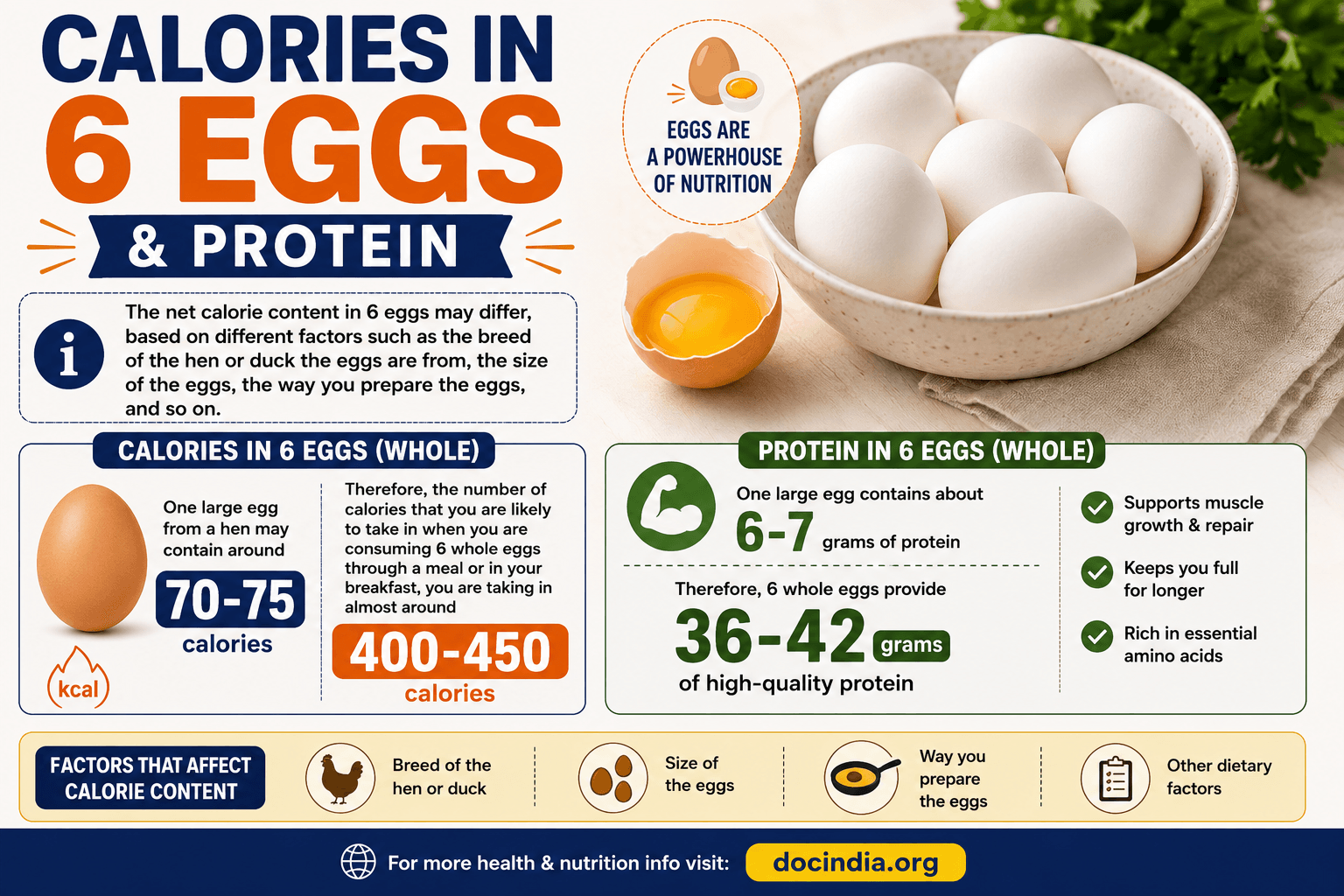
The net calorie content in 6 eggs may differ, based on different factors such as the breed of the hen or duck the eggs are from, the size of the eggs, the way you prepare the eggs, and so on. One large egg from a hen may contain around 70 to 75 calories. Therefore, the number of calories that you are likely to take in when you are consuming 6 whole eggs through a meal or in your breakfast, you are taking in almost around 400 to 450 calories.
Nutritional components in 6 whole eggs:
Taking in 6 whole eggs each day can ensure a high intake of proteins in through your platter. There are almost 36 to 38 grams of protein in these eggs, which can help in better growth, development, and muscle repair due to the presence of amino acids, which are considered the building blocks of protein.
Apart from this, there can also be some amounts of nutrients that you can get, and the health benefits that these nutrients can provide you are listed here as follows:
1. Healthy fats:
Having six whole eggs in your diet can provide you with enough amounts of healthy fats, especially monounsaturated fats and omega-3 fatty acids. Almost around 30 grams of these fats in a plate full of eggs can help to keep your heart healthy, improve immunity, and improve your overall wellness.
2. Vitamins:
Apart from macro-nutrients, different types of micro-nutrients are present in eggs as well. 6 whole eggs contain rich amounts of vitamins such as vitamin D for better health of the bones as it aids in calcium absorption, vitamin A for improving the health of your eyes and reducing problems related to vision, vitamin B12 for the formation of red blood cells and improving the nervous system.
3. Minerals:
Other than vitamins, if you have 6 whole eggs, you are also likely to consume minerals such as iron, which will help you to improve the health of red blood cells and synthesis of hemoglobin pigments, selenium that acts as an antioxidant, zinc for boosting your immune system, and so on.
Health benefits of having 6 eggs:
6 whole eggs in your diet can help you to get enough health benefits due to the nutrients that are present in them, some of which can be listed here as follows:
1. Get better brain health:
The nutrients in 6 whole eggs can help to improve your overall brain functioning, which can help to result in a healthier condition of your brain.
2. Improve bones and joints:
The vital vitamins and minerals that are present in whole eggs can help in strengthening your bone joints so that your bones do not become fragile.
3. Helps in promoting proper eye health:
The nutrients in so many eggs, when taken inside the body, can help to prevent the risks of eye-related health issues and can also reduce the risks of macular related eyes disorders.
Side effects of having 6 whole eggs:
Though having whole eggs in your diet is necessary, having 6 whole eggs in your diet can definitely lead to certain types of major health issues, such as increase in the cholesterol levels, along with increased risks of heart diseases, risks of imbalance of nutrients in your diet, allergic reactions from allergens in so many eggs, and the most common being digestive problems.
Which doctor to consult before having 6 whole eggs:
Not many doctors are instantly likely to say a ‘yes’ when it comes to having 6 whole eggs in your diet, but it is always advisable to consult a registered dietitian or a nutritionist to know whether so many eggs will suit your health and wellness at all.
Final Thoughts:
Eggs are some of the protein-rich and most beneficial foods to add to your diet. Having 6 whole eggs ensures increased intake of protein and other nutrients that can help to improve your overall health. But having 6 whole eggs can have potential side effects, so you should be cautious about your intake.
Authors

Sania Thakur
Content writer and marketing professional with strong sales and business skills. Experienced in web content writing, data annotation, and teaching, with a proven ability to craft engaging content and drive audience growth. Background in English Literature and Language Teaching from Aligarh Muslim University. Passionate about communication, branding, and strategic market analysis.
View profile
Surbhi Singhal
Surbhi is dedicated and self-motivated Ph.D. scholar passionate about Content Creation, Editing, and Teaching. I excel in dynamic environments, thrive on challenges, and am eager to contribute my expertise and enthusiasm in pushing the boundaries of knowledge.
View profile