Aloo Paratha Calories and Nutritional Information
On this page
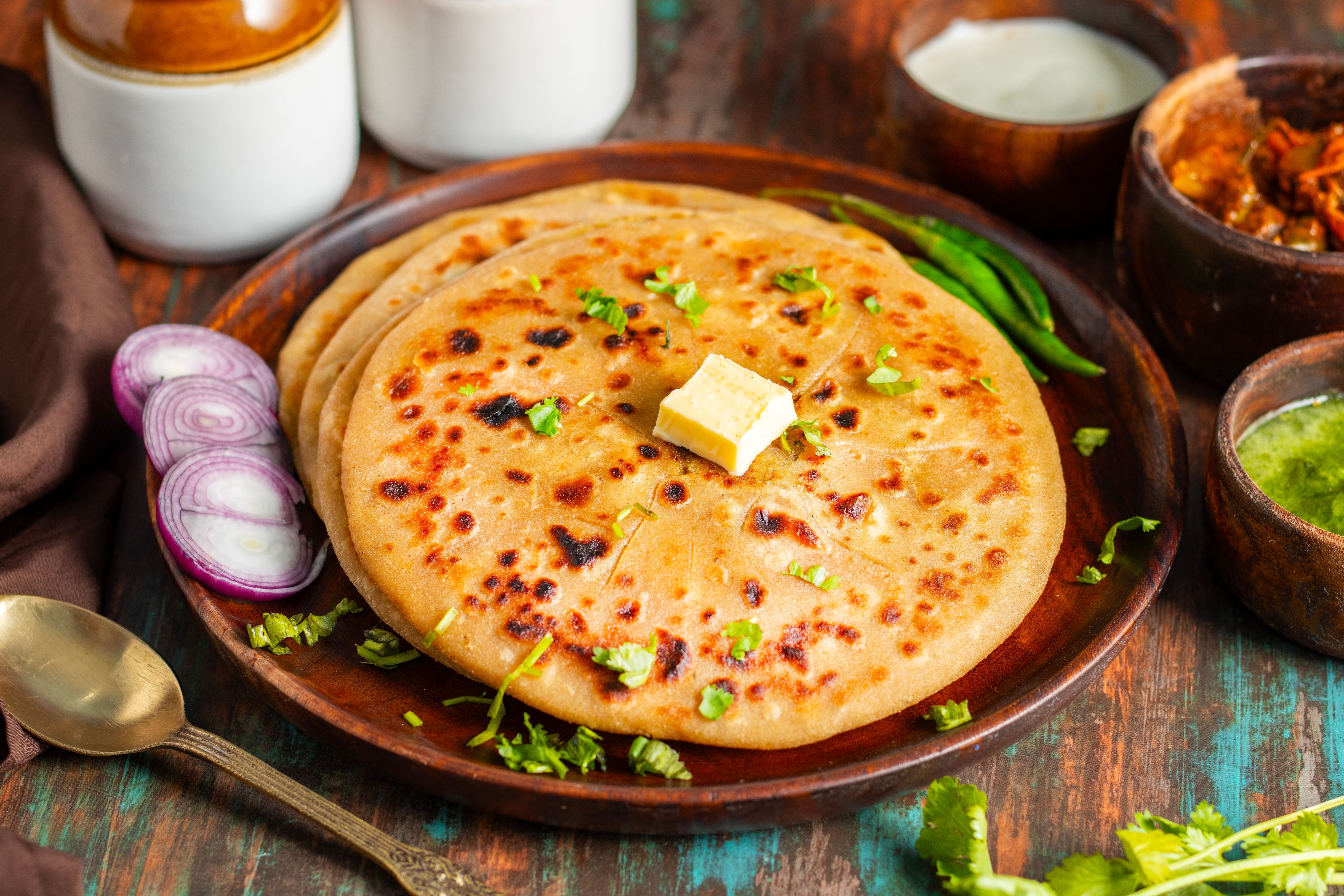
Who does not relish a plate full of aloo paratha with ketchup or pickles? Aloo Paratha is one of the most common dishes in North India and other parts of the country. Though aloo paratha is not a healthy, highly nutrient-dense food, it can be quite filling and savoury. It is important to know about the details of aloo paratha in detail. This article will give you a vivid and clear account of the number of calories that are present in aloo paratha, the list of nutritional components found in them, whether you can get any health benefits from this dish, and other important facts.
Calorie content in Aloo Paratha:
Aloo paratha is a dish that is high in calorie content. The high amounts of calories in aloo paratha mostly come from the components that are used while making the breads. There are certain types of ingredients that are found in aloo paratha, such as oil or ghee, that can increase your calorie intake. Some factors can create variations in the total calorie content in aloo paratha, some of which can be listed below:
The amount of ghee or oil added to aloo paratha
The filling in aloo paratha
The portion size of aloo paratha that you consume
The flour added while making the paratha
The ingredients that are added while making the paratha.
On average, each aloo paratha can contain around 250 to 350 calories. The calorie content will eventually increase to around 400 calories or more in each paratha if you add more ghee, brush oil at the top, or add further refined flour. Since people may typically consume 2 average-sized aloo parathas in a standard meal, you are likely to take in almost 500 to 700 calories from each plate containing 2 aloo parathas.
Are there nutrients in aloo parathas?
Aloo paratha is not necessarily a food item that is loaded with nutrients, but certain nutritional components are present in aloo parathas. Some of them can be listed below:
1. Carbohydrates:
Being made mostly from potatoes and refined flour, aloo paratha can be a major source of carbohydrates. The high amounts of carbohydrates that you get from aloo paratha can help you to get enough energy, especially when consumed during breakfast, to carry out different activities.
2. Fats:
You are likely to get some amounts of fats from the oil or ghee used while frying aloo parathas and from refined flour as well. It is mostly due to this reason that many healthcare professionals recommend consuming aloo parathas in limited amounts.
3. Fibre:
The flour in aloo paratha can provide you with certain amounts of dietary fibre, which can be beneficial for supporting your overall digestion and can also help to maintain gut health.
4. Vitamins and minerals:
There are very small quantities of vitamins and minerals that are found in aloo parathas. You may get some amounts of vitamin C, vitamin B6, and potassium from aloo paratha, which can be quite beneficial for improving your overall health and wellness.
Which specialist should you consult for having aloo paratha?
Aloo paratha is one of the most commonly consumed meals in many Indian families, mostly known for its delicious taste and providing a sense of fullness. But are you sure if aloo paratha is a good choice for your health? So to confirm this, before you start having aloo paratha in your diet, especially as a breakfast or lunch option, it is important to consult an expert. In such cases, you may talk to a registered nutritionist or a dietitian . This is because consulting a specialist will be able to get an idea regarding:
Whether you can have aloo paratha in your diet at all
The portion size of your total aloo paratha intake
What can you have these parathas with
How can you make aloo paratha healthy?
Final Thoughts:
Aloo paratha will always remain a favourite food item in most Indian households and can be a filling and healthy meal with pickles or chutneys. Though aloo paratha is mostly rich in high calories, it can contain some nutrients that can be beneficial for your health. But it is advisable to consume aloo paratha in moderation.
Also Check: Calories in Butter Naan – Nutrition Facts Information
Authors

Bidiptaa Sen
MA in Mass Media and Communication, Jadavpur University With 3.5+ years of experience in writing marketing and SEO content on healthcare and wellness, I write articles that help people to get an idea regarding medicines that are prescribed, how to improve their wellness care and educate people how to choose accurate health facilities. My communication skills, depth of knowledge in media management and strategic methods for better social media engagement and improving readers' experience through extensive research on the healthcare scenario.
View profile
Surbhi Singhal
Surbhi is dedicated and self-motivated Ph.D. scholar passionate about Content Creation, Editing, and Teaching. I excel in dynamic environments, thrive on challenges, and am eager to contribute my expertise and enthusiasm in pushing the boundaries of knowledge.
View profile