Find a doctor

Joint Fusion Surgery doctors in India

12 doctors in India — verified profiles, ratings, fees and clinic or online consultation.

Looking for a doctor for Joint Fusion Surgery in India? Browse 12 verified doctors who perform Joint Fusion Surgery — compare specialities, qualifications, patient ratings and consultation fees, and book a clinic or online appointment that suits you.

12 doctors All procedures →
Filters & sort

Dr Supriyo Saha

Verified

MS - Orthopaedics

Orthopedics Orthopedic Surgeons
Dr. Supriyo Saha | Orthopaedic Surgeon (MS Ortho, PDCC – AIIMS Kalyani) · Kolkata, West Bengal

I am an Orthopaedic Surgeon providing evidence-based care for bone and joint problems. My focus is on accurate diagnosis, clear communication, and practical…

1 Award
Consultation fee₹600

MS – Orthopedic Spine Surgeon

Orthopedics
Max Hospital, Shalimar Bagh · Delhi

Dr. Mayukh Mukherjee is an experienced Orthopedic and Fellowship-trained Spine Surgeon who entered the medical field in 2012. He holds multiple prestigious q…

Consultation fee₹1500

MBBS, MS Orthopedics

General Physician
Padmavathi medical centre · Secunderabad, Telangana

Dr. Mahitha is a qualified Orthopaedic Surgeon with an MS in Orthopaedics, dedicated to providing comprehensive care for bone, joint, and spine disorders. He…

Consultation fee₹500

Dr Aditya Sood

Verified

MBBS- MD- Sports Medicine

Sports Medicine
CESMOR CLINIC (Centre for Excellence in Orthopedics & Sports Rehabilitation) · Delhi

Dr. Aditya Sood is a distinguished medical professional specializing in Sports Medicine. He earned his MD in Sports Medicine, equipping him with advanced exp…

5 Awards
Consultation fee₹1500

MBBS, MS orthopedic

General Physician
Samatha hospital · Mangalagiri, Andhra Pradesh

I am an expert in handling complex trauma cases. I do Trauma care and fracture fixations, hip and knee joint replacement surgeries, deformity correction surg…

Consultation fee₹400

Joint Replacement & Orthopedic surgeon

Orthopedic Surgeons Orthopedic Spine Surgeons
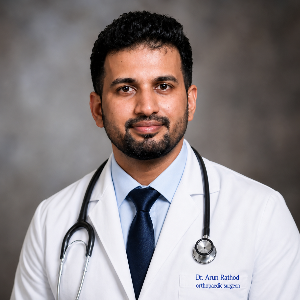
Dr. Arun Rathod - Joint replacement & Orthopaedic surgeon · Shivamogga, Karnataka

Dr Arun Rathod is an Orthopaedic & Joint Replacement Surgeon in Shivamogga specializing in knee pain, arthritis, fractures, sports injuries, ACL tears, spine…

Consultation fee₹300

Dr ANUPAM GUPTA

Verified

Senior Consultant Orthopaedics, Joint Replacement & Sports injuries

Orthopedics Orthopedic Spine Surgeons Orthopedic Surgeons
ProLife Hospital · Panchkula, Haryana

Dr. Anupam is an alumnus of India’s most prestigious medical institution, AIIMS, New Delhi. His extensive experience, clinical acumen, and empathetic approac…

Consultation fee₹500

Dr Milan Das

Verified

MBBS, D Ortho , MS Ortho

Orthopedic Surgeons Orthopedics
Care and Cure Nursing home · Chinsurah, West Bengal +19 more

Consultant trauma , arthroscopic and arthroplasty surgeon. Specialist in Total hip and Total knee surgeries. Special interest in complex trauma and arthrosco…

Consultation fee₹400 – ₹450

Dr R Kartheek

Verified

MBBS, MS - Orthopaedics

Orthopedic Surgeons
Vicinity Clinic · Hyderabad, Telangana

Dr R Kartheek is one of the best Hip and Knee replacement surgeons in Hyderabad. After his MS in Orthopaedics from Osmania medical college, he did his furthe…

2 Awards
Consultation fee₹600

MS Orthopaedic Surgery

Orthopedics Orthopedic Surgeons
Online Consultation · Mumbai, Maharashtra

I am a post graduate in Orthopaedics with complete 3 years experience of PG training and vast exposure to clinical cases of orthopaedics and emergency medici…

Consultation fee₹200

Dr Pradeep Lucas

Verified

MBBS D'ORTHO F-DFSI Consultant Orthopaedic,Diabetic Foot and Podiatric Surgeon

Orthopedic Surgeons
Revival Multispeciality Clinics · Bengaluru, Karnataka

Well trained Orthopaedic and Diabetic foot Surgeon and Podiatric Surgeon dealing with all bone joint and Diabetic foot problems Fellowship in Diabetic Foot s…

Consultation fee₹700

Dr Ashish Gupta

Verified

DNB/MS orthopaedics

Orthopedic Surgeons Orthopedics
Bone and joints clinic · Faridabad, Haryana

-former senior resident at holy family hospital okhla Delhi -former resident doctor at Maharaja -agarsen hospital punjabi bagh Delhi -ex Doctor at Santosh me…

Consultation fee₹300

Showing 1–12 of 12

Joint Fusion Surgery doctors by city

Introduction

Joint fusion surgery, also called arthrodesis, is a type of operation done to join two bones together so that they cannot move separately. This might sound strange at first; after all, most surgeries aim to restore movement, but in cases where pain and damage have made normal movement unbearable, fusion offers stability and relief. When a joint is badly worn out due to arthritis, trauma, infection, or congenital problems, patients can experience a lot of pain. Simply moving the joint can hurt badly, day after day.

Fusion surgery works by removing the damaged cartilage and placing the two bone ends directly against each other. The body eventually fills the gap with new bone, creating one solid piece. Because the joint no longer moves, the pain caused by the damaged joint can be reduced significantly or even disappear. This is a big advantage for people with severe pain that doesn’t improve with medicines or physical therapy.

Joint fusion is done in different parts of the body, like the ankle, wrist, spine, or foot. The main idea is the same everywhere: lock the joint so there is no friction, no abnormal motion, and no pain where the joint used to be. It’s not a quick fix, and recovery takes time, but many patients describe it as life-changing once healing is complete.

Who May Need Joint Fusion Surgery?

Joint fusion may be recommended when:

- Severe arthritis has destroyed the joint, and pain is constant

- Fractures around a joint didn’t heal well or kept causing pain

- Joint instability leads to frequent giving-way or deformity

- Infections have damaged cartilage that can’t be restored

- Certain neuromuscular conditions cause joint damage or instability

- Previous surgery didn’t work, and the joint continues to hurt

Not everyone with joint pain needs fusion. Often, doctors first try medications, injections, braces, and physical therapy. But when pain is severe, and nothing else helps, joint fusion becomes a sensible option.

Types of Joint Fusion Surgery

Joint fusion methods may vary based on the joint involved:

1. Ankle Fusion (Tibiotalar fusion): Common in severe ankle arthritis

2. Spinal Fusion: Fuses vertebrae to stabilise painful segments

3. Wrist Fusion: Used when wrist joints are badly damaged

4. Foot Fusion: Especially with severe mid-foot or hind-foot arthritis

5. Finger or Toe Fusion: Often done for painful small joint arthritis

Depending on the joint and patient factors, surgeons may use screws, plates, rods, wires, or bone grafts to keep the bones together until they grow into one piece.

Joint Fusion Procedure

Before surgery, you will have a detailed examination, including X-rays, CT, or MRI scans. These help the surgeon see how badly the joint is damaged. Blood tests and general health checks are done to make sure you can safely go under anaesthesia.

On the day of surgery, you will be given general anaesthesia or a regional block, so you won’t feel pain. In the operating room:

1. The surgeon makes an incision near the affected joint.

2. All damaged cartilage is removed so only raw bone surfaces remain.

3. Bone grafts may be placed between the bone ends to help with healing.

4. Screws, plates, rods or pins are used to hold everything tightly together.

5. The wound is closed, and a dressing or splint is applied.

The hardware keeps the bones stable while your body forms new bone between them. Unlike joint replacement, where movement is restored with an artificial joint, fusion purposely eliminates movement. The goal is comfort and strength.

Recovery & Aftercare

After surgery, you may stay in hospital from a day to several days, depending on which joint was fused and how complex the case is. Pain right after surgery is expected, and your doctor will give you pain medication for comfort.

Joint fusion recovery usually involves:

- Rest and Protection: The operated area must not bear full weight or movement too early. Crutches, braces, or casts may be used.

- Gradual Weight Bearing: In foot or ankle fusion, you may stay non-weight-bearing for weeks until X-rays show healing.

- Physical Therapy: Once early healing has begun, gentle exercises help maintain strength in nearby muscles and prevent stiffness.

- Follow-Up X-Rays: Regular imaging checks help confirm that the bones are fusing properly.

The fusion process itself can take anywhere from 6 to 12 weeks or more. Everyone heals differently; younger, healthier patients often heal faster, while smokers or those with diabetes may take longer.

Risks & Possible Complications

Joint fusion surgery is generally safe, but like all operations, it has risks. Some possible issues include:

- Delayed or Non-Union: Sometimes bones don’t fuse fully, requiring revision surgery

- Infection: Can happen with any surgery; early treatment is needed

- Nerve Injury: Temporary or rarely permanent nerve irritation or numbness

- Hardware Problems: Screws or plates can irritate soft tissue and may need removal

- Stiffness: Loss of motion at the fused joint may place more stress on nearby joints

- Pain: A small number of patients have ongoing discomfort even after healing

Your surgeon will review these risks with you and explain how they apply in your case. Careful surgical planning and proper aftercare reduce most problems.

Frequently asked questions

What is joint fusion surgery?

Joint fusion surgery joins two bones into one solid bone, so the joint no longer moves. It’s usually done when the joint is badly damaged and painful. The goal is to reduce pain and give better stability, although movement at that joint is sacrificed.

Does joint fusion surgery hurt?

During surgery, you are under anaesthesia, so you won’t feel pain. After surgery, it’s normal to feel discomfort or soreness as the area heals. Your doctor will give you pain medicines to make you comfortable.

How long does the joint fusion procedure take?

Most joint fusion surgeries take between one and three hours, depending on the joint and complexity. Smaller joints like fingers take less time, while bigger ones like ankles or spines take longer. Your surgeon will guide you on what to expect.

How long does recovery take?

Recovery can begin in a few weeks, but complete healing usually takes 6 to 12 weeks. Some patients may take longer if healing is slow. Physical therapy and following your doctor’s instructions help speed up recovery.

Will I lose movement after fusion surgery?

Yes, the fused joint will no longer move, because that’s the point of fusion: to stop painful movement. Nearby joints may compensate a bit, but your pain relief and improved function often outweigh the loss of motion.

Can everyone get joint fusion surgery?

Not everyone needs fusion. It’s recommended mainly when pain is severe, long-standing, and other treatments haven’t worked. Your doctor will check your condition carefully before suggesting it.

Chat Support