What Is a Bone Graft?
A bone graft is a surgical procedure in which bone, either from your own body or from another source, is placed into an area where bone is missing or weak to help the bone heal, grow, and become stronger. Bone grafting is commonly used when a bone has a large defect after injury, disease, or surgery, or when stronger bone is needed before placing dental implants, repairing fractures, or rebuilding joints.
Purpose & Benefits of Bone Graft
A bone graft helps repair hard tissues (bones) and provides support where bone has been lost or weakened.
• Helps Bone Healing: It gives a framework where new bone cells can grow, improving healing after fractures or bone loss.
• Strengthens Bone Structure: Particularly useful in areas that cannot heal on their own, such as large fractures or bone defects.
• Supports Dental Procedures: Often done before dental implants to build up the jawbone so implants fit securely.
• Used in Orthopedic Surgeries: Helps in spinal fusion, joint reconstruction, or in situations where bone has been removed due to infection or tumours.
• Promotes Function and Mobility: By restoring bone strength, it can improve stability and function in the affected area.
Who May Benefit from a Bone Graft?
A bone graft may be recommended for:
• Fractures that are not healing normally.
• Large bone defects due to trauma or surgery.
• Jawbone loss before dental implant surgery.
• Orthopedic reconstruction of joints or spine.
• Bone loss from disease, infection, or tumour removal.
Types of Bone Grafts
The bone graft material can come from different sources:
• Autograft: Bone taken from another part of your own body (e.g., hip) — often heals well because it contains living cells.
• Allograft: Bone taken from a donor (cadaver) and processed in a bone bank.
• Synthetic Grafts: Man-made bone substitutes that act as a scaffold for new bone growth.
• Xenografts: Bone derived from animals, processed to remove organic material.
Bone Graft Treatment Process
1. Evaluation & Planning:
Your doctor checks scans and decides which type of bone graft is best based on location, amount of bone needed, and overall health.
2. Preparation:
You may be asked to stop certain medications, and you’ll receive instructions about fasting before surgery.
3. Surgery:
Under general anesthesia, the surgeon makes an incision to access the affected bone. Bone graft material is placed into the defect, and sometimes plates, screws, or other hardware are used to support it.
4. Closing & Healing:
The area is closed with stitches. New bone begins to form around the graft as part of the natural healing process.
5. Follow-up:
Regular check-ups and imaging help monitor bone growth and healing. Recovery time varies depending on graft size and location.
Duration & Setting
Bone graft surgery is performed in a hospital or surgical center with anesthesia. The length of the procedure may range from 1–3 hours or more, depending on complexity. Some grafts require only a single surgery visit, while others need a short hospital stay.
Safety, Precautions & Risks
Bone grafting is generally safe, but like all surgeries, it carries some risks:
• Infection or bleeding at the surgical site.
• Pain, swelling, or discomfort as part of normal healing.
• Reaction to anesthesia.
• Graft failure or slow healing if the body does not fully integrate the graft.
• Nerve injury or graft rejection (rare).
Your surgeon will explain risks and specific care steps before and after surgery.
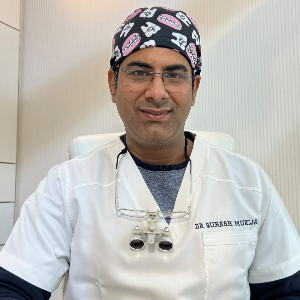
Dr. Suresh Kumar
Zygomatic Implant Specialist
 Dentist
.png) Dentist
DentistDr. Suresh Mukhija, the Chief Dental Surgeon and Chief Dental Implantologist at Krisshnaa Dental & Multispeciality Care, is a distinguished and well-known dentist in Delhi, boasting over 10 years of clinical experience. His expertise is internationally acclaimed, highlighted by the prestigious FELLOWSHIP IN DENTAL IMPLANTOLOGY he secured from the University of Genova, Italy. This specialization qualifies him as a proficient Zygomatic Implant Specialist, providing critical, advanced solutions for patients with severe bone loss. Dr. Mukhija leads a team of specialists at his clinic, dedicated to delivering the most modern and effective dental treatments at highly affordable prices.
74, Kishan Ganj market , Old rohtak road, Delhi-110007, Old rohtak road, Delhi., Delhi, Delhi, India, 110007
- Delhi, Delhi
- DocIndia Verified
- 5 Award
- 500
- KRISSHNAA DENTAL& MULTISPECIALITY CARE + 1 More

Dr. Isha Badyal
MDS Periodontist and Implantologist
Dentist
Dr. Isha Badyal is a Periodontist with a Master’s degree in Periodontology. She is trained in the diagnosis and management of gum diseases and specializes in non-surgical and surgical periodontal procedures, dental implant therapy, and preventive oral care. She also has strong clinical experience in general dentistry, including root canal treatments, restorations, crowns and bridges, and removable prostheses. Dr. Badyal believes in providing ethical, evidence-based, and patient-centric dental care with a strong focus on long-term oral health and patient comfort.
Gurugram, Haryana, India, 122505
- Gurugram, Haryana
- DocIndia Verified
- 300
- Online Consultation
 Orthopedics
Dr. U.K. Sadhoo
MBBS, MS - Orthopaedics
Orthopedics
Local Shopping Centre, Pamposh Enclave, Delhi, Delhi, India
Dr. Madan Temker
MBBS, MS - Orthopaedics, DNB - Orthopedics/Orthopedic Surgery
Orthopedics
2nd Floor, CNS Complex, Varthur Rd, Kumarapalli, Thubarahalli, Whitefield, Bengaluru, Karnataka 560066, Bengaluru, Karnataka, India
Dr. Chandrashekar
MS - Orthopaedics, MBBS
Orthopedic Surgeons
 Orthopedic Surgeons
L 166,3rd Floor, 5th Main Service Road, Sector 6, Outer Ring Road, Bengaluru, Karnataka, India
Dr. J V Srinivas
MBBS, MS - Orthopaedics
Orthopedics
CA-37, 24th Main Rd, ITI Layout, 1st Phase, Bengaluru, Karnataka, India
Dr. Bharath K. Kadadi
MBBS, MS - Orthopaedics
Orthopedics
8th Main Road, 5/2, 13th Cross Road, Bengaluru, Karnataka, India
Dr. Rudra Prasad
MBBS, DNB - Orthopedics/Orthopedic Surgery
Orthopedics
146, Infantry Road, Bengaluru, Karnataka, India