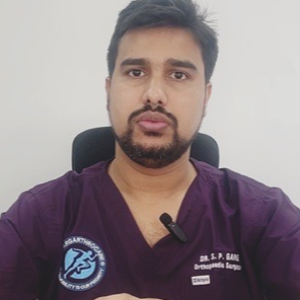
What Is Arthroscopic Surgery?
Arthroscopic surgery (also called arthroscopy) is a minimally invasive surgical procedure used to look inside and treat problems in joints using a small camera called an arthroscope. Surgeons insert this thin instrument through a tiny cut, and it sends live video to a monitor so they can see inside the joint without making a large incision. This allows both diagnosis and treatment of joint issues like torn cartilage, ligament injuries, or inflammation in places such as the knee, shoulder, ankle, hip, or wrist. Because the cuts are small, this approach usually leads to less pain, shorter recovery, and smaller scars than traditional open surgery.
Purpose & Benefits of Arthroscopic Surgery
Arthroscopic surgery is used for many joint problems and offers several benefits:
• Accurate joint evaluation: Doctors can clearly view inside the joint to find exact problems.
• Corrects injuries: Helps treat torn cartilage, ligaments, or loose bone pieces.
• Less pain after surgery: Smaller incisions usually mean less tissue damage and pain compared to open surgery.
• Faster recovery: Many patients go home the same day and return to normal activities sooner.
• Useful for many joints: Can be done on the knee, shoulder, hip, elbow, wrist, and ankle.
Who May Benefit from Arthroscopic Surgery?
Arthroscopic surgery may be recommended when someone:
• Has joint pain, swelling, or stiffness not improving with non-surgical care.
• Has a tear in cartilage or ligaments (e.g., meniscus tear in the knee).
• Has loose bone fragments or worn joint surfaces, causing pain.
• Needs joint evaluation and treatment when imaging (X-ray/MRI) hasn’t given a clear answer.
Arthroscopic Surgery Process
1. Consultation & Planning:
The surgeon evaluates symptoms, examines the joint, and may use imaging tests (X-ray or MRI) to plan the surgery.
2. Anesthesia:
You receive general, regional, or local anesthesia so you don’t feel pain during the operation.
3. Small Incisions:
Small cuts are made near the joint. A tiny camera (arthroscope) is inserted through one cut, and surgical tools go through others.
4. Viewing & Treatment:
The camera shows a clear picture inside the joint on a monitor. If needed, the surgeon repairs torn tissue, removes loose fragments, or smooths damaged areas.
5. Closure & Recovery Start:
Instruments are taken out, incisions are closed with stitches or tape, and recovery begins soon after surgery.
Duration & Setting
Arthroscopic surgery is usually performed in a hospital or surgical center by an orthopedic surgeon. The operation often takes about 1–2 hours, depending on the joint and treatment needed. In many cases, patients go home the same day or stay overnight for observation.
Safety, Precautions & Risks
Arthroscopic surgery is generally safe, but it still has some possible effects:
Common after-effects:
• Swelling, bruising, or mild pain around the incision sites.
• Stiffness or discomfort as the joint begins to heal.
Possible risks:
• Infection at the incision site (rare).
• Bleeding or blood clots.
• Nerve or tissue damage (very rare).
• Incomplete relief of symptoms or need for further surgery.
Your surgeon will explain all precautions and instructions to help ensure proper healing.

 Orthopedics
 Orthopedic Surgeons