Learn More About Ovulation Calculation and How it Can Help in Pregnancy?
On this page
- Ovulation Calculation
- Here are a few signs that you are ovulating
- Do you know when ovulation occurs to you?
- Let us learn how to use the ovulation calculator
- Have you ever thought about why ovulation calculation is important? Here is why
- When you should visit a doctor?
- Here are a few tips for getting pregnant
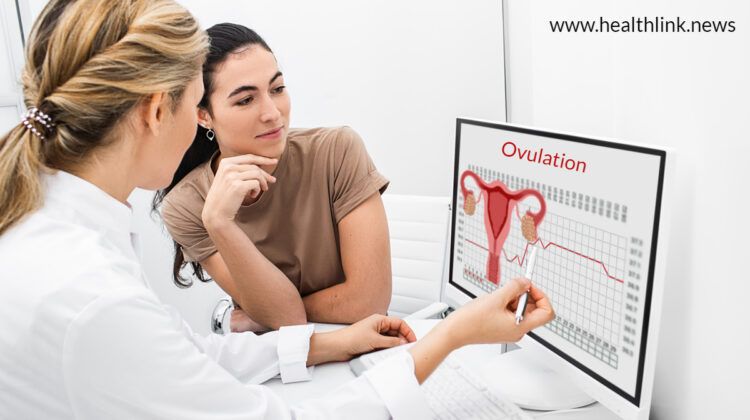
Ovulation Calculation
Being pregnant can be your dream come true. It is one of the most beautiful emotions in the world, like intimacy with your partner. But for the others, you might not yet be ready, which is not a bad thing either. Whether you are trying to get pregnant or buffer, for now the ovulation calculator can help you do both.
Having sexual intercourse during low-risk months when you have no ovulation makes your chances of getting pregnant so much lower. So, it is always best to know the days when you are most likely to be fertile as it can only increase your chances of getting pregnant. A woman’s typical menstrual cycle is 28 days, but each woman is different. Each menstrual cycle has about 6 days when you can get pregnant. This is called your fertile window. You can use the calculator anywhere, any time to see when you are most likely to give birth.
Here are a few signs that you are ovulating
When ovulation occurs in your body the body shows some symptoms that indicate your utmost fertility. Some such symptoms are as follows:
- A Sudden increase in the basal temperature of your body, approximately around 1/2 to 1 degree. You will certainly notice this rise in body temperature once ovulations start if you measure your body temperature with a thermometer.
- An Increase in the levels of luteinizing hormone (LH) can be measured using a home ovulation kit
- Sudden changes occur in the secretion of cervical mucus, also known as vaginal discharge or white discharge. It tends to appear clearer, thinner, and stretchy, like raw egg whites
- Growth and tenderness in breasts
- Bloating of stomach
- Light spotting
- One may experience mild pains or cramps
Do you know when ovulation occurs to you?
Ovulation usually occurs 14 days before the start of the next menstrual period, but it can vary from month to month, even for women who have a regular cycle. Record your basal body temperature and cervical mucus for a better understanding of the timing of ovulation. Check for hormonal changes before ovulation using a commercially available ovulation prediction kit or OPK, ovulation tracking bracelet, or lab test.
If you are trying to get pregnant, how often you need to have sex, depends on your ovulation. If you have sexual intercourse 1-2 days before ovulation, you are most likely to become pregnant. However, the length of the cycle varies, and some women are irregular or miscalculate the cycle. Sperm can survive up to 5 days in a female body. To make sure about it, start having sex 3 days before ovulation and have frequent sex for 2-3 days after you think you are ovulating.
Let us learn how to use the ovulation calculator
The calculation of when ovulation occurs to you is very easy. This is how you do it.
- Step 1: Begin by entering the date of the first day of your last period on an ovulation calculator. It is easily available. For example , if the last period starts on the 11th of the month and ends on the 16th, the first day of the last period will be the 11th.
- Step 2: Select the average length of your menstrual cycle. To do this, start by calculating the number of days from the first day of your last-to-last period to the first day of your last period. For example , if your menstruation had begun on the 12th of February and the 10th of March, the average length of your cycle is 30 days. It is the number of days between the two dates.
However, if you need to get a more accurate reading, try following the same steps for 4-5 months. Let us assume that the average cycle length for the period from March to July is 30, 29, 27, and 30. Your average cycle length would be an average of these numbers, that is, 29.
Step 3: Now, press `Calculate’ on your ovulation calculator to see your ovulation date, ovulation window and your next period date. The ovulation window is also called the fertility window as these are the most fertile days for the woman. However, you must keep in mind that these are only rough estimates regarding your ovulation, and your dates may differ.
Have you ever thought about why ovulation calculation is important? Here is why
having a clear understanding of how your body works is essential to being healthy and wise. Calculating your ovulation is important, especially if:
a) If you are planning a pregnancy
b) If you are not ready and are planning to avoid pregnancy and
c) If you want to keep a check on your ovulation symptoms such as light spotting, breast tenderness, slight cramping or side pains, abdominal bloating, or even increased sex drive.
A lot of you might be thinking about how long you are going to be ovulating
It is not that long. Your ovulation lasts for around 12 to 24 hours. Once your ovary releases an egg, it stays in your body for about 12 to 24 hours and after that, it dissolves or dies if it is not fertilized by a sperm. This leads to detachment or shedding of the uterine lining, which leads to menstruation after 2 weeks. But that does not mean you can only get pregnant during that days’ time frame. Sperm are known to stay in the female body for up to 5 days. Therefore, if you have had sex without using any protection 5 days before the day of ovulation and during the 6 days of the day of ovulation, you may become pregnant.
When you should visit a doctor?
You need to make sure you do not have PCOD. If you have polycystic ovary disease (PCOD), it affects ovulation. If such a case occurs, you must see a doctor understand your ovulation cycle.
Thyroid problems can also be of great effect on your ovulation cycle and can lead to premature menopause. You need to consult a doctor if you have been diagnosed with an overactive or underactive thyroid.
If you see any unusual occurrence, such as having a period that is postponed or delayed by more than a week, unusually light or heavy discharge or excruciating pain, you must visit the doctor.
You may not be ovulating too. If you are wondering what the signs are show that you are not ovulating , then you are in the right place.
You must know that regardless of the fact that you ovulate or do not ovulate, your body`s uterine lining breaks every month, and you have your menstrual cycle. The signs that your body is not releasing an egg can differ from heavier or lighter menstrual bleeding for the last few periods, having extremely painful periods, having irregular periods, if you notice sudden changes in you such as a weight gain, or a drop in sex drive, or even growth of body hair or development of acne.
Here are a few tips for getting pregnant
- Find out when you will ovulate using an ovulation calculator, an ovulation predictor kit, or by tracking your symptoms.
- Have sex during the two or three days before you ovulate.
- Consult your doctor, drop any unhealthy habits, and start consuming folic acid before you start trying.
Know that sex position and female orgasm do not affect your chances of getting pregnant.