100 gm soya chunks calories - Nutrition Facts Information
On this page
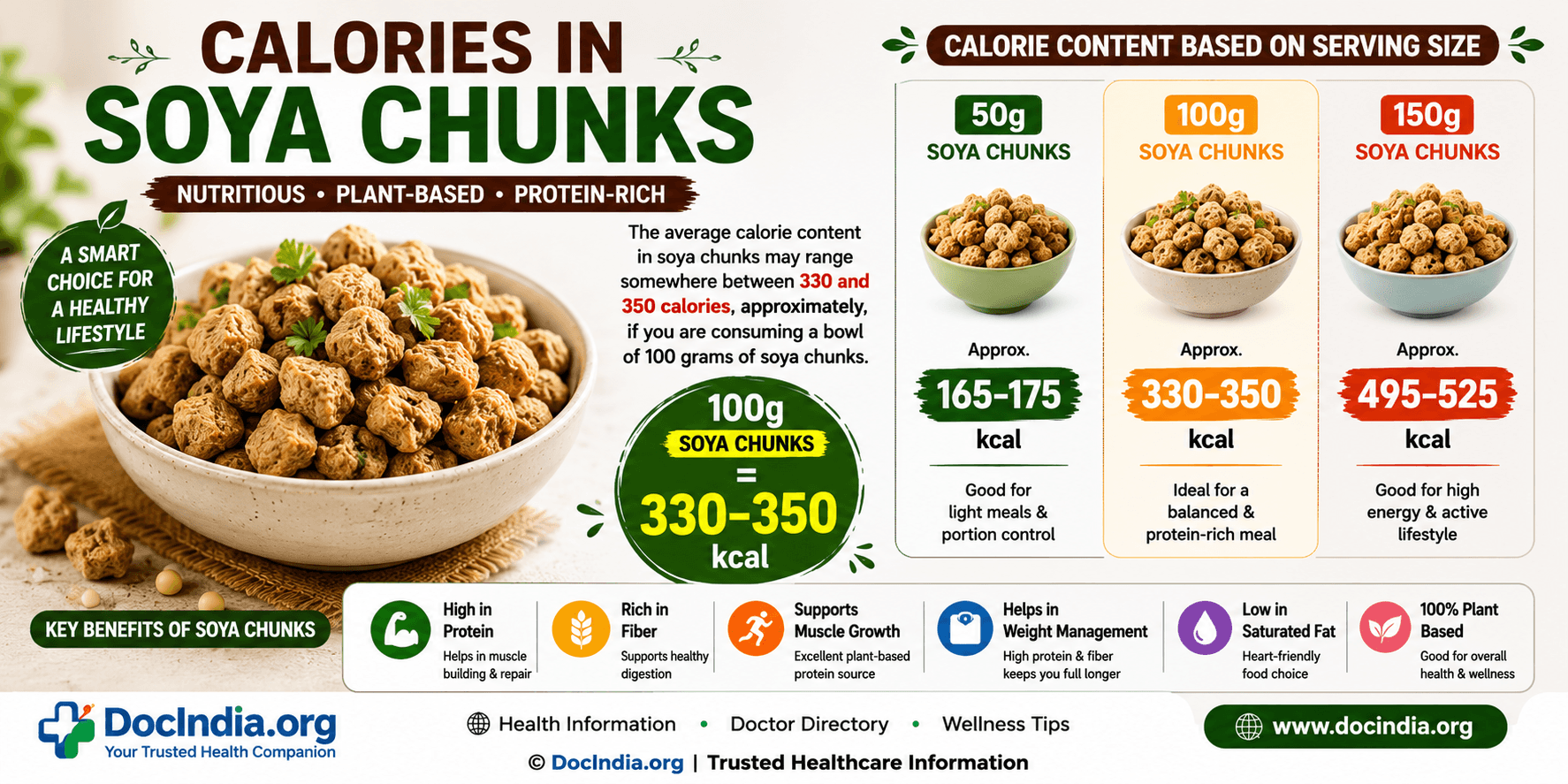
Soya chunks are some of the most highly recommended foods by health care experts, mostly for their rich protein content and being filled with high amounts of nutritional components. These vital nutrients in soya chunks are proven to improve your overall wellness and help you to stay healthy and free from the risks of developing various types of diseases.
This article will give you a clear account of the number of calories present in soya chunks, the list of nutritional components that are present in these protein chunks, the health benefits that you can derive from them, and other details.
Calorie content in soya chunks:
Soya chunks are some of the richest sources of plant-based protein and are dense in other necessary nutrients and thus are mostly low in calorie content.
The average calorie content in soya chunks may range somewhere between 330 and 350 calories, approximately, if you are consuming a bowl of 100 grams of soya chunks. But the calorie content usually lowers down after the soya chunks absorb water.
Yet, there are certain factors on which the net calorie content of soya chunks may depend. Some of them can be listed here as follows:
The way in which soya chunks are cooked
The ingredients used while cooking the soya chunks
The portion size of your total soya chunk intake each day
The size of the soya chunks (large or soya mini chunks, for instance).
Nutritional components in soya chunks:
Soya chunks are powerhouses of some of the major nutritional components that can be highly beneficial for your health and wellness. Some of the major nutrients and health benefits that you may get from soya chunks may include the following:
1. Protein:
Soya chunks are often considered as some of the greatest sources of vegetable protein. In fact, you are likely to get almost around 50 to 52 grams of protein per 100 grams (dry), which is significantly higher than any other plant-based food. Being rich in protein, soya chunks can be a perfect choice for vegetarians to gain enough protein in their daily diet for better muscle repair, overall growth, and development.
2. Carbohydrates:
The other major macronutrient that is present in soya chunks includes quite a large amount of carbohydrates. You can get almost 30 to 5 grams per 100 grams of soya chunks, approximately. The carbohydrate content in soya chunks is not only beneficial for providing enough amount of energy, but can also help to reduce the risks of digestive problems.
3. Vitamins and Minerals:
Soya chunks are quite rich in some of the most essential micronutrients. These are vital sources of B-complex vitamins (especially vitamin B12), along with folic acid or folate, which can help in the better functioning of cells and growth of tissues.
The minerals that you are likely to find in soya chunks include iron, which can help to prevent anaemia, calcium and magnesium for strong bone health, and small amounts of phosphorus, potassium, and small amounts of zinc.
Which specialist should you consult for having soya chunks?
Soya chunks are quite safe to be included in your daily diet, being low in calories and high in protein and other nutrients. But such high amounts of protein may not be good for many people. So, you must know whether adding soya chunks to your daily diet is good for your health at all, and you should take expert opinion before having soya chunks.
You may consult with a registered nutritionist expert or a dietitian . This is because consulting a specialist will be able to get an idea regarding:
Whether you can have soya chunks at all
The portion size of your total soya chunk intake
The ingredients to add while cooking the soya chunks
How can you make soya chunks healthier?
Final Thoughts:
To conclude, one can state that soya chunks are quite beneficial for your overall health and wellness if you add them to your daily diet. These chunks, no matter what their sizes are, can be rich in nutritional components and are quite beneficial for healthy weight management, improving the health of your muscles, heart health, and controlling your blood sugar levels. But be careful, so that you do not end up having too many soya chunks, especially if your body is intolerant towards protein.
Also Check: Calories in 100 gm Peanuts Protein - Nutritional Information
Authors

Bidiptaa Sen
MA in Mass Media and Communication, Jadavpur University With 3.5+ years of experience in writing marketing and SEO content on healthcare and wellness, I write articles that help people to get an idea regarding medicines that are prescribed, how to improve their wellness care and educate people how to choose accurate health facilities. My communication skills, depth of knowledge in media management and strategic methods for better social media engagement and improving readers' experience through extensive research on the healthcare scenario.
View profile
Sania Thakur
Content writer and marketing professional with strong sales and business skills. Experienced in web content writing, data annotation, and teaching, with a proven ability to craft engaging content and drive audience growth. Background in English Literature and Language Teaching from Aligarh Muslim University. Passionate about communication, branding, and strategic market analysis.
View profile