Why Is Thoracentesis Performed?
Thoracentesis is a medical procedure performed to remove excess fluid from the pleural space, which is the area between the lungs and the chest wall. Under normal conditions, only a small amount of fluid is present in this space to help the lungs move smoothly during breathing. However, certain medical conditions can cause an abnormal accumulation of fluid, known as pleural effusion.
Thoracentesis may be performed for both diagnostic and therapeutic purposes. Diagnostic thoracentesis helps healthcare providers determine the cause of pleural effusion by collecting a fluid sample for laboratory analysis. Therapeutic thoracentesis is performed to remove larger amounts of fluid to relieve symptoms such as shortness of breath, chest discomfort, and breathing difficulties.
Pleural effusion may occur due to various conditions including infections, heart failure, kidney disease, liver disease, cancer, pulmonary disorders, and inflammatory conditions. Thoracentesis helps physicians evaluate the underlying cause of fluid accumulation while also improving patient comfort and respiratory function.
Overall, thoracentesis is a commonly performed procedure that can assist in diagnosis, symptom relief, and management of conditions affecting the lungs and pleural space.
Purpose & Benefits of Thoracentesis
Thoracentesis offers several important benefits.
• Removes excess fluid from the pleural space
• Helps improve breathing and lung expansion
• Relieves shortness of breath
• Reduces chest pressure and discomfort
• Assists in diagnosing the cause of pleural effusion
• Helps guide further treatment planning
• Improves patient comfort and respiratory function
• Provides fluid samples for laboratory analysis
These benefits make thoracentesis an important procedure in the evaluation and management of pleural effusion.
Who May Benefit from This Procedure?
Thoracentesis may benefit:
• Individuals with pleural effusion
• Patients experiencing shortness of breath due to fluid accumulation
• People with unexplained fluid around the lungs
• Patients requiring evaluation of pleural fluid
• Individuals with suspected infections affecting the pleural space
• Patients with cancer-related pleural effusion
• People with heart failure associated with pleural fluid buildup
• Individuals requiring symptom relief from chest pressure
Doctors evaluate symptoms, imaging findings, medical history, and overall health before recommending thoracentesis.
Thoracentesis Procedure
1. Medical Evaluation
The doctor reviews the patient's symptoms, medical history, imaging reports, and the reason for fluid accumulation.
2. Imaging Assessment
Chest X-rays, ultrasound, or other imaging studies may be used to identify the location and amount of pleural fluid.
3. Patient Positioning
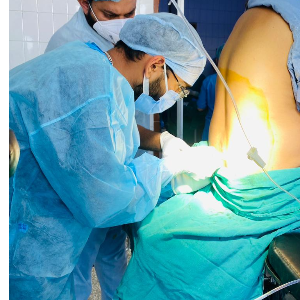
The patient is typically seated upright and positioned to allow safe access to the pleural space.
4. Site Preparation
The skin over the procedure area is cleaned using antiseptic solutions to reduce the risk of infection.
5. Local Anesthesia
A local anesthetic is administered to numb the area before needle insertion.
6. Needle or Catheter Insertion
A needle or catheter is carefully inserted through the chest wall into the pleural space.
7. Fluid Removal
Pleural fluid is withdrawn either for laboratory testing, symptom relief, or both.
8. Completion of Procedure
After fluid removal, the needle or catheter is removed and a dressing is applied to the site.
9. Post-Procedure Monitoring
Patients may be observed for a period of time to ensure there are no immediate complications.
The procedure helps remove excess fluid and provides important diagnostic information regarding the cause of pleural effusion.
Duration & Treatment Setting
Thoracentesis is usually performed in hospitals, pulmonary medicine departments, respiratory care centers, interventional radiology units, and multispecialty healthcare facilities.
The procedure itself is generally completed within approximately 15 to 45 minutes, depending on the amount of fluid being removed and the complexity of the case. Additional time may be required for preparation, imaging guidance, and post-procedure observation.
Thoracentesis is commonly performed as an outpatient procedure or during a hospital stay if the patient is already admitted for treatment of an underlying medical condition. Most patients can return home after monitoring unless additional treatment is required.
Safety, Precautions & Risks
Thoracentesis is generally considered safe when performed by qualified healthcare professionals.
Common Effects
• Mild discomfort at the insertion site
• Temporary coughing during fluid removal
• Mild soreness after the procedure
• Temporary fatigue
Possible Risks
• Pneumothorax (collapsed lung)
• Bleeding
• Infection
• Injury to nearby structures
• Re-expansion pulmonary edema in rare cases
• Persistent discomfort at the procedure site
Precautions
• Inform the doctor about medications and bleeding disorders
• Follow pre-procedure instructions carefully
• Remain still during the procedure
• Attend follow-up appointments if recommended
• Seek medical attention if symptoms worsen after the procedure
Proper monitoring and adherence to medical recommendations help reduce the risk of complications.
Types of Thoracentesis
Different forms of thoracentesis may be performed depending on the purpose of treatment.
• Diagnostic Thoracentesis
Performed to collect pleural fluid samples for laboratory testing and diagnosis.
• Therapeutic Thoracentesis
Performed to remove larger volumes of fluid and relieve symptoms such as shortness of breath.
• Ultrasound-Guided Thoracentesis
Uses ultrasound imaging to improve accuracy and help guide needle placement.
• Repeated Thoracentesis
May be performed in patients who experience recurrent pleural effusions requiring ongoing fluid removal.
The healthcare provider recommends the most appropriate approach based on the patient's condition and treatment objectives.
Recovery After Procedure
Recovery after thoracentesis is usually straightforward. Many patients experience relief from symptoms such as shortness of breath and chest pressure soon after fluid removal.
Patients may be monitored for a short period following the procedure to ensure stable breathing and to evaluate for potential complications. In some cases, follow-up imaging such as a chest X-ray may be performed.
Mild soreness around the insertion site may occur but generally improves within a few days. Patients are usually advised to follow medical instructions, monitor for symptoms such as worsening shortness of breath or chest pain, and attend follow-up appointments when necessary.
Recovery time may vary depending on the underlying cause of the pleural effusion and the patient's overall health condition. Ongoing management of the underlying disease remains important for long-term outcomes.
 Internal medicine
 General Surgeon

 Pulmonology
 Allergy and Immunology

.png) Cardiology
Cardiology

.png) Family Medicine
Family Medicine


 Obstetricians and Gynecologists
 Gynecology
 Surgery