When Is Surgery Needed for Clubfoot?
Clubfoot (medically called talipes equinovarus) is a condition present at birth where a baby’s foot is twisted inward, downward, or both. Instead of pointing straight ahead, the foot may look like it’s turned in or twisted down toward the sole. Sometimes one foot is affected, and sometimes both feet are involved. The muscles, tendons, and bones of the foot and lower leg are shaped differently, which makes it hard for the child to walk normally unless it is treated.
Clubfoot correction is a set of treatments used to gently reposition and correct the foot so that it can function normally. The most common method is the Ponseti technique, which uses gentle casts and braces. In some cases, surgery may be needed to release tight tendons or adjust foot bones. Early treatment, ideally soon after birth, helps give the best result so the child can walk, run, and play comfortably.
Purpose & Benefits of Clubfoot Correction
● Helps the foot straighten and align properly
● Improves the ability to walk and stand normally
● Prevents future pain or disability
● Reduces the need for lifelong assistive devices
● Help the child participate in everyday activities
● Encourages normal leg and foot development
Who May Need Clubfoot Correction?
● Babies born with clubfoot
● Children with partial correction after earlier treatment
● Individuals with recurrent clubfoot deformity
● Patients with tight tendons and limited foot movement
● Children whose foot shape affects mobility
Types of Clubfoot Correction
1. Ponseti Method
This is the most common and widely accepted approach. It uses a series of gentle manipulations and casts to slowly correct the position of the foot.
• The foot is gently moved toward a more normal position.
• A cast is placed to hold the new position.
• The process is repeated every week for several weeks.
Once the foot is corrected with casting, a brace is worn to keep the feet in the corrected position and prevent relapses.
2. French Functional Method
This is a non-surgical method involving daily stretching, taping, and physical therapy by trained therapists. It requires frequent visits and parent participation.
3. Surgical Correction
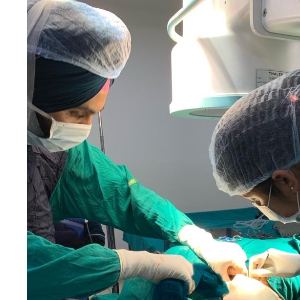
If non-surgical methods are not enough, especially in older children or severe cases, surgery may be done to release tight tendons or adjust bones. Surgery is usually followed by casting and bracing.
Clubfoot Correction Procedure: Step-by-Step
Ponseti Method (Most Common):
1. Assessment:
The doctor examines the baby’s foot to plan treatment.
X-rays may be taken to understand bone position if needed.
2. Manipulation & Casting:
The foot is gently moved into a better position.
A cast is applied from the toes to the thigh to hold the correction.
3. Weekly Changes:
The cast is changed weekly for about 4–8 weeks.
Each new cast allows more correction.
4. Tenotomy (if needed):
A tiny procedure to cut the Achilles tendon may be done under local anesthesia to help stretch the heel.
A final cast is applied for about 3 weeks.
5. Bracing:
A special brace (boots and bar) is fitted to keep the feet in position.
The brace is worn full-time for 3 months, then at night and nap time for several years.
French Functional Method:
Daily gentle stretching and taping by a therapist. The foot is kept in a correct position with tape and splints. Parents are taught how to continue exercises at home.
Surgical Correction:
1. Anesthesia:
General anesthesia is given so the child does not feel pain.
2. Procedure:
Tight tendons and soft tissues are released.
Bones may be adjusted and aligned.
3. Casting and Recovery:
A cast is applied after surgery, followed by a brace as healing continues.
Recovery & Aftercare
● Follow-up visits are important to check progress.
● After casting or surgery, braces help keep the correction.
● Watch for skin irritation or rubbing under casts or braces.
● Keep the cast dry and clean.
● Parents are taught how to check the foot and brace fit.
● Ongoing physical therapy may be recommended.
Most babies respond well to early treatment. With proper casting and bracing, many children achieve good foot shape and normal walking.
Risks & Possible Complications
Clubfoot correction is generally safe, but some issues may occur:
● Relapse (foot turning inward again) if braces are not worn as advised
● Skin irritation under the cast or brace
● Foot stiffness or tight tendons in some cases
● Rarely, surgical site infection (with surgical correction)
● Need for additional casting or procedures in some cases
Your doctor will explain how to prevent problems and how to care for casts and braces at home.
Clubfoot Correction vs Other Treatments
Ponseti Method
● Non-surgical and most effective
● Uses gentle manipulation and casts
● Followed by bracing
● Very high success in babies
French Functional Method
● Daily stretching and taping
● Requires frequent therapist visits
● Good for early, mild cases
Surgical Correction
● Used when non-surgical methods aren’t enough
● Involves releasing tight tissues and fixing bone position
● Followed by casting and braces
The choice depends on severity, age, and response to initial treatment.
 Orthopedics
 Orthopedic Surgeons
 Orthopedic Spine Surgeons

 Physiotherapy