What Is Bone Fracture Repair and How Is It Performed?
Bone fracture repair is a medical treatment used to fix broken bones so they can heal properly and return to normal function. When a bone breaks, the pieces must be realigned and held in place so that new bone can grow back solidly. This process is important because bones that heal with the wrong alignment or without support may cause pain, deformity, limited movement, or long-term problems.
A doctor or surgeon will decide the best method to repair the fracture based on how severe the break is, which bone is broken, and whether other tissues (like nerves or blood vessels) are involved. Treatment may be non-surgical, using a cast or brace, or surgical, using plates, screws, rods, or other devices to stabilize the bone.
Purpose & Benefits of Bone Fracture Repair
● Restores proper bone alignment to help heal the fracture correctly.
● Supports faster and more stable healing, especially for serious breaks.
● Reduces pain and discomfort by keeping bone pieces steady.
● Improves future function and mobility of the injured area.
● Prevents long-term problems like deformity or early arthritis.
● Helps protect nearby nerves and blood vessels that may be affected by the fracture.
Who May Need Bone Fracture Repair?
Bone fracture repair is often recommended for people who:
● Have severe or displaced fractures where bone pieces are not aligned.
● Have breaks that cannot heal properly with just a cast or splint.
● Have open fractures where the bone has pierced the skin.
● Have fractures involving joints that need precise alignment.
● Have poor healing or risk of non-union (when bone fails to join on its own).
● Require internal support because the break is in a load-bearing bone (e.g., femur).
Your doctor will name the exact type of repair based on your X-rays, symptoms, and overall health.
Types of Bone Fracture Repair
Non-Surgical Repair
In less serious fractures where bones are still aligned or can be aligned externally, doctors may use:
● Casts or Splints: Hard covers that keep bones from moving while they heal.
● Braces: Support that allows controlled movement while protecting the bone.
● Traction: Gentle pulling to help align bones is sometimes used before casting.
Open Reduction and Internal Fixation (ORIF)
This is the most common surgical fracture repair for broken bones that can’t be fixed by casting alone. “Open reduction” means the surgeon makes a cut to expose and reposition the broken bone pieces, and “internal fixation” means using metal plates, screws, rods, or pins to hold them in place while healing occurs.
External Fixation
In this method, pins or screws are placed into the bone and connected to a bar outside the skin, creating an external frame that keeps the bone stable while it heals. It’s often used when the injury also involves soft tissue damage or when internal devices can’t be used immediately.
Specialized Techniques
In rare or complex cases (such as bones that haven’t healed or those with infection risk), methods like bone grafts or distraction osteogenesis may be used to promote healing and restore length or alignment.
Bone Fracture Repair Procedure: Step-by-Step
1. Preparation and Evaluation:
The doctor examines the injury and uses imaging tests like X-rays or CT scans to see where and how the bone is broken. You’ll be told about medications to avoid and how to prepare for surgery if needed.
2. Anesthesia:
For surgical repair, you’ll get general anesthesia (asleep) or regional anesthesia (numb) so you don’t feel pain.
3. Reduction (Setting the Bone):
- In closed reduction, the doctor moves the bone from the outside without surgery.
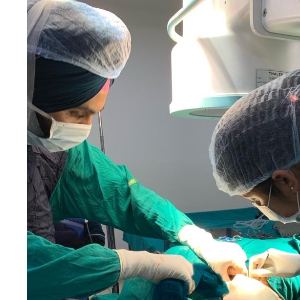
- In open reduction, a small or larger incision is made to directly access and align the bone.
4. Fixation: Once aligned, the bone pieces are held steady:
- Internal fixation with metal plates, screws, rods, or pins inserted into the bone.
- External Fixation with frame and pins outside the skin.
5. Closing and Dressing:
The surgical wound is stitched or stapled, and the area is wrapped in a sterile dressing. A cast or splint may also be applied to support the bone.
6. Monitoring and Recovery Start:
After the procedure, you’ll be observed in a recovery area until the anaesthesia wears off. Pain relief and early movement instructions are given.
Recovery & Aftercare
After bone fracture repair:
● Initial Care: You may stay in the hospital for a few hours or days depending on your situation. Pain control and wound care are priorities.
● Cast or Brace: Most patients need to wear a cast, splint, or brace for several weeks so the bone stays stable.
● Physical Therapy: Once the bone begins healing, your doctor may recommend physiotherapy to help regain strength, flexibility, and normal movement.
● Home Care: Protect the injured area from water, strain, or falls. Follow your doctor’s advice about medicines, diet (rich in calcium and vitamin D), and activity limits.
● Follow-Up Visits: Regular check-ups help ensure the bone is aligning and healing well. Recovery can vary, simple fractures may heal in a few weeks, while complex ones can take several months.
Risks & Possible Complications
Bone fracture repair is usually safe, but like all medical procedures it carries some risk:
● Infection at the incision or bone site.
● Bleeding during or after surgery.
● Blood clots in the legs (deep vein thrombosis).
● Nerve or blood vessel damage near the fracture.
● Delayed healing or non-union (bone takes too long or fails to heal).
● Misalignment (malunion) where the bone heals incorrectly.
Your care team will explain your personal risks based on your injury and health history.
Bone Fracture Repair vs Other Treatment Methods
● Repair vs Casting Only: Some fractures can heal in a cast alone, but more severe or shifted breaks often need fracture repair to align bones correctly.
● Internal vs External Fixation: Internal fixation uses plates and screws inside the body, while external fixation uses pins with a frame outside the skin, both stabilize the bone but in different ways.
● Surgical vs Physical Therapy Alone: Physical therapy helps regain movement after healing but won’t fix bone alignment by itself; surgery or proper immobilization must first ensure bone alignment.
 General Physician
.png) Family Medicine
Family Medicine
 Physiotherapy
.png) Critical care medicine
Critical care medicine
 Sports Medicine
 Orthopedic Surgeons
 Orthopedics

 Internal medicine
.png) Emergency Medicine
Emergency Medicine