Prostate Artery Embolization (PAE): Benefits & Procedure
On this page
- What Is Prostate Artery Embolization? A Patient-Friendly Medical Explanation
- What is an Enlarged Prostate? Or Benign prostatic hyperplasia (BPH)
- Symptoms of an Enlarged prostate
- How PAE Reduces the Size of the Prostate?
- Who Is an Ideal Candidate for PAE?
- Who May Not Be Suitable for PAE?
- What Happens Before the PAE Procedure?
- What to Expect During Your PAE Procedure?
- Benefits of PAE Compared with Surgical Approaches
- Possible Risks and Side-Effects
- Efficacy of PAE: Findings from Various Studies
- Effect of PAE on Sexual Function or Fertility?
- PAE procedure for patient suffering other Medical Conditions
- Will PAE Eliminate the Need for Prostate Medications?
- Lifestyle Changes that supports better results after PAE
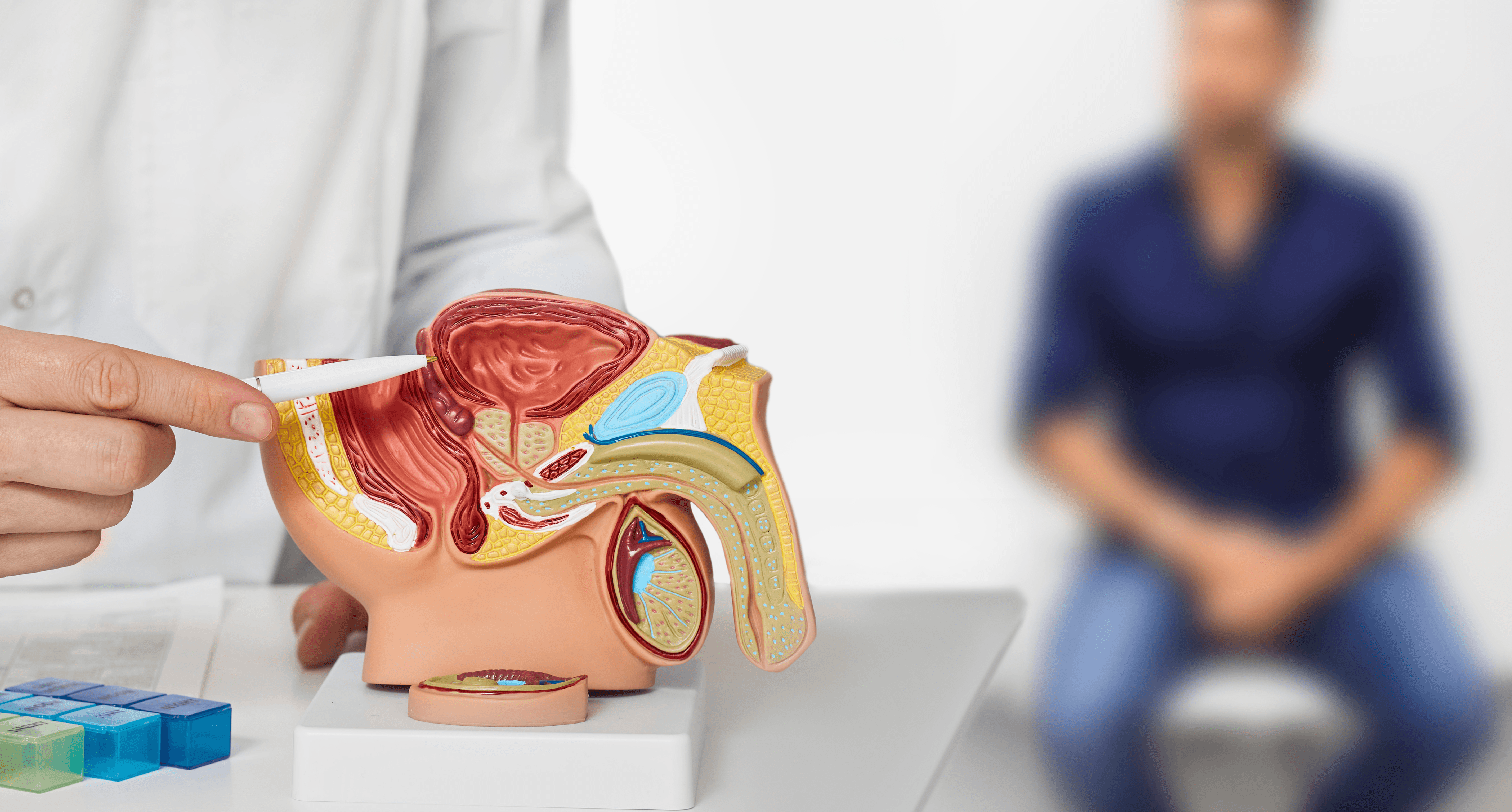
What Is Prostate Artery Embolization? A Patient-Friendly Medical Explanation
Prostate Artery Embolization or PAE, is a minimally invasive procedure that aims to provide relief from the symptoms associated with an enlarged prostate.
Unlike surgery, prostate artery embolization actually decreases the size of the prostate by slowing its blood flow.
The procedure is conducted by a specifically trained doctor known as an interventional ra-diologist, through the use of imaging and small tools. In this procedure large incisions are not required and most of the patients go home on the same day.
PAE has mostly been used in the treatment of benign prostatic hyperplasia (BPH), which is a non-cancerous enlargement of the prostate gland in aging men.
What is an Enlarged Prostate? Or Benign prostatic hyperplasia (BPH)
The prostate is a gland, which is small and is placed below the bladder, near the urethra (a tube through which the urine passes). As men gets older, their prostate enlarges in size. This is completely normal and is non-cancerous.
However, if this gland enlarges beyond normal, it puts pressure on the urethra, making it difficult for urine to drain. This compression causes many of the urinary symptoms, which are associated with BPH.
BPH is very prevalent and common in men over the age of 50 years. They experience this enlarged prostrate symptoms and with increase in age the condition becomes more fre-quent.
Symptoms of an Enlarged prostate
The enlarged prostate may cause difficulty with daily life activities like, sleep, urination etc. The symptoms may include:
- Frequent urination, especially during night time
- Slow or weak urine stream
- Difficulty in starting during urination
- Sensation that bladder is not emptied
- Urinary urges that are sudden
- Dribbling after urination
These symptoms are generally not serious, but they can certainly impact the quality of life.
How PAE Reduces the Size of the Prostate?
Dr. Bhavesh Popat, an interventional radiologist in mumbai says “The prostate enlarges be-cause of continuous blood flow to it. PAE carefully blocks some of the smaller arteries that carry blood to the prostate.
During this process, minute particles are inserted into these arteries. This causes a reduc-tion in blood flow, resulting in the shrinkage of the prostate. At the same time, as the pros-tate shrinks, the pressure on the urethra reduces, thus improving the urinary symptoms.
The PAE process is carefully targeted and does not affect other organs.”
Who Is an Ideal Candidate for PAE?
PAE can be considered for the following who:
- Suffer from moderate to severe urinary symptoms from BPH
- Have not improved enough with medications
- Want to avoid surgery
- Concerns about surgical risks and side effects
- Have an enlarged prostate that does not respond to other forms of therapies
- Prefer a minimally invasive surgical method
A full assessment must be done by the medical expert before considering suitability.
Who May Not Be Suitable for PAE?
PAE may not be the ideal alternative for all patients. There may be other treatments or preference if the patient meets any of these criteria:
- Has prostate cancer
- Has severe bladder issues that are not related to BPH
- Has certain abnormal blood vessel anatomy
- Has untreated urinary tract infections
- Has symptoms due to non-prostate conditions
A doctor will examine the history and the test results before suggesting the PAE treatment.
What Happens Before the PAE Procedure?
Prior to PAE, the following evaluation are done:
- Medical history and symptoms evaluation
- Blood tests
- Urine tests
- Prostate imaging (CT Scan or MRI)
- Ultrasound or urine flow studies
The patient may need to discontinue some of their medications. Guidelines are provided to avoid causing harm to the patient.
What to Expect During Your PAE Procedure?
PAE is commonly carried out in a hospital or at outpatient clinic.
- It may take 1.5 to 3 hours for completion
- Local anesthesia is employed, this means that patients can remain conscious throughout
- Mild sedation can also be used for relaxation
In fact, most of these patients experience minimal or no pain.
Step-by-Step PAE
- A small puncture is made in the wrist or groin region
- A thin catheter is inserted into the prostate arteries using imaging
- To decrease blood flow, tiny particles, often microspheres are used
- The catheter is removed
- A bandage is put in place – no stitching is needed
The procedure is done by an interventional radiologist who has expertise in image-guided therapies.
- Recovery after Prostate Artery Embolization (PAE) Procedure
- Almost all patients are allowed to go home the same day
- Mild pain, fatigue or urinary irritation may be experienced
- Normal activities usually return in a few days
- Symptoms show improvement in weeks’ time
Follow-up visits must check the progress.
Benefits of PAE Compared with Surgical Approaches
PAE has many advantages:
- Decreased risk of bleeding
- Reduced recovery time
- Minimal anesthesia
- Preservation of urine and sexual functions
- Best option for patients with a higher risk of surgery
These advantages make PAE an attractive option for several patients.
Possible Risks and Side-Effects
PAE is considered relatively safe; however, as in any medical intervention, complications are possible. Some of these complications include:
- Temporary pelvic pain
- Urinary burning sensation
- Mild fever or tiredness
- Short-term urinary symptoms
Life-threatening emergencies are rare. Caution is exercised by the physician.
Efficacy of PAE: Findings from Various Studies
According to medical research, most patients experience the following:
- Increased urine flow
- Urinary frequency and urgency reduced
- Better quality of life
For many patients, relief from symptoms has lasted for many years. PAE results and out-come may vary depending on individual patient’s health affect factors.
Effect of PAE on Sexual Function or Fertility?
PAE does not require cutting or removal of tissues in the prostate. As a result, PAE patient does not experience any negative impact on sexual organs or functions.
The risk or chance of erectile dysfunction or problems with ejaculation is lower in compari-son to some surgical procedures. Individuals concerned with may discuss this matter with the consulting physician.
PAE procedure for patient suffering other Medical Conditions
PAE may benefit patients with the following:
- Heart disease
- Diabetes
- Advanced age
- Patients on blood thinners
Another reason why PAE may be preferred is that it is less invasive and thus safer for pa-tients who are generally unsuitable for surgery.
Will PAE Eliminate the Need for Prostate Medications?
Some patients may require:
- Lower dosages of medicine
- Stop certain medications altogether
Medication doses and period depends on symptom improvement and doctor’s guidance.
Lifestyle Changes that supports better results after PAE
Healthy habits can improve and maintain PAE outcomes:
- Keep yourself hydrated
- Reduce coffee and alcohol intake
- Avoid retention of urines for too long
- Keep a healthy weight
- Follow up with scheduled appointments
- Practice good bladder habits
These measures can help in the long-term control of symptoms.
Prostate Artery Embolization (PAE) is a cutting-edge, minimally invasive technique used for men showing symptoms of an enlarged prostate. This method is very efficient, having fewer side effects and quick recovery time when compared with traditional surgical procedures.
It is important for an individual, in consultation with an experienced healthcare profession-al, to discuss whether they find PAE an appropriate choice for themselves.
Authors

Bidiptaa Sen
MA in Mass Media and Communication, Jadavpur University With 3.5+ years of experience in writing marketing and SEO content on healthcare and wellness, I write articles that help people to get an idea regarding medicines that are prescribed, how to improve their wellness care and educate people how to choose accurate health facilities. My communication skills, depth of knowledge in media management and strategic methods for better social media engagement and improving readers' experience through extensive research on the healthcare scenario.
View profile
Sania Thakur
Content writer and marketing professional with strong sales and business skills. Experienced in web content writing, data annotation, and teaching, with a proven ability to craft engaging content and drive audience growth. Background in English Literature and Language Teaching from Aligarh Muslim University. Passionate about communication, branding, and strategic market analysis.
View profile