NT-proBNP Test: Purpose, Age-Based Normal Ranges & Meaning
On this page
- What Is the NT-proBNP Test?
- Why Doctors Order This Test
- 1. Shortness of Breath
- 2. Diagnosing Heart Failure
- 3. Monitoring Known Heart Failure
- 4. Risk Assessment in Other Conditions
- How the Test is Performed
- Normal Range of NT-proBNP
- What Elevated NT-proBNP Levels Mean
- What Low NT-proBNP Levels Mean
- NT-proBNP and BNP Compared
- Why a Reliable Diagnostic Partner Matters
- Conclusion
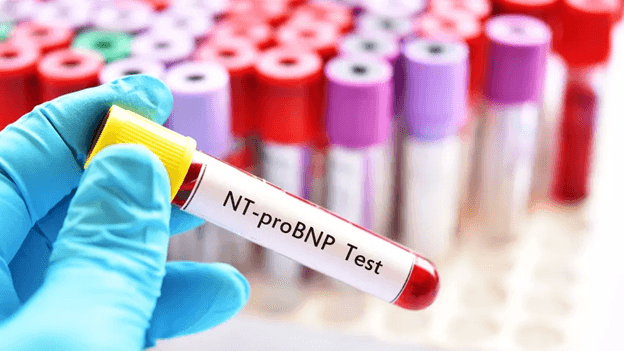
Heart failure is one of the leading causes of hospital admission in India, and early detection can change the course of the condition significantly. Doctors checking for shortness of breath, leg swelling, or unexplained fatigue often turn to a specific blood test that helps distinguish heart-related causes from other possibilities. The NT-proBNP test measures a hormone released by the heart when it is under stress, serving as a sensitive marker of cardiac strain. Understanding what this test measures, when it is ordered, and how to interpret the results can help individuals and families make sense of an important diagnostic tool in modern cardiology.
What Is the NT-proBNP Test?
NT-proBNP stands for N-terminal pro-B-type natriuretic peptide. It is a hormone fragment released by the heart's ventricles when they are stretched or under increased pressure, which usually happens in heart failure. The NT-proBNP test measures the level of this peptide in the bloodstream through a simple blood sample.
Higher-than-normal levels suggest the heart is working under strain, while normal levels make heart failure less likely in patients with shortness of breath or fluid retention. The test does not diagnose a specific heart condition on its own, but supports clinical assessment alongside other findings.
Why Doctors Order This Test
The NT-proBNP test is recommended in situations such as:
1. Shortness of Breath
When a patient reports breathlessness, the test helps decide whether the heart is the likely cause or whether lung-related conditions should be explored first.
2. Diagnosing Heart Failure
Elevated NT-proBNP helps with the diagnosis of heart failure, especially when symptoms such as fatigue, leg swelling, or rapid weight gain are present.
3. Monitoring Known Heart Failure
For patients already diagnosed, serial NT-proBNP measurements help track how well treatment is working and whether the condition is stable, improving, or worsening.
4. Risk Assessment in Other Conditions
The test is used in patients with kidney disease, after a heart attack, or before major surgery to estimate cardiac stress and risk.
How the Test is Performed
The test requires a routine blood sample drawn from a vein in the arm and fasting is not usually required. The sample is processed using immunoassay techniques, and results are mostly available within a day.
Patients should mention any medications they take, particularly those for blood pressure or heart conditions, since some treatments can influence NT-proBNP levels. Recent intense exercise, kidney function, and age also play a role in interpretation.
Normal Range of NT-proBNP
The reference ranges depend strongly on the age and normal ranges:
● Under 50 years: Below 125 pg/mL is considered normal.
● 50 to 75 years: Up to 450 pg/mL may be within the normal range.
● Above 75 years: Up to 900 pg/mL may be acceptable in some individuals.
Values above these thresholds suggest the heart may be under stress. Very high values, often above 1,800 pg/mL, raise the likelihood of heart failure significantly. Interpretation should always be done by a qualified medical professional.
What Elevated NT-proBNP Levels Mean
A higher-than-normal NT-proBNP level can be a result increased cardiac strain. Some common causes include:
● Heart failure: The most common reason for marked elevation
● Cardiomyopathy: Disease of the heart muscle affecting its function
● Valve disorders: Conditions such as severe mitral regurgitation or aortic stenosis
● Atrial fibrillation: Abnormal heart rhythm can raise NT-proBNP
● Pulmonary embolism: A clot in the lungs strains the right side of the heart
● Chronic kidney disease: Reduced clearance leads to higher circulating levels
Mildly increased levels may also occur in older adults, women, and people with certain non-cardiac conditions.
What Low NT-proBNP Levels Mean
A low NT-proBNP level in a patient with breathing difficulty makes heart failure unlikely as the cause. It is one of the most useful aspects of the test, since it helps doctors avoid unnecessary cardiac investigations and focus on other possible reasons such as asthma, chronic obstructive pulmonary disease, anaemia, or thyroid disorders.
NT-proBNP and BNP Compared
BNP and NT-proBNP are produced from the same precursor hormone and reflect similar cardiac processes. The main differences are:
● NT-proBNP: It has a longer half-life and is more stable in blood samples, making it convenient for laboratory testing.
● BNP: It has a shorter half-life and may respond faster to acute changes.
Most cardiology centres in India use NT-proBNP because of its reliability and availability.
Why a Reliable Diagnostic Partner Matters
Cardiac biomarkers such as NT-proBNP play a direct role in treatment decisions, hospital admission, and long-term care planning. Accurate results depend on assay quality, sample handling, and timely reporting done by reputed diagnostic centers such as Lupin Diagnostics. It offers NT-proBNP and broader cardiac panels across India through its National Accreditation Board for Testing and Calibration Laboratories (NABL) accredited labs, with free home sample collection available in major cities.
Conclusion
The NT-proBNP test is an important tool to assess heart strain, supporting heart failure diagnosis, and guiding ongoing cardiac care. While the result is meaningful, it should always be interpreted alongside symptoms, ECG findings, imaging studies, and clinical assessment by a physician. Anyone experiencing shortness of breath, swelling, or unexplained fatigue should consult a doctor about appropriate cardiac evaluation and the role of biomarker testing in their case.
Author

DocIndia Editorial Team
Check cache DocIndia Editorial Team works with Doctors to create informative articles.
View profile