Calories in Upma - Nutritional Values & Healthy Benefits
On this page
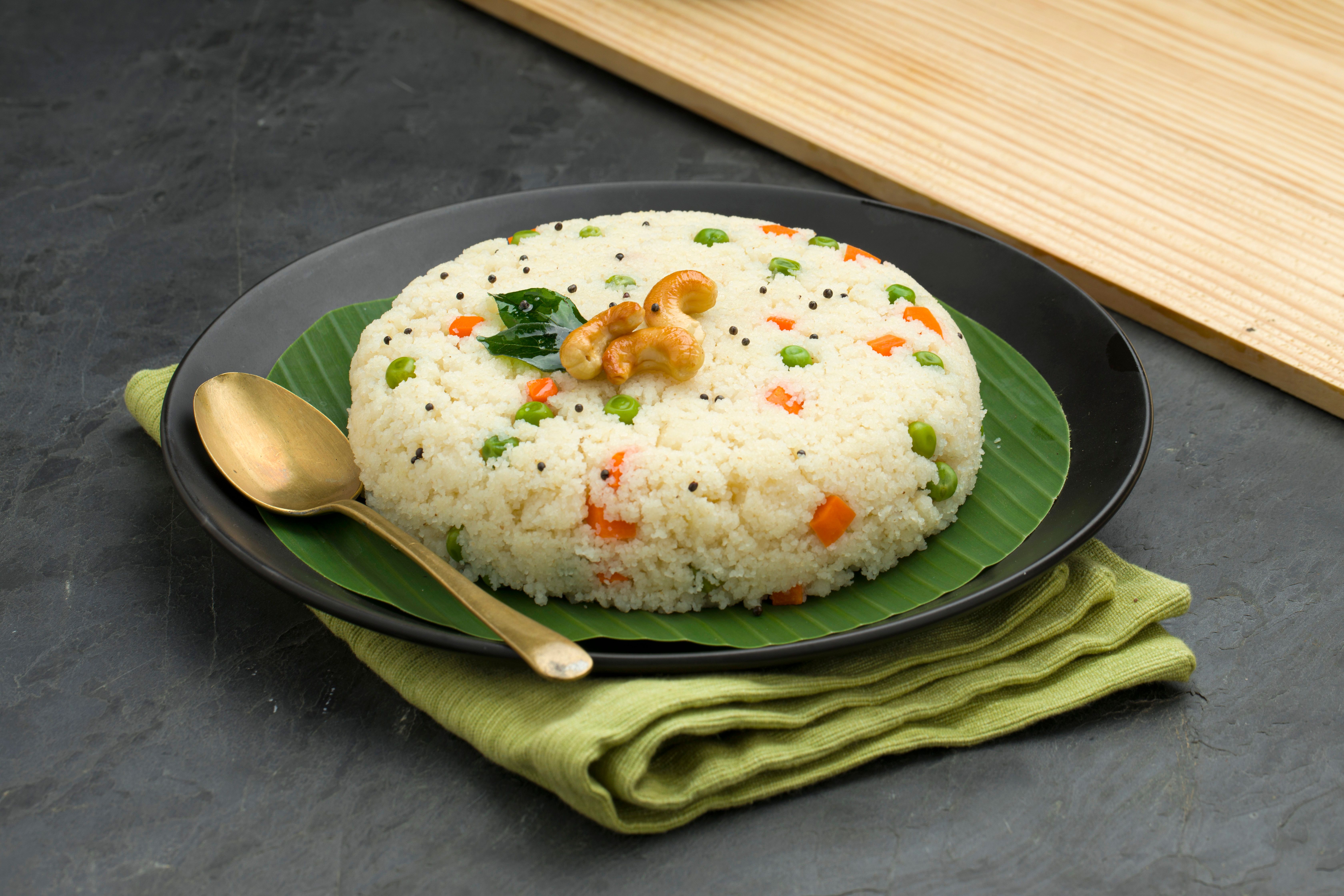
Upma is one of the most popular foods that is not only widely consumed in different parts of South India, but it is also preferred as a staple breakfast item in other states as well. Upma is not only known for its delicious taste, but it is also filled with high amounts of nutrients that can help you derive a number of health benefits.
If you are thinking of adding upma to your breakfast menu or as an afternoon snack, then it is important for you to know all the necessary diet-related details about upma. This article, therefore, can be the best guide for you. Read till the end to get a clear idea regarding the calories and nutrients in upma, the health benefits that you can have from them, and other necessary details.
How many calories are present in upma?
Before knowing the net calorie content in upma, it is important to know why you need to know the calorie count in upma. One must know the number of calories that are present in upma, because it will help a person to know the size that they need to consume, based on their net intake of calories. Though the net calorie content in upma may differ based on the types of upma and the way it is prepared, on average, one medium bowl of upma may contain around 416 calories.
The calorie count in upma can also largely depend on the serving size or the quantity of upma that you are consuming. So a small cup of upma containing around 100 grams by weight may have 208 calories, while the calorie content may increase to around 624 kcal when you are consuming a large cup of upma of nearly 300 grams. If the cup is medium and holds around 200 grams of upma, then the calorie content may range from 400 to 416 kcal.
Apart from these, it is also important to note that upma is a food item that can be prepared in different ways, and thus, the calorie content will vary accordingly. For instance, 100 grams of rava upma may contain 208 calories, whereas the calorie content may reduce slightly to 166 kcal if you are consuming daliya upma of around 100 grams. If you consume the same amount of oats upma, the calorie intake may be around 172 kcal.
The number of calories in upma will also depend on what you add to your upma dish. For instance, your upma will become much healthier and lower in calorie content if you add vegetables into the dish, whereas the calorie content is likely to increase if you add more ghee, oil, or butter to the dish while preparing it.
Nutritional content in upma:
Upma is often considered a major source of some of the vital nutrients that are required in the body, such as high dietary fibre, protein, beta carotene, lycopene, copper, along with good amounts of vitamin C, manganese, vitamin E, and so on. Here is a list of some of the key nutrients found in upma, along with the values in around 100 grams of serving:
Carbohydrate 38 gm
Protein 6.5 gm
Fat 4 gm
Fiber 3 gm
It is also important to remember that the value of the nutrients that are present in upma will depend largely on the type of upma that you are consuming (for example, sooji or semolina upma, rava upma or daily upma, and so on), the portion size, the way you are cooking the upma, and so on.
Health benefits of consuming upma:
According to many experts and health care professionals, it can be said that having upma can be quite beneficial for your overall health and wellness. In fact, upma can be a healthy breakfast or afternoon snack alternative that is both healthy and tasty. So, instead of having any fast or junk foods your breakfast or snacks, try to add upma to your diet for better health and wellness.
Here is a list of some of the most common types of health benefits that you can derive from having upma in your diet:
1. Upma provides energy and satiety:
Upma is rich in healthy dietary fibre. So, when you consume a bowl of upma, you are supposed to feel full, and thus you do not have to go for binge-eating. Apart from this, upma is digested slowly compared to other foods. This can significantly help to reduce the chances of adding more calories intake into the body. Moreover, it is mostly due to the presence of this fibre along with some amount of carbohydrates in upma that helps to derive enough amount of energy that is required for carrying out different functions throughout the day.
2. Upma can keep your heart healthy:
Upma consists of essential nutrients that are believed to keep your heart healthy and get rid of the risk of developing various types of cardiac and cardiovascular conditions. Upma consists of dietary fibre, along with healthy fats, and minerals like selenium, which not only help to keep your heart healthy, but can also help you boost your overall immune system.
The low sodium content and the rich amounts of magnesium in upma can also be beneficial for improving the functioning of the heart by keeping high blood pressure levels within check.
3. Upma is good for the kidneys:
The nutrients that are found in kidneys can be beneficial for the overall health and functioning of your kidneys. This is because upma consists of optimum levels of potassium, which not only helps to balance the sodium-potassium levels in the body but can also help to improve the health of your kidneys. This can further help to prevent the risks of developing different types of kidney diseases.
4. Upma can be a good source of iron:
Iron is one of the most vital minerals that is required in the human body for improving the pigments, like haemoglobin, the pigment that is required for the red colouration of the blood. Having upma can provide enough iron to the body, which can help to improve the circulation system in your body and can also help to keep the red blood cells or the RBC, in good health.
Moreover, when you add vegetables to your semolina upma, you are more likely to gain better iron and other vital nutrients that are beneficial for your RBC.
Which expert should you consult before consuming upma?
Upma is one of the most commonly consumed food items in India. But it is always advisable to consult an expert before you finally start adding upma to your daily diet, simply to avoid side effects or any health risks. It is always better to consult a registered nutritionist or a dietitian before you add upma to your diet. This is because, such an expert will be able to tell you what kind of upma would be well suited for you, the way in which you should prepare upma to make it healthier, how much upma you must consume in a day based on your calorie intake, whether you need to consume upma at all, and other necessary details.
Final Thoughts:
Upma is one of the most staple breakfast food items among South Indians, which is also often consumed in other parts of India. Apart from being tasty, upma is also loaded with several essential nutrients such as dietary fibre, healthy fats, vitamins, minerals, and so on that can make upma a healthy start to a day. Its calorie content is such that it will not add much to your body. Moreover, you are likely to take in more nutrients from upma if you add vegetables into it, such as tomatoes, peas, green beans, carrots and so on. So, it is always advisable to add upma to your diet after consulting with an expert.
Authors

Bidiptaa Sen
MA in Mass Media and Communication, Jadavpur University With 3.5+ years of experience in writing marketing and SEO content on healthcare and wellness, I write articles that help people to get an idea regarding medicines that are prescribed, how to improve their wellness care and educate people how to choose accurate health facilities. My communication skills, depth of knowledge in media management and strategic methods for better social media engagement and improving readers' experience through extensive research on the healthcare scenario.
View profile
Surbhi Singhal
Surbhi is dedicated and self-motivated Ph.D. scholar passionate about Content Creation, Editing, and Teaching. I excel in dynamic environments, thrive on challenges, and am eager to contribute my expertise and enthusiasm in pushing the boundaries of knowledge.
View profile