Postpartum Pregnancy Backpain: Why it Happens?
On this page
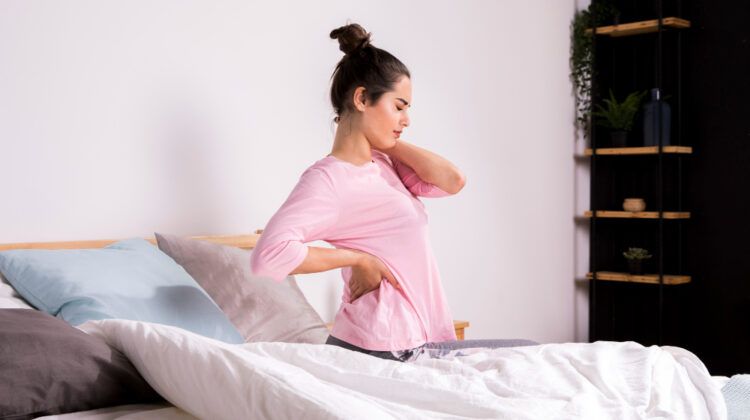
Pregnant women frequently complain of low back pain (LBP), which significantly lowers their quality of life. Hippocrates, Vesalius, Pinean, Hunter, Velpeau, and many others have all documented low back pain during pregnancy, a condition that has been known and acknowledged for many years. Walde was the first to distinguish between lumbar pain (LP) and Pelvic Girdle pain (PGP) in 1962. The standards for distinguishing between these two things were later established by Ostgaard et al. According to estimates, 50% of expectant mothers will experience low back discomfort at some point throughout their pregnancies or in the postpartum phase. There are several possible causes of pregnancy-related low back discomfort, including mechanical, hormonal, and other variables.
While there are two distinct forms of LBP during pregnancy—PGP and LP—a tiny percentage of women experience both types of pain. PGP is around four times more common than LP and is common throughout pregnancy and the postpartum period. Deep, stabbing pain that can occur between the posterior iliac crest and the gluteal fold, sometimes spreading to the posterolateral thigh, knee, and calf but not the foot, is how it is defined. It can be unilateral or bilateral, recurring or continuous. Pregnancy-induced pain (PGP) is more severe than postpartum pain. It has the potential to transform the physiological discomfort of pregnancy into a pathological state that reduces physical activity and social engagement. The most effective tests to distinguish PGP from other illnesses are pain provocation tests. In the cases of PGP, the posterior pain provocation test (PPPT) is positive.
It is easy to distinguish between PGP and LP since LP during pregnancy looks like pain over and around the lumbar spine, above the sacrum, just like lumbar discomfort reported by women who are not pregnant. Unlike PGP, LP may or may not radiate to the foot. One common observation is tenderness over the paravertebral muscles. Although LP typically worsens with specific activities and postures (such as prolonged sitting), it seems to be less incapacitating than PGP. It commonly flares up during the postpartum period. Test results for posterior pain provocation are negative.
Early diagnosis and differentiation between LP and PGP are important because each ailment requires a separate course of treatment. A thorough medical history and examination are necessary. Motion palpation is one of the most often used diagnostic techniques, despite its limited utility in differential diagnosis. Notably, insufficient research has been done on its validity, sensitivity, and specificity in general.
Women’s lives are profoundly impacted by low back discomfort associated with pregnancy. The most frequent reason for sick absence is low back discomfort following delivery. The best result will come from early detection and treatment, keeping in mind the uniqueness of each woman and her pregnancy. The best course of treatment is conservative management, which includes physiotherapy, stabilization belts, medication, acupuncture, massage, yoga, relaxation, and activation of the nerves. As long as low back discomfort associated with pregnancy is identified and treated early on, the prognosis is usually benign. This article’s goal is to examine relevant studies that provide clinical evidence for the diagnosis and treatment of back pain associated with pregnancy and to highlight particular treatment recommendations.
Treatment of Back Pain After Pregnancy
You should still receive relief from your back discomfort even if it results from your joints adjusting throughout the postpartum phase! Numerous strategies exist for relieving back pain at home, such as the following:
Massages
A professional massage or a massage from a partner can be a terrific approach to help relieve tense back muscles.
Additionally, when navigating your postpartum phase, it’s critical to take care of yourself and give yourself the time you need for much-needed self-care.
Therapy with heat and cold
To reduce pain and discomfort, hot and cold therapy involves switching between applying hot and cold compresses.
Cold therapy should be initiated as soon as back pain is detected. Apply a cold compress to your lower back, such as an ice bag or a box of frozen veggies.
To reduce the chance of frostbite, make sure you wrap the ice or frozen package in a towel. If you expose bare skin to the ice for an extended period, this can occur.
You can apply ice to your back as often as you desire, but no more than 20 minutes should pass between sessions.
After a few days, begin using heat treatment. Try these methods to ease your back:
- An electric heating pad
- A warm bath or compress
- But if you’re still healing from a C-section, you’ll have to hold off on taking warm baths until after your incision is completely healed.
Relax
Of course, it’s easier said than done when you’re simultaneously attempting to take care of a newborn! However, one of the finest things you can do to relieve back pain is to relax your back.
When you’re lying down, you might also want to spend some money on a sturdy pillow to put under your knees. This could lessen the possibility of any back discomfort.
Exercise
It may surprise you to learn that exercise can truly aid with back pain relief. But bear in mind that you should only be exercising at minimal impact, particularly during the first few weeks after giving birth.
Core workouts that support and strengthen your abdomen and pelvis can be excellent choices. Similarly, studies have demonstrated that yoga can effectively aid in the relief of low back pain (National Centre for Complementary and Integrative Health).
Over-the-Counter drugs
If you find that taking an over-the-counter (OTC) drug such as ibuprofen (Advil or Motrin) is too painful for your back pain, you might want to give it some thought.
If you are nursing a baby, see your doctor before taking any drugs.
Physiotherapy
Consult your doctor if trying remedies at home doesn’t relieve your back discomfort. They may advise you to seek out professional physical therapy.
PTs are capable of:
- assist you in increasing your mobility.
- instruct you in specific pain-relieving activities.
- even demonstrate how to maintain good posture.
Medical treatments
A doctor should be consulted if your back pain is chronic and interferes with your quality of life in addition to physical therapy.
Depending on how severe your back pain is, there are a variety of treatments available, including cortisone injections, prescription drugs, and surgical operations.
How can post-C-section back discomfort be managed?
Following a C-section, back pain is frequently transient, with pain severity progressively waning in the days, weeks, and months that follow delivery. Here are a few strategies to help your back feel better in the interim.
1. When you are raising and picking up your baby, try not to bend over.
Pay attention to your posture. Maintain a straight back while bending at the knees. Ask your partner or another person to put the baby in the pram, crib, or car seat if you’re experiencing pain.
2. When nursing, maintain a straight back.
Reducing strain on your neck and spine, can both prevent and relieve back discomfort. It might make a big difference to choose a pleasant place to feed.
3. Have a warm bath.
Your back’s tense and spastic muscles can be released with a hot bath. Furthermore, moist heat promotes blood circulation, which lowers inflammation and back pain. After a C-section, you should wait to take a bath until your doctor provides the all-clear. If you don’t have time for a bath, use a heating pad or stand in the shower and let the hot water run down your back.
Try to do the previously recommended things too.
One of the most typical musculoskeletal issues that pregnant women experience is LBP. Some women may experience an exacerbation of their chronic lower back pain, while others may experience incapacitating pain during pregnancy and for an erratic amount of time after giving birth. LBP during pregnancy may be brought on by hormonal, mechanical, and other causes related to the body’s changes. Literature makes it abundantly evident that LBP can be incapacitating, interfere with daily activities, and affect productivity. For these reasons, it is important to treat or disregard LBP.
In certain situations of persistent LBP, there may be no cure, but the pain can be effectively managed. The best chance for the best result is early detection and treatment that takes into account each woman’s unique circumstances and stage of pregnancy. Because PGP and LP require distinct treatments, getting the diagnosis right and differentiating between the two is crucial. Depending on the situation, treatment options may include physical activity, physiotherapy, stabilization belts, nerve stimulation, medication, acupuncture, massage, yoga, and relaxation techniques. In more severe situations with neurologic consequences like disc herniation or mass, a more aggressive treatment plan should be implemented.
Bigger studies are required given the high prevalence of LBP during pregnancy to explore treatment and prevention methods in bigger populations and enhance the health of women.